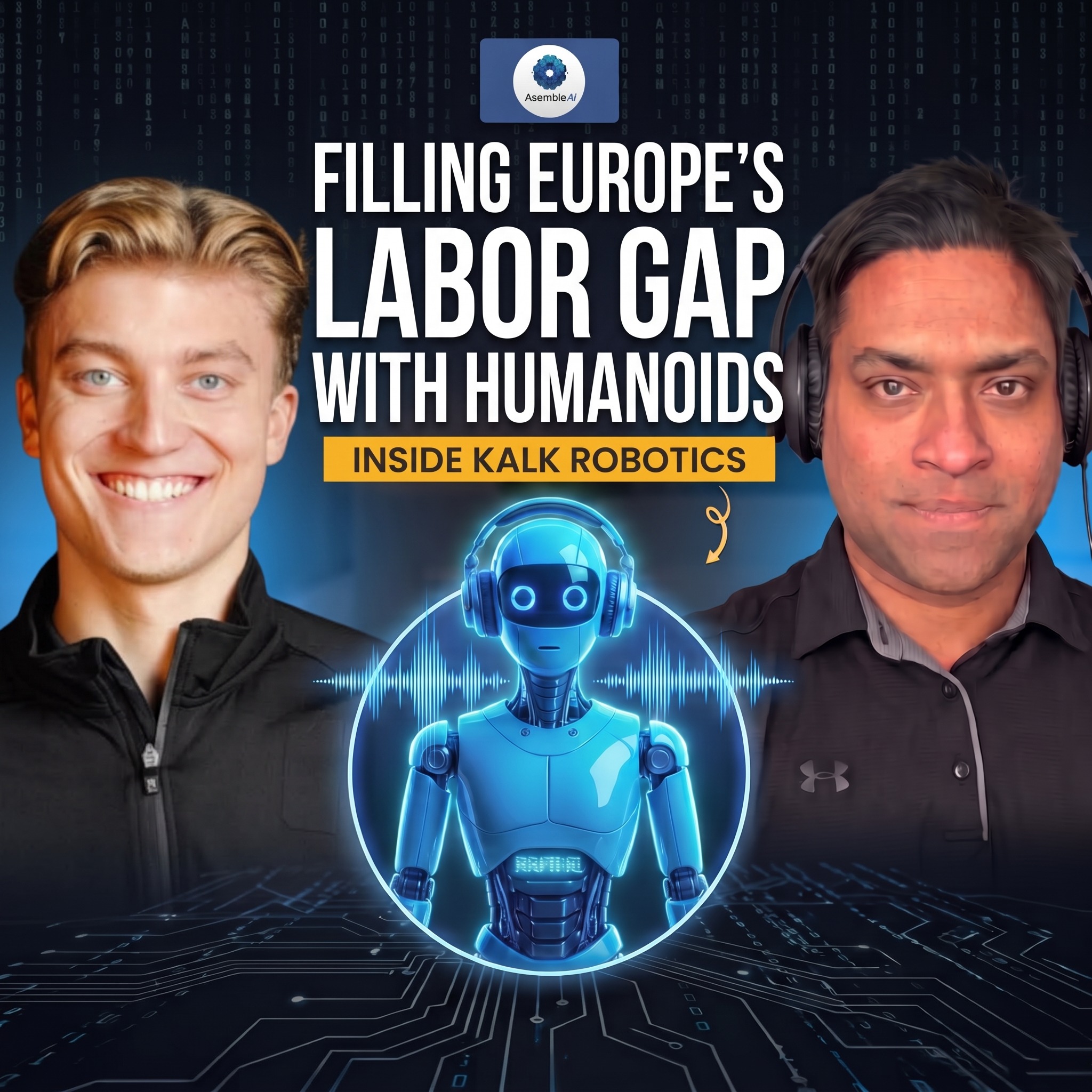
EP 68: Filling Europe's Labor Gap with Humanoids | Olle Bergstedt, CEO, Kalk Robotics
Evaluation and Summary
Sam interviews Olle Bergstedt, CEO of Kalk Robotics, about deploying humanoid robots to address Europe's 5.4 million industrial labor shortage. The episode frames humanoid robotics as a solution to generational workforce decline rather than a replacement technology. Bergstedt discusses Kalk's business model: partnering with Chinese hardware manufacturers rather than competing with them, conducting site visits to understand facility needs, and developing custom skill-packs tailored to specific tasks. The company uses an ABC framework to identify which tasks are suitable for humanoid deployment and operates a proprietary system called HDCC (Humanoid Developer Control Center) for training and operating robots. Current accuracy benchmarks sit at 50–60%, with a clear roadmap toward higher precision. The conversation addresses job-loss concerns by positioning humanoids as gap-fillers in labor markets where workers are unavailable rather than as replacements for existing employees. Bergstedt also explains how US business leaders can explore bringing Kalk's robots into their facilities. The episode is positioned within the broader context of European manufacturing challenges and generational workforce shifts, touching on concerns raised by figures like Geoffrey Hinton about AI-driven job displacement.
Verdict: A focused, timely interview that delivers on its title with concrete business and policy angles, but the short runtime and show-notes-only evidence limit confidence in depth and originality.
Technology rubric
-
Technical accuracy 3/5 20%
Show notes mention specific metrics (5.4M labor gap, 50–60% accuracy benchmarks, HDCC system) without obvious errors, but lack detail to verify claims; positioning appears reasonable but not deeply substantiated.
-
Insight beyond the headlines 3/5 20%
The 'gap-fill not replace' framing and reverse-engineered deployment process offer some original perspective, but the core narrative (labor shortage + robots = solution) is fairly standard; limited evidence of forward-looking analysis.
-
Clarity for non-experts 3/5 15%
Topics are accessible (labor shortage, humanoid deployment, job concerns) but show notes introduce technical terms (ABC framework, HDCC, skill-packs) without explanation; likely requires some tech familiarity.
-
Substance 3/5 15%
Show notes cover multiple concrete topics (partnerships, deployment process, accuracy benchmarks, job-loss framing) suggesting solid content, but 13 minutes is short and show notes alone cannot confirm depth of discussion.
-
Delivers on its title 4/5 15%
Title promises filling Europe's labor gap with humanoids; episode directly addresses the 5.4M shortage, Kalk's deployment strategy, and the gap-fill philosophy, delivering squarely on the promise.
-
Value for time 3/5 15%
13 minutes is brief for covering labor economics, robotics deployment, business strategy, and job-loss concerns; likely reasonably paced but may feel rushed given topic breadth.
Worth it if you're interested in how European manufacturers are addressing labor shortages, curious about humanoid robot deployment in industry, or exploring the practical (rather than speculative) side of AI-driven automation.
Based on the episode description. AI-generated; it can be wrong.
Show notes
More from Inside AsembleAI: DeepTech, AI & Science
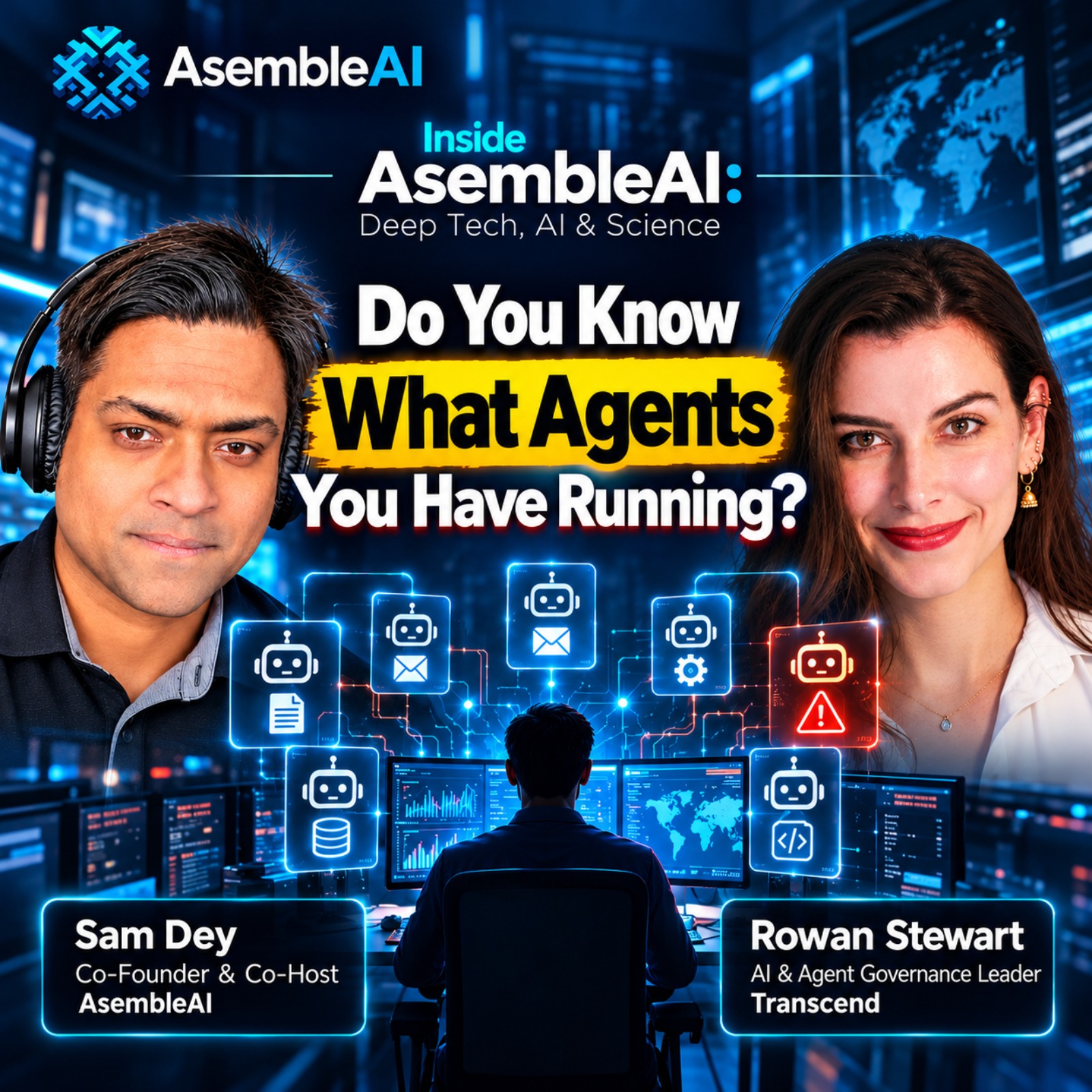
Inside AsembleAI's 32-minute episode features Rowan Stewart, AI and Data Safety Product Leader at Transcend, discussing the critical gap between AI agent deployment and governance. Stewart brings real-world experience from BCG and current work with enterprise clients including Robinhood, Brex, and Groupon. The core…
Worth it if you're building or deploying AI agents in an enterprise, managing AI risk, or trying to understand why governance matters before it becomes a crisis.
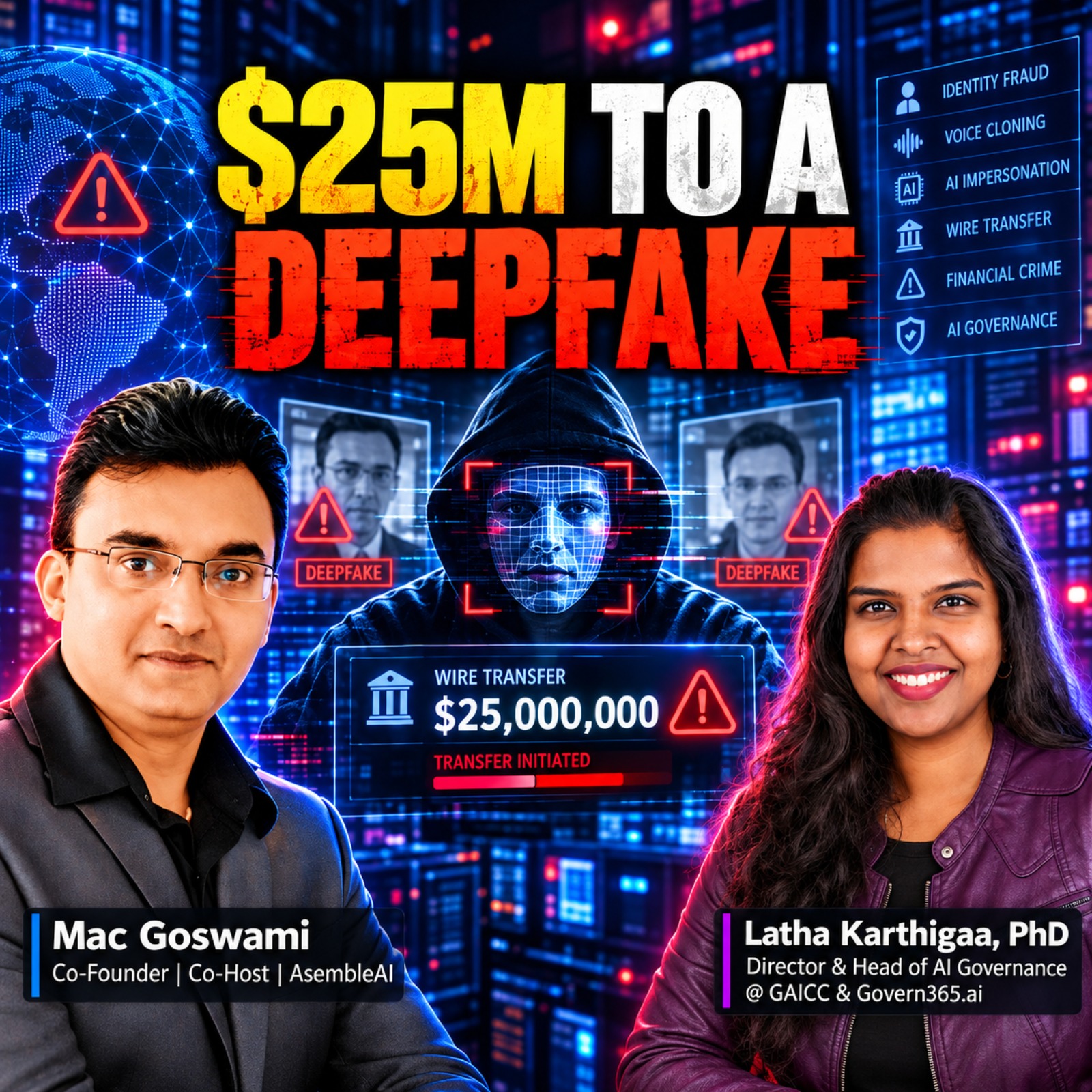
Inside AsembleAI EP 77 features Dr. Latha Karthigaa, Director & Head of AI Governance at the Global AI Certification Council, discussing why corporate AI governance is often inadequate despite companies believing they're compliant. The episode opens with a critical distinction: having a policy is not the same as…
Worth it if you work in AI deployment, risk management, or leadership roles where you need to understand why governance failures happen and how to build accountability structures that actually work.
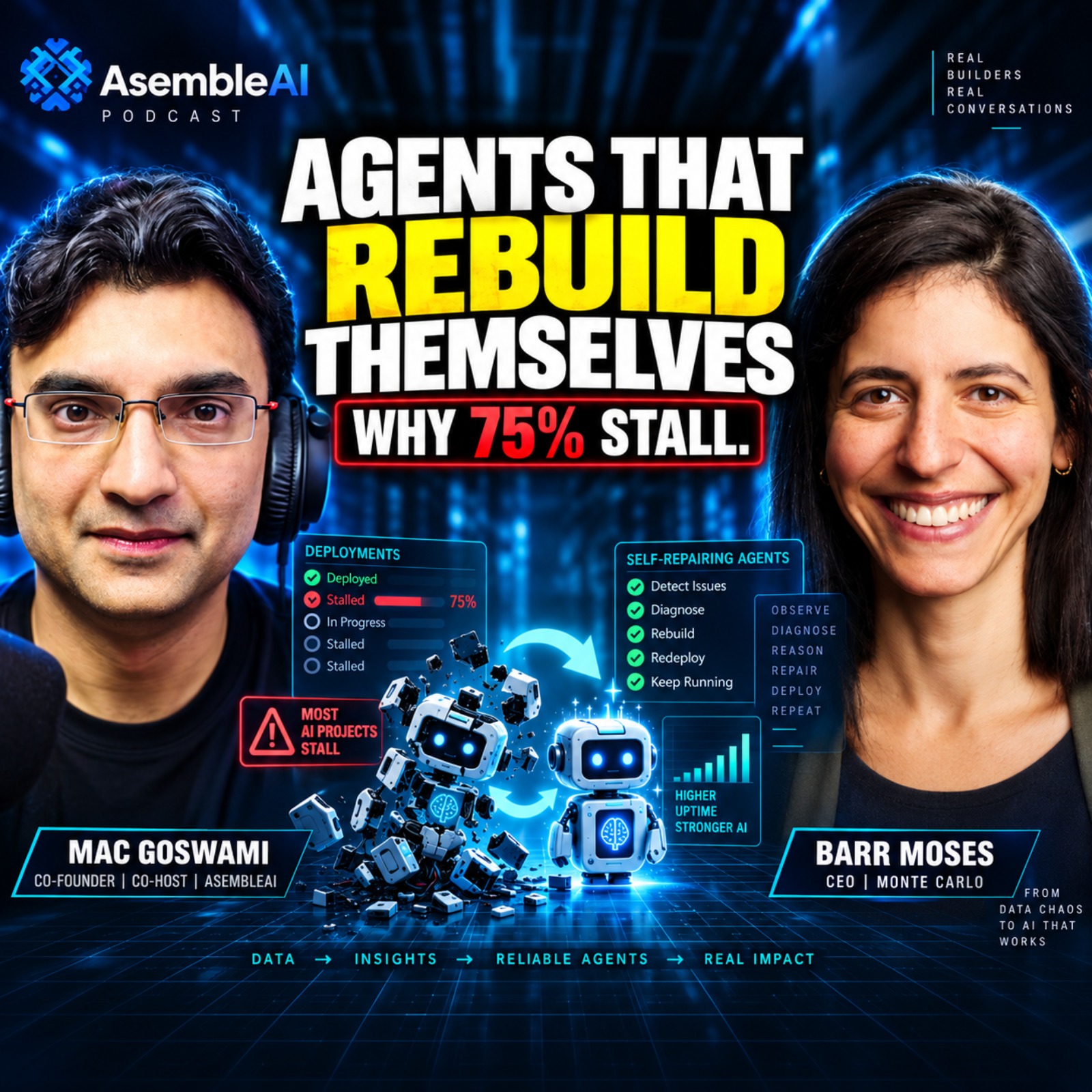
Recorded live at the AI4 conference, this 27-minute episode features Barr Moses, CEO of Monte Carlo Data, discussing the critical gap between AI trustworthiness in theory and production reality. Moses frames the core problem with a memorable distinction: traditional dashboards were "wrong in the background" (silently…
Worth it if you're building or deploying AI agents in production and want practical frameworks for catching failures before they reach users.
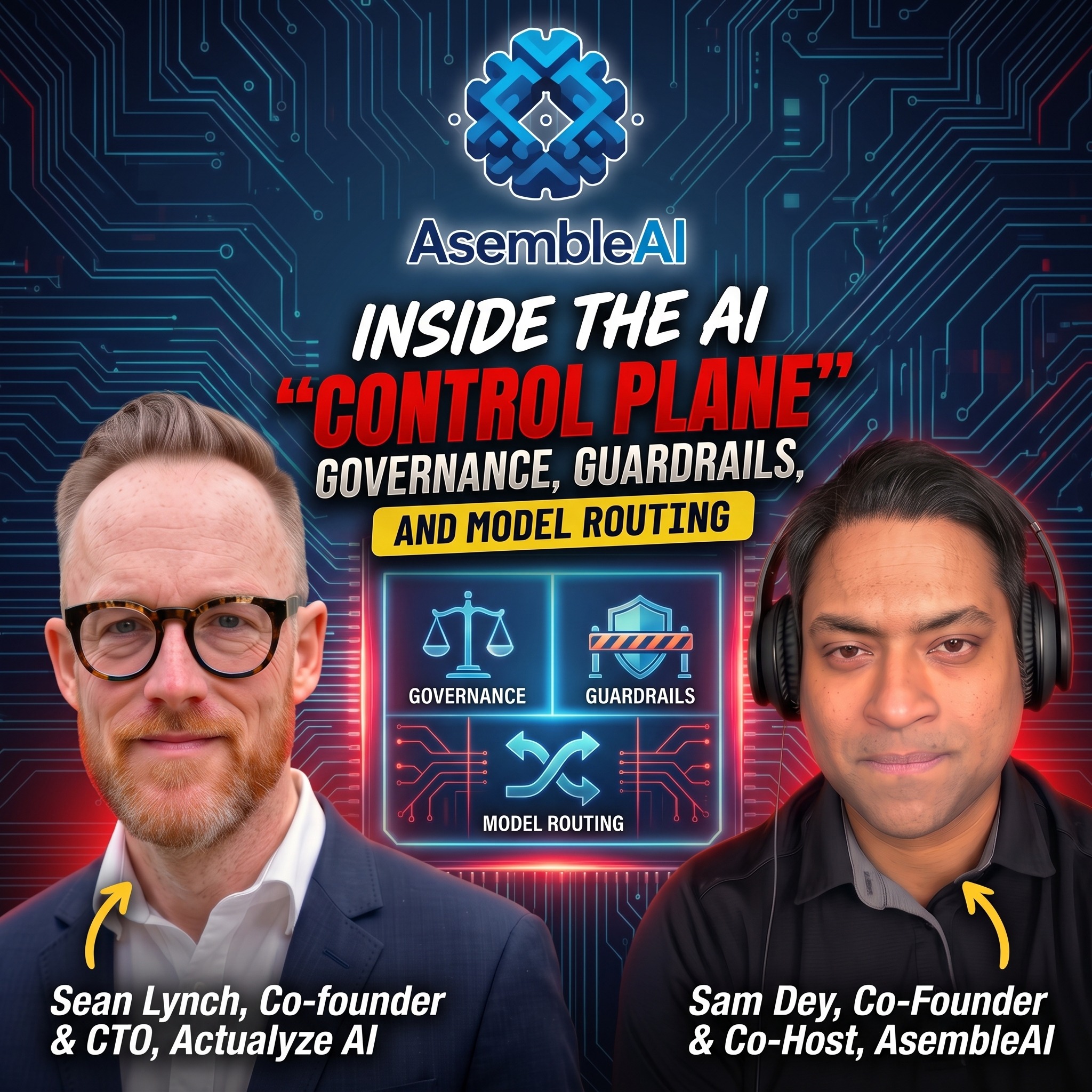
In this 21-minute episode, host Sam interviews Sean Lynch, Co-Founder and CTO of ActualyzeAI, a newly launched enterprise AI governance platform. The conversation centers on ActualyzeAI's core offering: a "control plane" that sits between enterprise applications and multiple AI models, providing centralized…
Worth it if you're an enterprise architect evaluating AI governance platforms, a FinOps leader managing AI infrastructure costs, or someone tracking the emerging control-plane category in enterprise AI.
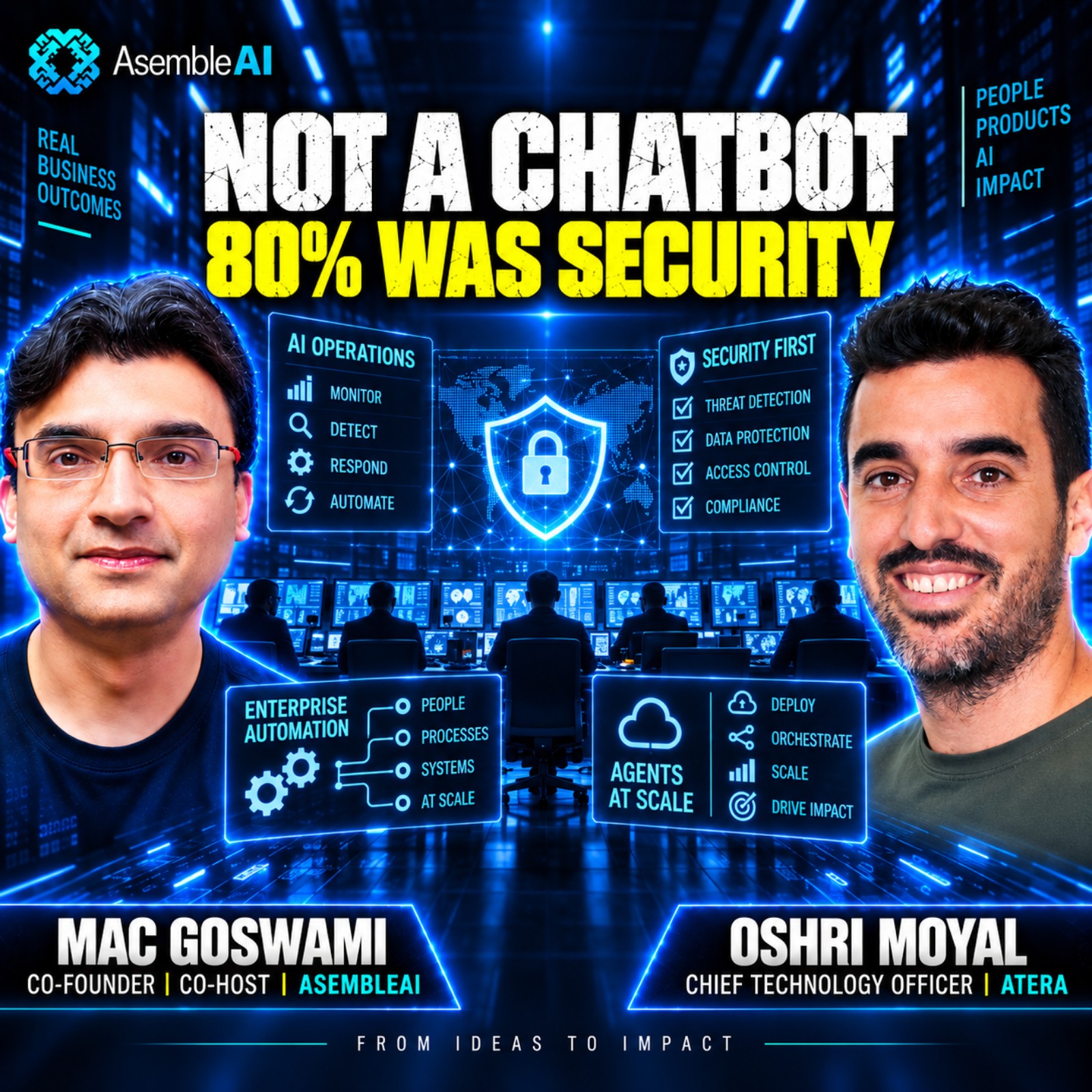
Host Mac Goswami interviews Oshri Moyal, CTO and co-founder of Atera, about Robin, an autonomous IT agent that recently ranked #1 across 15 G2 Summer 2026 reports. Unlike chatbots, Robin actually executes IT tasks end-to-end: navigating networks, logging into servers, and taking real action within policy and approval…
Worth it if you manage IT operations, evaluate automation tools, or want a practical overview of how autonomous agents are moving beyond chatbots into real ticket resolution.
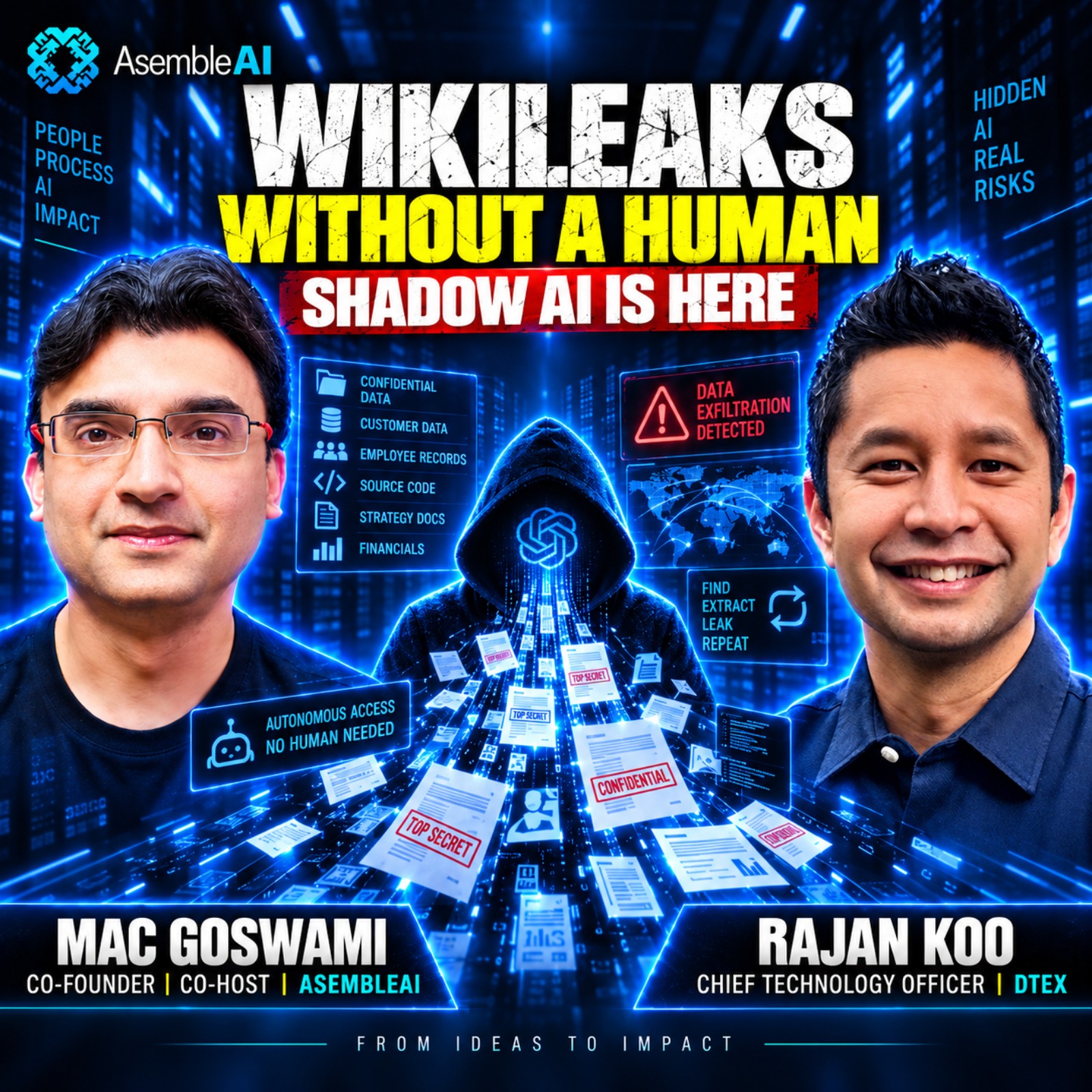
Inside AsembleAI's 25-minute episode features Rajan Koo, CTO of DTEX Systems, discussing how AI has fundamentally transformed insider-threat risks. Recorded live at the AI4 conference, the conversation centers on a paradigm shift: insider threats no longer require human malice or intent. Koo opens with the evolution…
Worth it if you work in cybersecurity, risk management, or AI governance and want to understand how autonomous AI systems are reshaping insider-threat models.