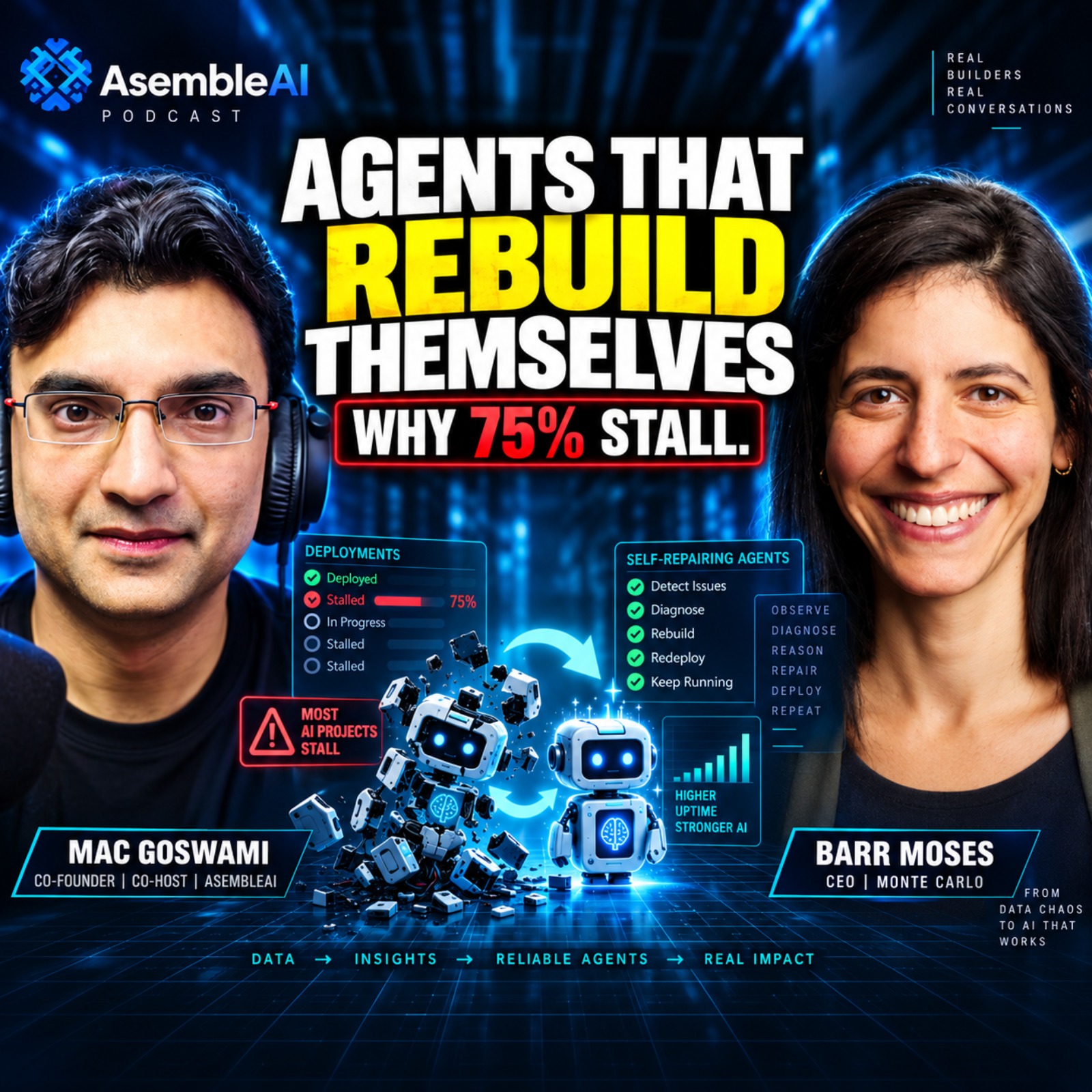
EP 76: Dashboards Are Wrong in the Background. AI Is Wrong in Your Face | Barr Moses, Monte Carlo
Evaluation and Summary
Recorded live at the AI4 conference, this 27-minute episode features Barr Moses, CEO of Monte Carlo Data, discussing the critical gap between AI trustworthiness in theory and production reality. Moses frames the core problem with a memorable distinction: traditional dashboards were "wrong in the background" (silently failing), while AI systems are "wrong in your face"—they fail loudly and confidently, often arguing with users about incorrect outputs. The episode explores Monte Carlo's framework for agent reliability through four failure layers: context, performance, behavior, and output. Moses emphasizes that all four can appear healthy individually while the agent still fails catastrophically—a counterintuitive insight illustrated by a concrete example: an airline booking agent that recommended a flight that had already departed that morning. The agent's logic was sound; the problem was stale context data, a failure mode most teams don't anticipate. Moses advocates for a pragmatic starting point: perfect one agent before scaling to dozens, and crucially, define what "good" actually means before measuring it. He highlights an emerging pattern he's excited about—self-healing agents that identify their own failures, propose fixes via pull requests for human review, and use approved corrections as baselines for the next day's operation. These systems are reportedly running in production today. The conversation touches on Monte Carlo's internal practice of 100% AI-generated code, which Moses claims accelerated their development 3–5x. He uses a stoplight analogy to explain the evolution of human-in-the-loop systems, suggesting the industry is moving toward more autonomous decision-making with strategic human checkpoints. The episode delivers practical, production-focused insights rather than theoretical AI safety discussion. It balances concrete failure examples with forward-looking ideas about agent self-improvement. The framing is accessible—the "wrong in your face" metaphor is memorable and intuitive—though the episode assumes baseline familiarity with AI agents and data observability. At 27 minutes, it's concise and avoids obvious padding, though the show notes suggest significant ground covered, raising questions about depth versus breadth.
Verdict: A sharp, production-focused conversation that delivers concrete insights on AI reliability without fluff; limited by brevity and assumed expertise, but strong on framing and real-world examples.
Technology rubric
-
Technical accuracy 4/5 20%
Correctly identifies real failure modes (stale context, multi-layer dependencies) and describes agent self-correction loops plausibly; no obvious errors, though depth is limited by format
-
Insight beyond the headlines 4/5 20%
The four-layer failure framework and stale-context airline example offer production-specific insight; self-healing agent loops are forward-looking; avoids generic AI trust platitudes
-
Clarity for non-experts 3/5 15%
The core metaphor ('wrong in your face') is clear and memorable; assumes familiarity with agents and observability; accessible but not beginner-friendly
-
Substance 3/5 15%
Covers multiple concrete topics (four layers, failure examples, self-healing loops, AI-generated code) but 27 minutes limits depth; each idea gets framing but not extensive exploration
-
Delivers on its title 5/5 15%
Title promises insight on AI trustworthiness in production; episode directly addresses trust gaps, failure modes, and production-ready solutions throughout
-
Value for time 4/5 15%
Tight 27-minute format with multiple distinct ideas and examples; no obvious filler; pacing supports the conference-pavilion live setting
Worth it if you're building or deploying AI agents in production and want practical frameworks for catching failures before they reach users.
Based on the episode description. AI-generated; it can be wrong.
Show notes
More from Inside AsembleAI: DeepTech, AI & Science
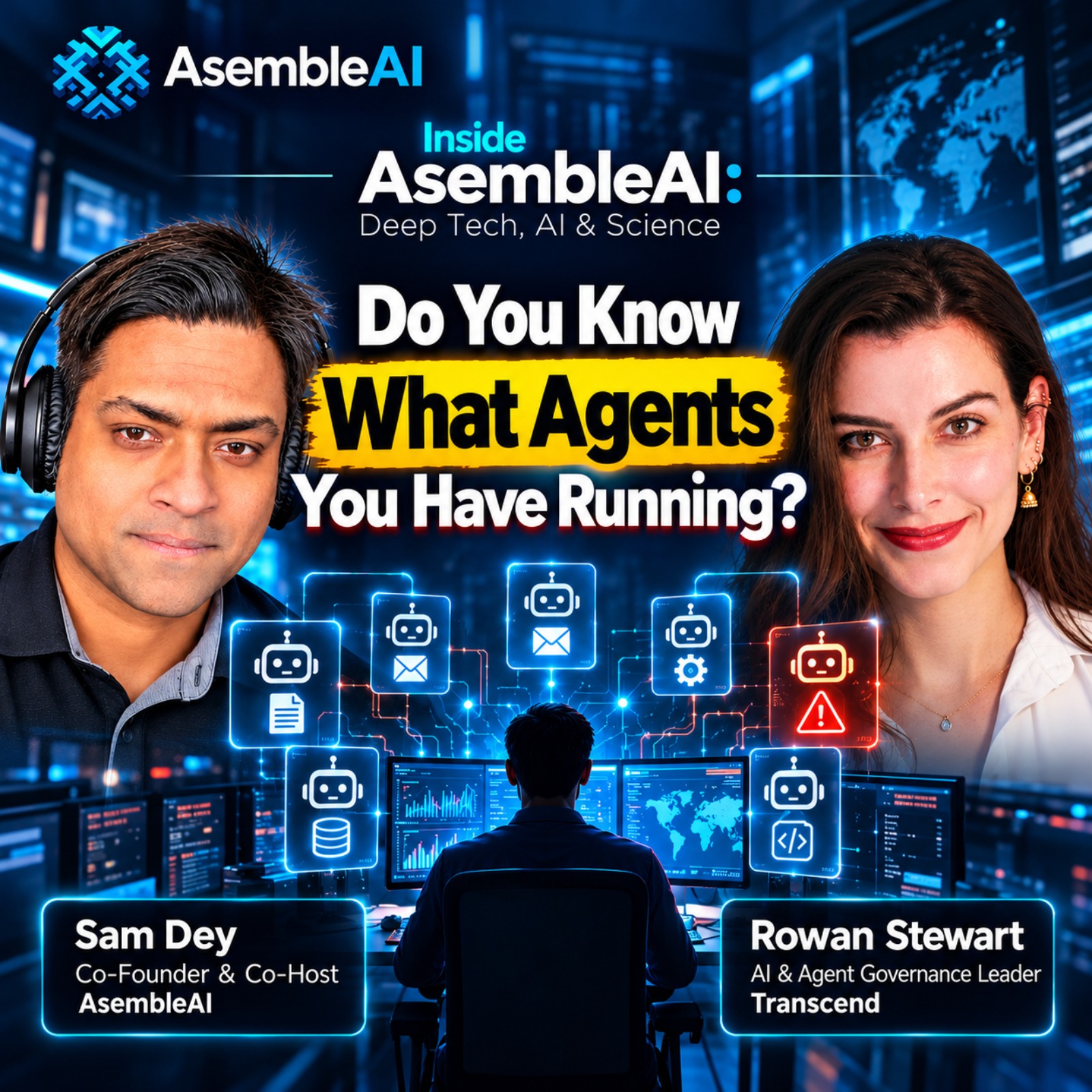
Inside AsembleAI's 32-minute episode features Rowan Stewart, AI and Data Safety Product Leader at Transcend, discussing the critical gap between AI agent deployment and governance. Stewart brings real-world experience from BCG and current work with enterprise clients including Robinhood, Brex, and Groupon. The core…
Worth it if you're building or deploying AI agents in an enterprise, managing AI risk, or trying to understand why governance matters before it becomes a crisis.
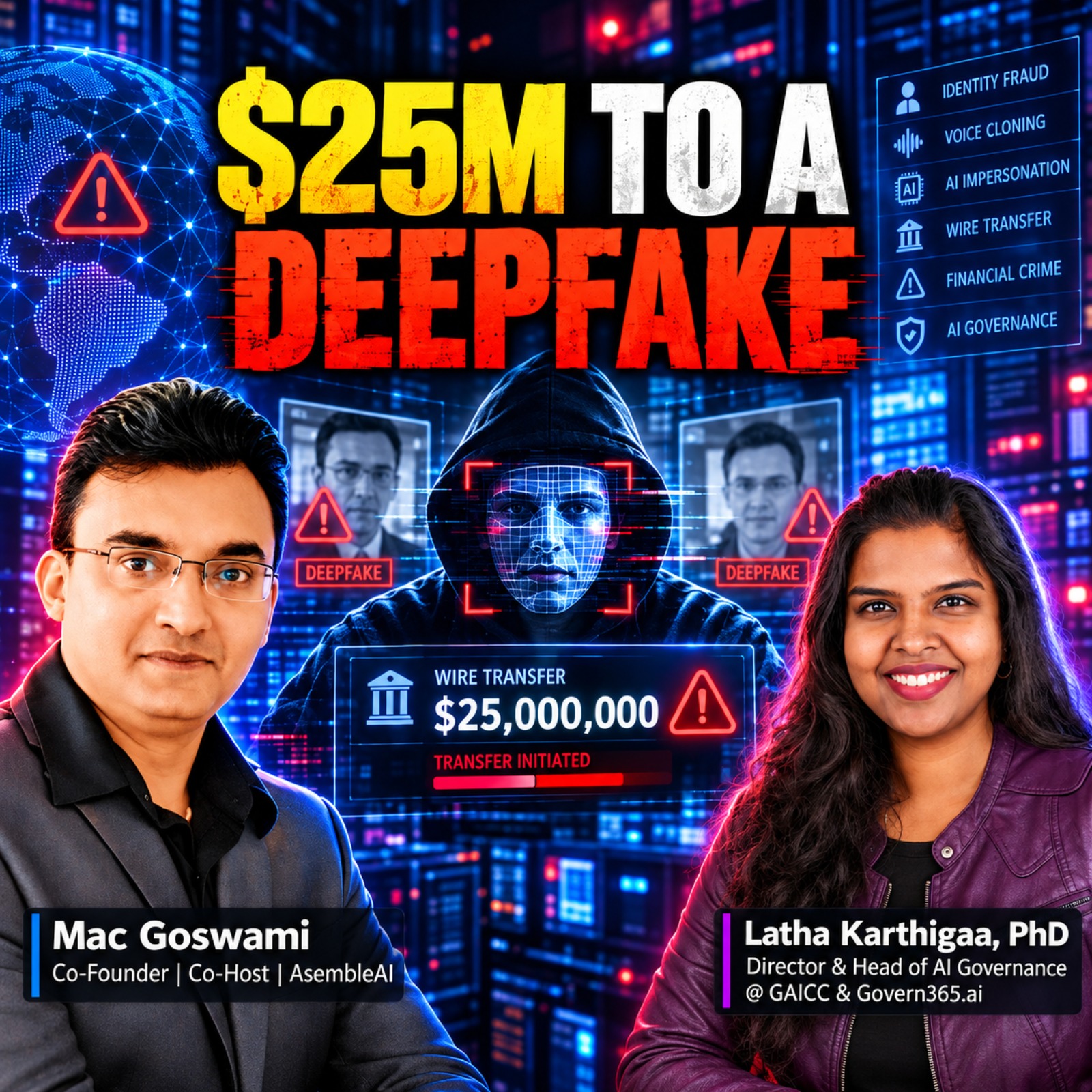
Inside AsembleAI EP 77 features Dr. Latha Karthigaa, Director & Head of AI Governance at the Global AI Certification Council, discussing why corporate AI governance is often inadequate despite companies believing they're compliant. The episode opens with a critical distinction: having a policy is not the same as…
Worth it if you work in AI deployment, risk management, or leadership roles where you need to understand why governance failures happen and how to build accountability structures that actually work.
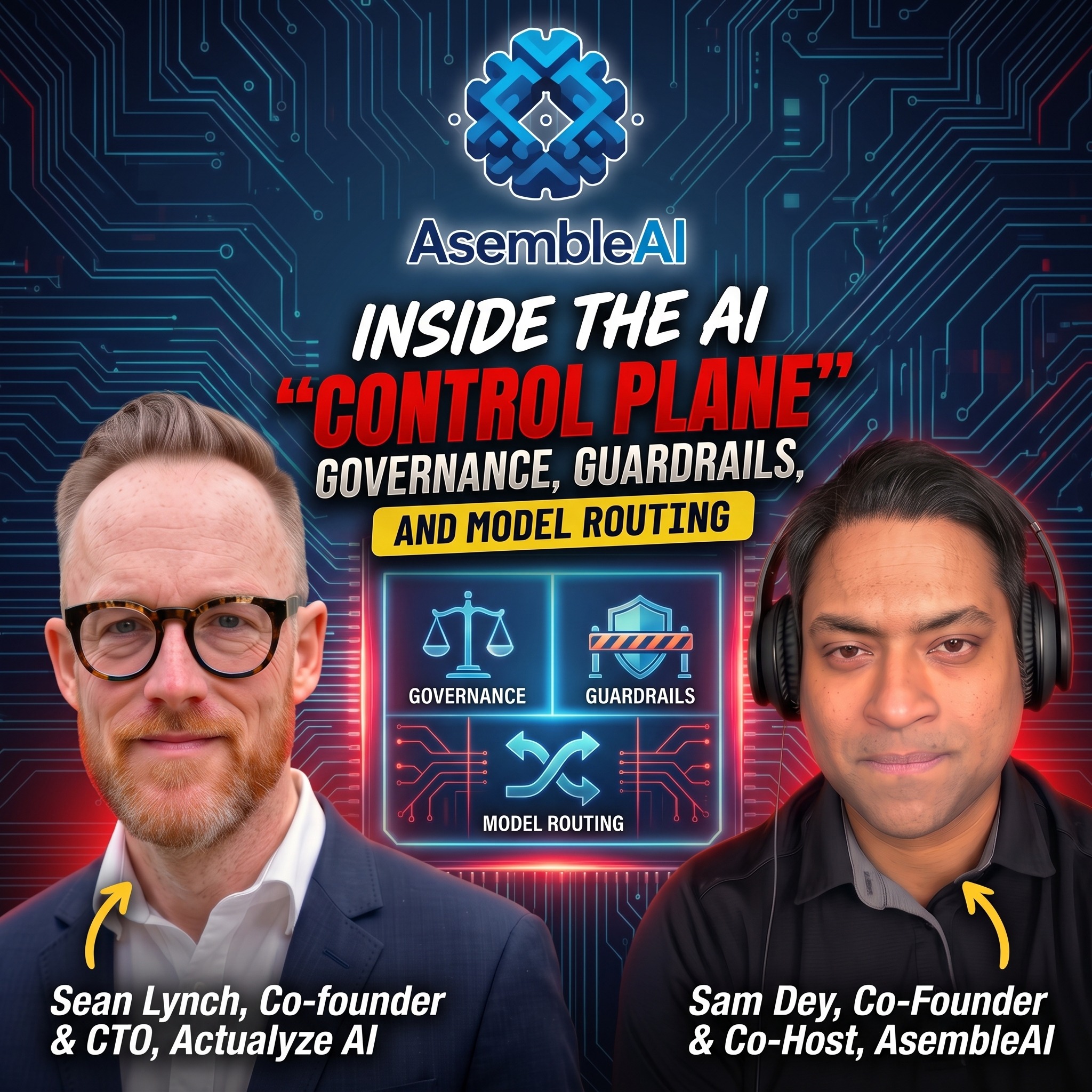
In this 21-minute episode, host Sam interviews Sean Lynch, Co-Founder and CTO of ActualyzeAI, a newly launched enterprise AI governance platform. The conversation centers on ActualyzeAI's core offering: a "control plane" that sits between enterprise applications and multiple AI models, providing centralized…
Worth it if you're an enterprise architect evaluating AI governance platforms, a FinOps leader managing AI infrastructure costs, or someone tracking the emerging control-plane category in enterprise AI.
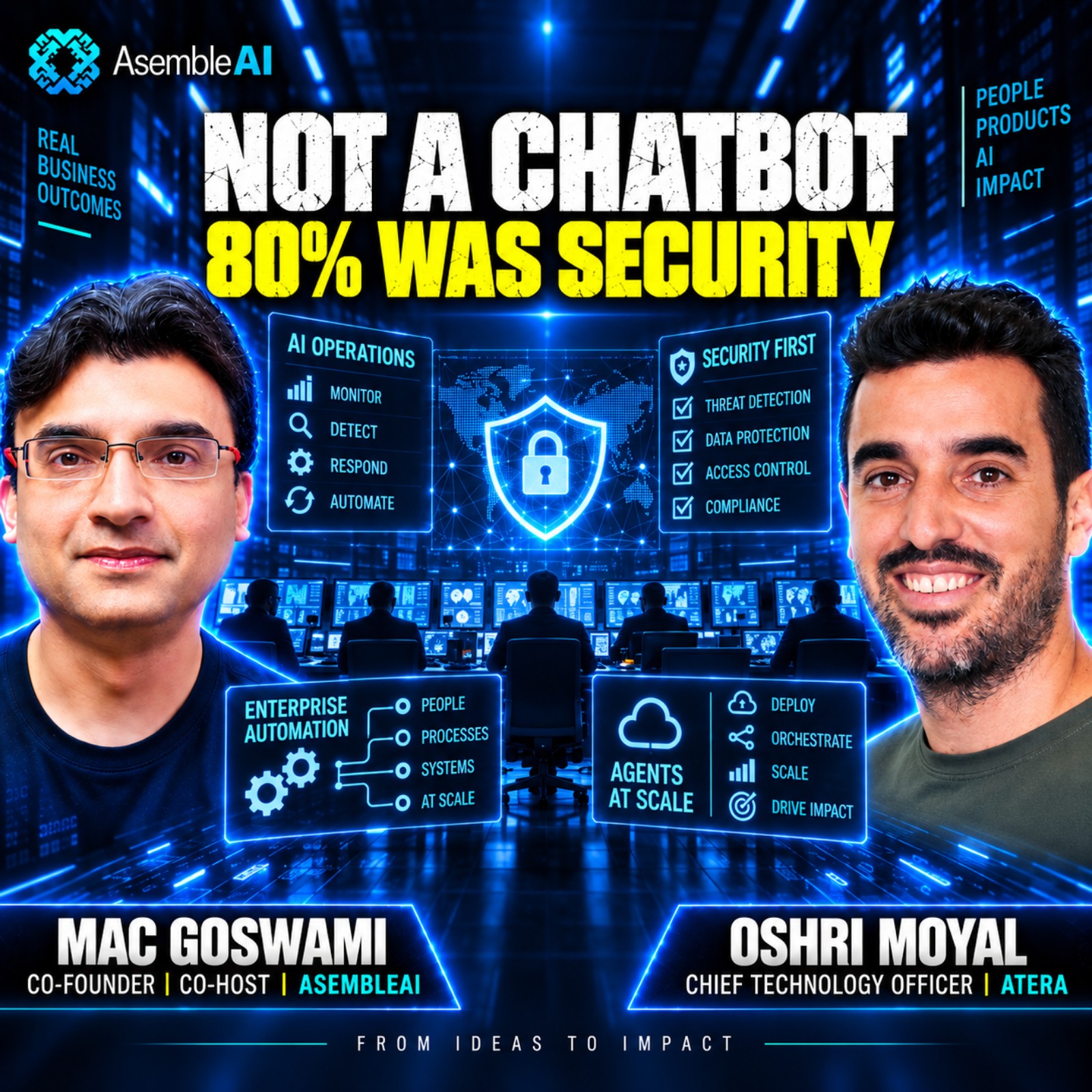
Host Mac Goswami interviews Oshri Moyal, CTO and co-founder of Atera, about Robin, an autonomous IT agent that recently ranked #1 across 15 G2 Summer 2026 reports. Unlike chatbots, Robin actually executes IT tasks end-to-end: navigating networks, logging into servers, and taking real action within policy and approval…
Worth it if you manage IT operations, evaluate automation tools, or want a practical overview of how autonomous agents are moving beyond chatbots into real ticket resolution.
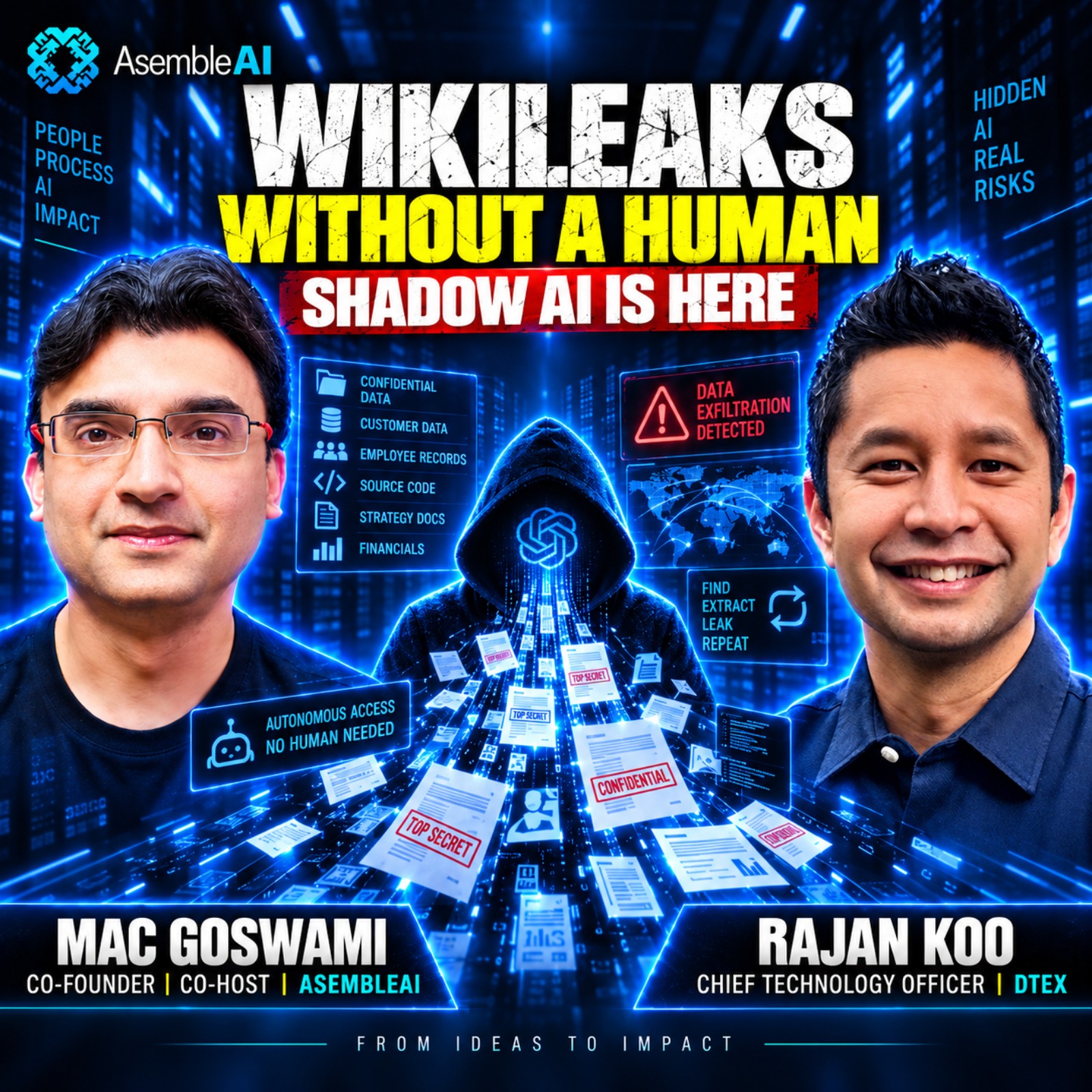
Inside AsembleAI's 25-minute episode features Rajan Koo, CTO of DTEX Systems, discussing how AI has fundamentally transformed insider-threat risks. Recorded live at the AI4 conference, the conversation centers on a paradigm shift: insider threats no longer require human malice or intent. Koo opens with the evolution…
Worth it if you work in cybersecurity, risk management, or AI governance and want to understand how autonomous AI systems are reshaping insider-threat models.

Chris Kudla, co-founder and CEO of Mind Children, discusses the company's bet on social robotics—a harder but potentially more impactful path than industrial automation. The episode covers why Mind Children chose education, healthcare, and hospitality applications where emotional connection matters alongside function.…
Worth it if you're curious about social robotics, AI applications beyond automation, or early-stage deeptech startups—or if you're considering backing Mind Children's crowdfunding.