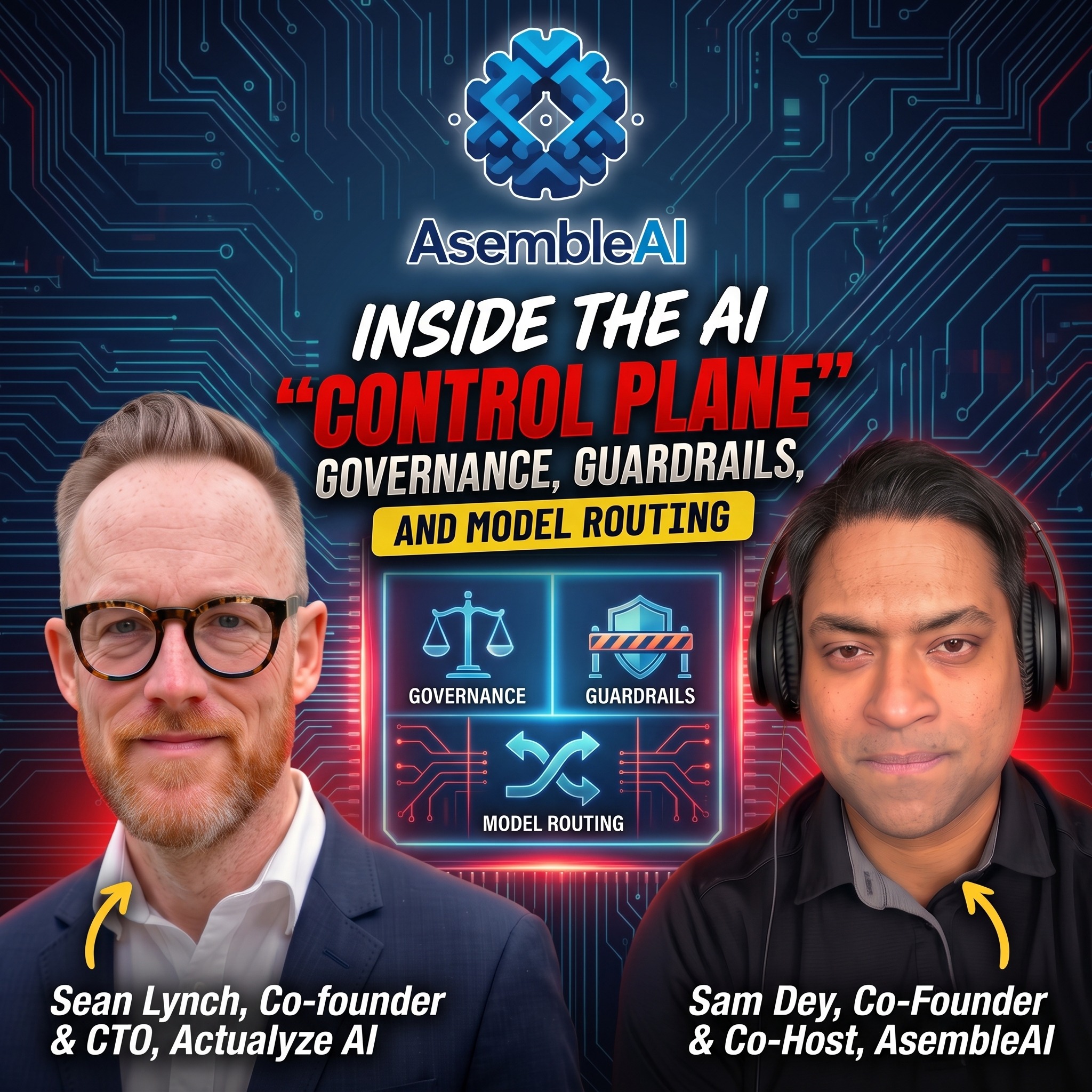
EP 75: Inside the AI Control Plane: Governance, Guardrails, and Model Routing | Sean Lynch, ActualyzeAI
Evaluation and Summary
In this 21-minute episode, host Sam interviews Sean Lynch, Co-Founder and CTO of ActualyzeAI, a newly launched enterprise AI governance platform. The conversation centers on ActualyzeAI's core offering: a "control plane" that sits between enterprise applications and multiple AI models, providing centralized governance, cost management, security, and intelligent routing. Lynch explains the practical problem the company solves: enterprises today juggle APIs from OpenAI, Anthropic, Google Bedrock, and self-hosted models separately, creating fragmentation and operational complexity. ActualyzeAI's control plane aggregates these into a single endpoint, requiring zero code changes to adopt—a significant advantage for enterprise deployment. Key technical features discussed include "virtual models," which are purpose-built configurations that intelligently route requests based on task type (coding, reasoning, agentic work). The platform includes guardrails that automatically detect and redact sensitive data in inference streams—PII, PHI, API keys—addressing a critical security concern for regulated industries. Financial operations emerge as the primary adoption driver. The episode highlights budgetary controls, spend limits, and team-based cost tracking as compelling value propositions for CFOs and engineering leaders managing sprawling AI infrastructure costs. Lynch also addresses market dynamics: the coming wave of domestic and open-weight small language models will expand the addressable market, making model-agnostic infrastructure increasingly valuable as the foundation model landscape fragments. This forward-looking perspective connects product strategy to broader industry trends. The founding team's pedigree—most previously worked at Metacloud (acquired by Cisco)—provides credibility in infrastructure and enterprise adoption. The episode concludes with information about ActualyzeAI's design partner program for early customers. The episode delivers a focused product narrative with concrete technical details and business context. However, the source material provides limited evidence of deep technical depth, critical questioning, or analysis beyond the company's own framing. The conversation appears product-focused rather than investigative, which is appropriate for a launch-window interview but limits originality. The 21-minute format is tight, though without hearing the actual audio, it's unclear whether the pacing feels natural or rushed.
Verdict: A well-structured product launch interview that delivers on its title with concrete technical and business details, but lacks the independent analysis or critical depth that would elevate it beyond a polished company narrative.
Technology rubric
-
Technical accuracy 4/5 20%
Describes control plane architecture, model routing, and guardrails with specificity; no obvious errors, though depth is limited to product-level explanation rather than deep technical validation
-
Insight beyond the headlines 3/5 20%
Connects product strategy to market fragmentation and the rise of open-weight models, but remains largely within the company's narrative without independent analysis or contrarian perspective
-
Clarity for non-experts 4/5 15%
Explains control plane concept, routing logic, and guardrails in accessible terms; assumes some familiarity with enterprise AI but avoids heavy jargon
-
Substance 3/5 15%
Covers multiple concrete topics (routing, guardrails, cost controls, market dynamics) with specific examples, but 21 minutes limits depth; no evidence of deep dives or nuanced debate
-
Delivers on its title 5/5 15%
Title promises governance, guardrails, and model routing; episode directly addresses all three with concrete examples and use cases
-
Value for time 3/5 15%
Covers substantial ground in 21 minutes, but without hearing the audio, unclear if pacing is tight or if there's filler; product-launch format suggests efficient but potentially surface-level coverage
Worth it if you're an enterprise architect evaluating AI governance platforms, a FinOps leader managing AI infrastructure costs, or someone tracking the emerging control-plane category in enterprise AI.
Content flags
- Sponsored Episode is a launch-window interview with a newly stealth-exited company; while not explicitly labeled as promotional, the format and timing suggest this is part of ActualyzeAI's go-to-market strategy
Based on the episode description. AI-generated; it can be wrong.
Show notes
More from Inside AsembleAI: DeepTech, AI & Science
Inside AsembleAI's 32-minute episode features Rowan Stewart, AI and Data Safety Product Leader at Transcend, discussing the critical gap between AI agent deployment and governance. Stewart brings real-world experience from BCG and current work with enterprise clients including Robinhood, Brex, and Groupon. The core…
Worth it if you're building or deploying AI agents in an enterprise, managing AI risk, or trying to understand why governance matters before it becomes a crisis.
Inside AsembleAI EP 77 features Dr. Latha Karthigaa, Director & Head of AI Governance at the Global AI Certification Council, discussing why corporate AI governance is often inadequate despite companies believing they're compliant. The episode opens with a critical distinction: having a policy is not the same as…
Worth it if you work in AI deployment, risk management, or leadership roles where you need to understand why governance failures happen and how to build accountability structures that actually work.
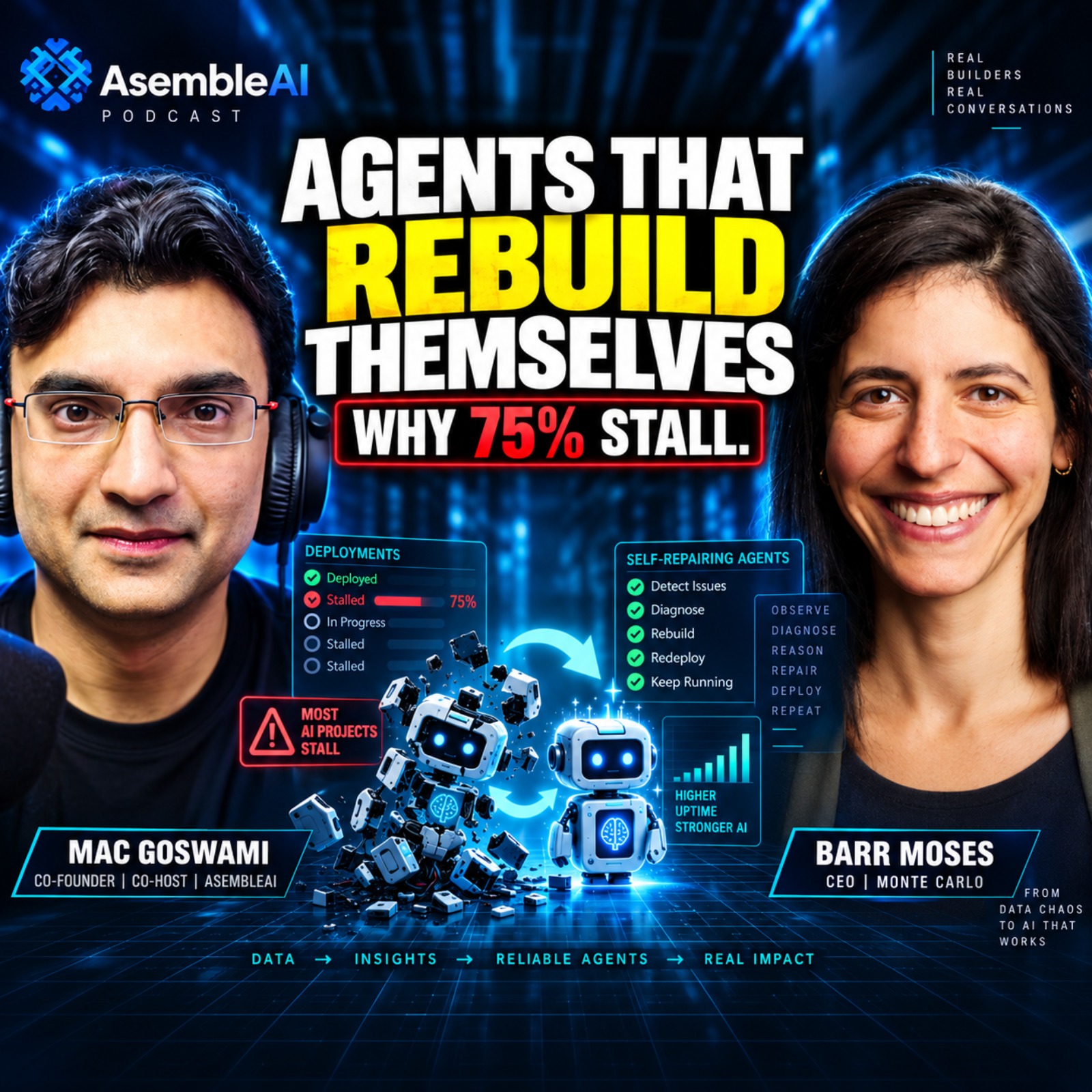
Recorded live at the AI4 conference, this 27-minute episode features Barr Moses, CEO of Monte Carlo Data, discussing the critical gap between AI trustworthiness in theory and production reality. Moses frames the core problem with a memorable distinction: traditional dashboards were "wrong in the background" (silently…
Worth it if you're building or deploying AI agents in production and want practical frameworks for catching failures before they reach users.
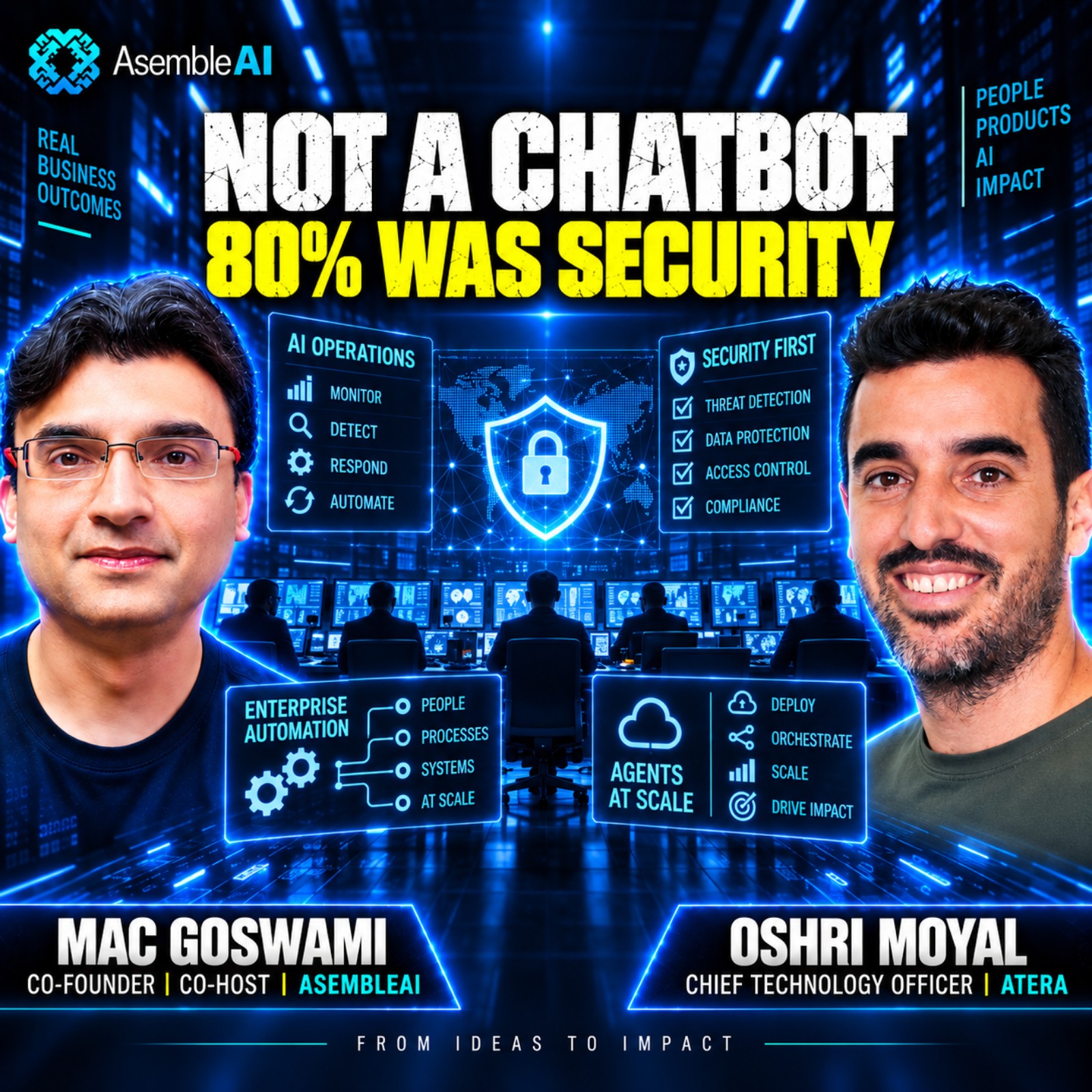
Host Mac Goswami interviews Oshri Moyal, CTO and co-founder of Atera, about Robin, an autonomous IT agent that recently ranked #1 across 15 G2 Summer 2026 reports. Unlike chatbots, Robin actually executes IT tasks end-to-end: navigating networks, logging into servers, and taking real action within policy and approval…
Worth it if you manage IT operations, evaluate automation tools, or want a practical overview of how autonomous agents are moving beyond chatbots into real ticket resolution.
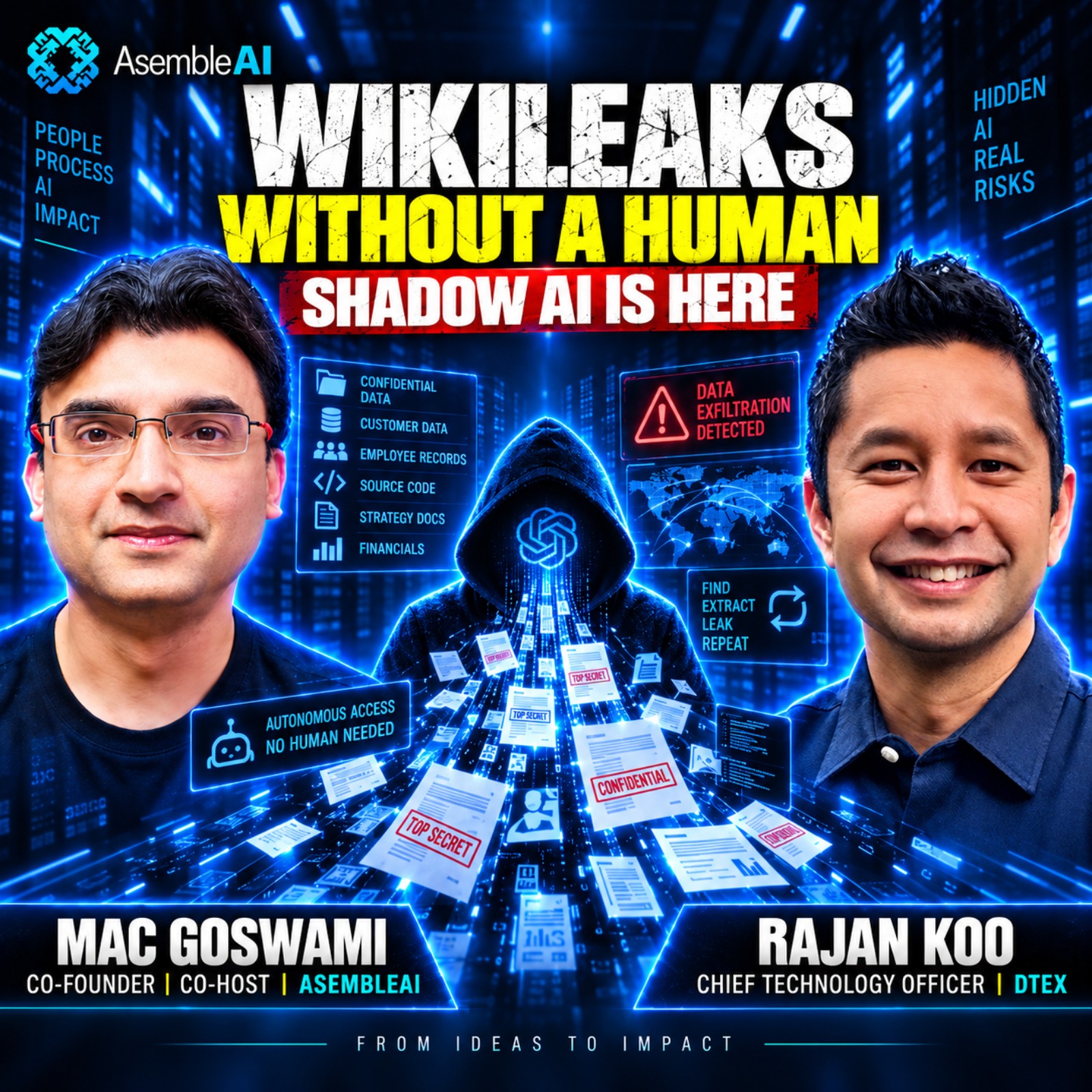
Inside AsembleAI's 25-minute episode features Rajan Koo, CTO of DTEX Systems, discussing how AI has fundamentally transformed insider-threat risks. Recorded live at the AI4 conference, the conversation centers on a paradigm shift: insider threats no longer require human malice or intent. Koo opens with the evolution…
Worth it if you work in cybersecurity, risk management, or AI governance and want to understand how autonomous AI systems are reshaping insider-threat models.

Chris Kudla, co-founder and CEO of Mind Children, discusses the company's bet on social robotics—a harder but potentially more impactful path than industrial automation. The episode covers why Mind Children chose education, healthcare, and hospitality applications where emotional connection matters alongside function.…
Worth it if you're curious about social robotics, AI applications beyond automation, or early-stage deeptech startups—or if you're considering backing Mind Children's crowdfunding.