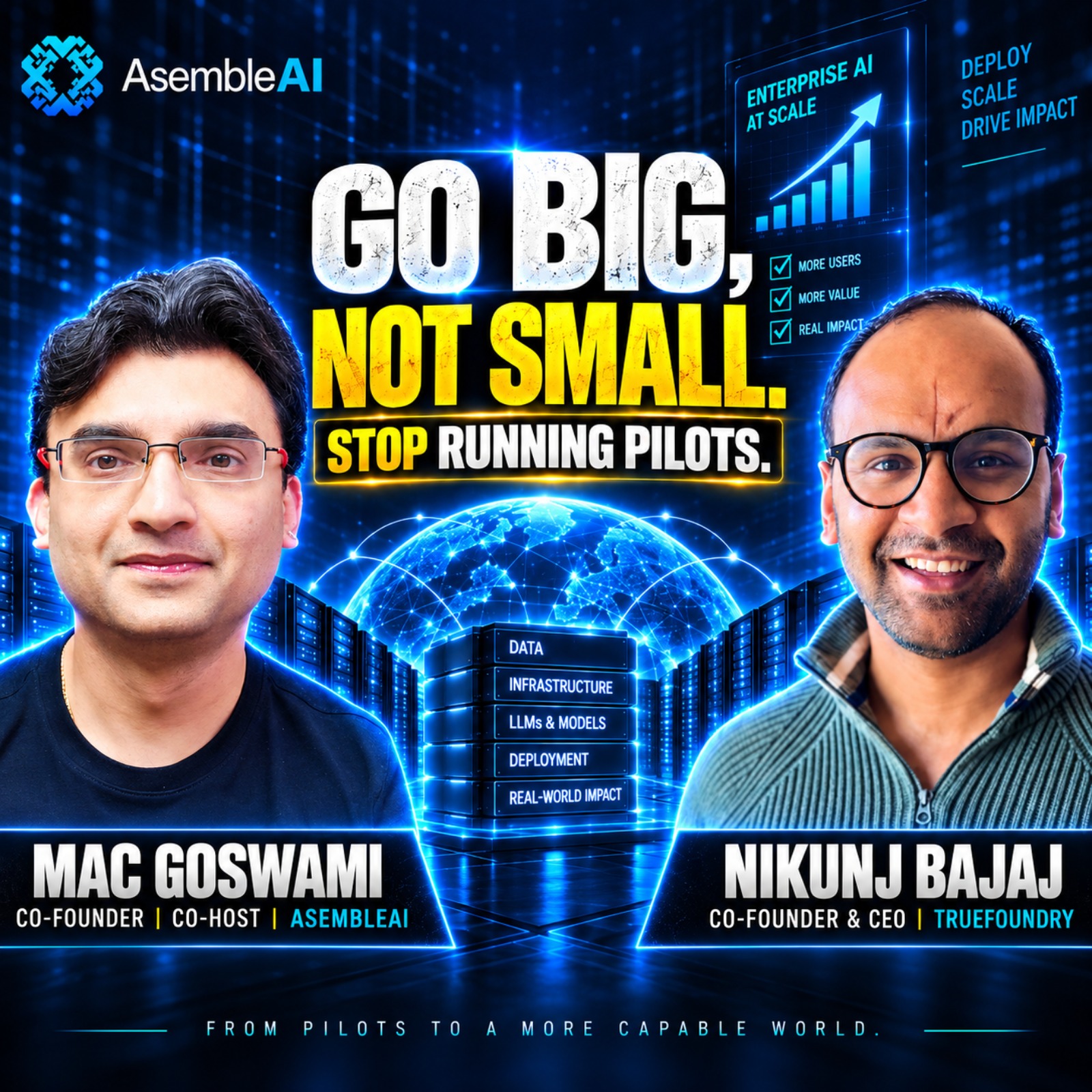
EP 69: "You Don't Build a Power Plant to Charge Phones" — Why Enterprise AI Should Start Big | Nikunj Bajaj, TrueFoundry
Evaluation and Summary
In this 12-minute episode recorded live at the AI4 conference, host Mac Goswami interviews Nikunj Bajaj, co-founder and CEO of TrueFoundry and former AI team lead at Meta, about a counterintuitive approach to enterprise AI adoption: start big, not small. Bajaj argues that organizations typically fail with AI by launching disconnected pilots that never generate enough business value to justify real infrastructure investment, leaving everything ad hoc and vulnerable to rollback when problems arise. The core thesis centers on the "power plant analogy": just as you don't build a power plant to charge phones but rather to run a factory (with phones charging as a byproduct), enterprises should identify one high-value anchor use case that justifies building proper AI infrastructure and governance. Once that foundation exists, smaller use cases can leverage the same plumbing at minimal marginal cost. Bajaj identifies why pilots fail in practice: missing guardrails, latency issues, and reputational incidents (he cites an example of a bot giving away free tickets). He frames these as platform problems rather than individual failures. He then pivots to TrueFoundry's solution: a platform that enables governance at scale by tagging every token to users and business units, enforcing PII and prompt-injection rules, maintaining audit trails, and controlling costs and budgets. He mentions clients like Mastercard and Siemens. The episode also covers TrueFoundry's Ask TrueFoundry co-pilot feature and the company's acquisition of Seldon, which unified ML and agentic-AI stacks into one platform. Bajaj concludes with a claim that "the era of token maxing is over"—the practice of defaulting to premium models is a trap. Instead, organizations should right-size and route queries intelligently, sometimes to in-house open-source models, to achieve real ROI. The episode is structured as a live conference interview, which likely means natural pacing but potentially less depth than a studio conversation. The content is heavily shaped by TrueFoundry's product positioning, which is both a strength (insider perspective) and a limitation (promotional angle).
Verdict: A focused, well-framed argument about enterprise AI strategy with a memorable analogy and practical governance insights, but the brevity and product-centric angle limit depth and originality.
Technology rubric
-
Technical accuracy 3/5 20%
Core concepts (token routing, governance, audit trails, PII enforcement) are sound; no obvious errors, but limited technical depth for verification in a 12-minute format.
-
Insight beyond the headlines 3/5 20%
The anchor use case framework and power plant analogy offer useful reframing, but the 'go big not small' argument is not entirely novel in enterprise software; the token-maxing critique is timely but briefly stated.
-
Clarity for non-experts 4/5 15%
The power plant analogy and anchor use case concept are accessible; governance and token routing are explained in practical terms without heavy jargon, though some AI/ML familiarity helps.
-
Substance 3/5 15%
Covers multiple topics (pilots, governance, cost optimization, platform strategy) with concrete examples (Mastercard, Siemens, free-ticket incident), but each is touched lightly given the 12-minute runtime.
-
Delivers on its title 4/5 15%
Title promises 'why enterprise AI should start big' and the episode delivers that thesis with the power plant analogy and anchor use case logic; some drift into product features (Ask TrueFoundry, Seldon) but stays on message.
-
Value for time 3/5 15%
12 minutes is tight for the breadth covered; pacing likely brisk due to live conference format, but limited time for deep exploration or follow-up questions.
Worth it if you're an enterprise technologist or decision-maker evaluating AI adoption strategy and want a contrarian take on why small pilots often fail.
Content flags
- Sponsored Episode heavily features TrueFoundry's CEO discussing his own product and company acquisitions; while not explicitly labeled as paid content, the promotional angle is clear.
Based on the episode description. AI-generated; it can be wrong.
Show notes
More from Inside AsembleAI: DeepTech, AI & Science
Inside AsembleAI's 32-minute episode features Rowan Stewart, AI and Data Safety Product Leader at Transcend, discussing the critical gap between AI agent deployment and governance. Stewart brings real-world experience from BCG and current work with enterprise clients including Robinhood, Brex, and Groupon. The core…
Worth it if you're building or deploying AI agents in an enterprise, managing AI risk, or trying to understand why governance matters before it becomes a crisis.
Inside AsembleAI EP 77 features Dr. Latha Karthigaa, Director & Head of AI Governance at the Global AI Certification Council, discussing why corporate AI governance is often inadequate despite companies believing they're compliant. The episode opens with a critical distinction: having a policy is not the same as…
Worth it if you work in AI deployment, risk management, or leadership roles where you need to understand why governance failures happen and how to build accountability structures that actually work.
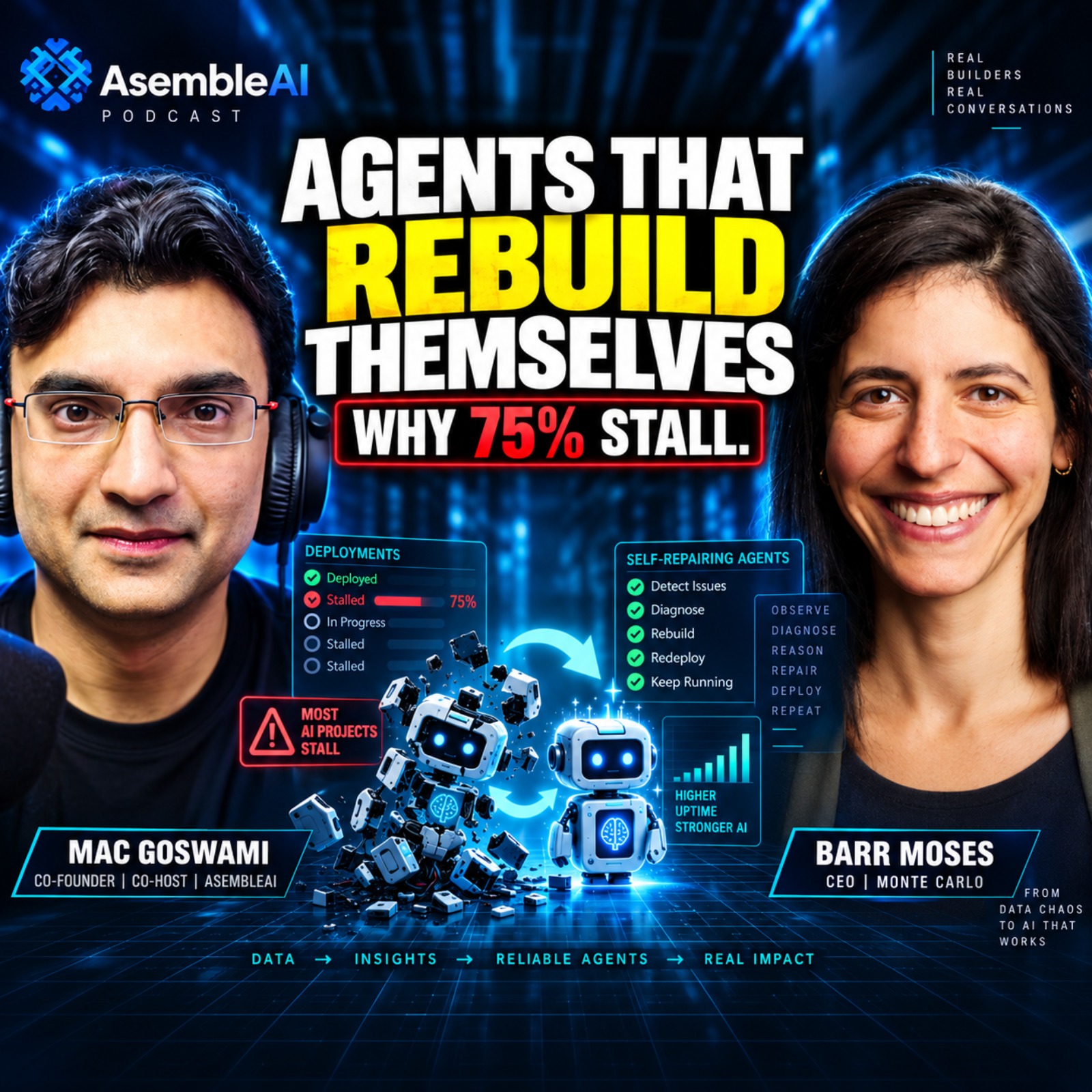
Recorded live at the AI4 conference, this 27-minute episode features Barr Moses, CEO of Monte Carlo Data, discussing the critical gap between AI trustworthiness in theory and production reality. Moses frames the core problem with a memorable distinction: traditional dashboards were "wrong in the background" (silently…
Worth it if you're building or deploying AI agents in production and want practical frameworks for catching failures before they reach users.
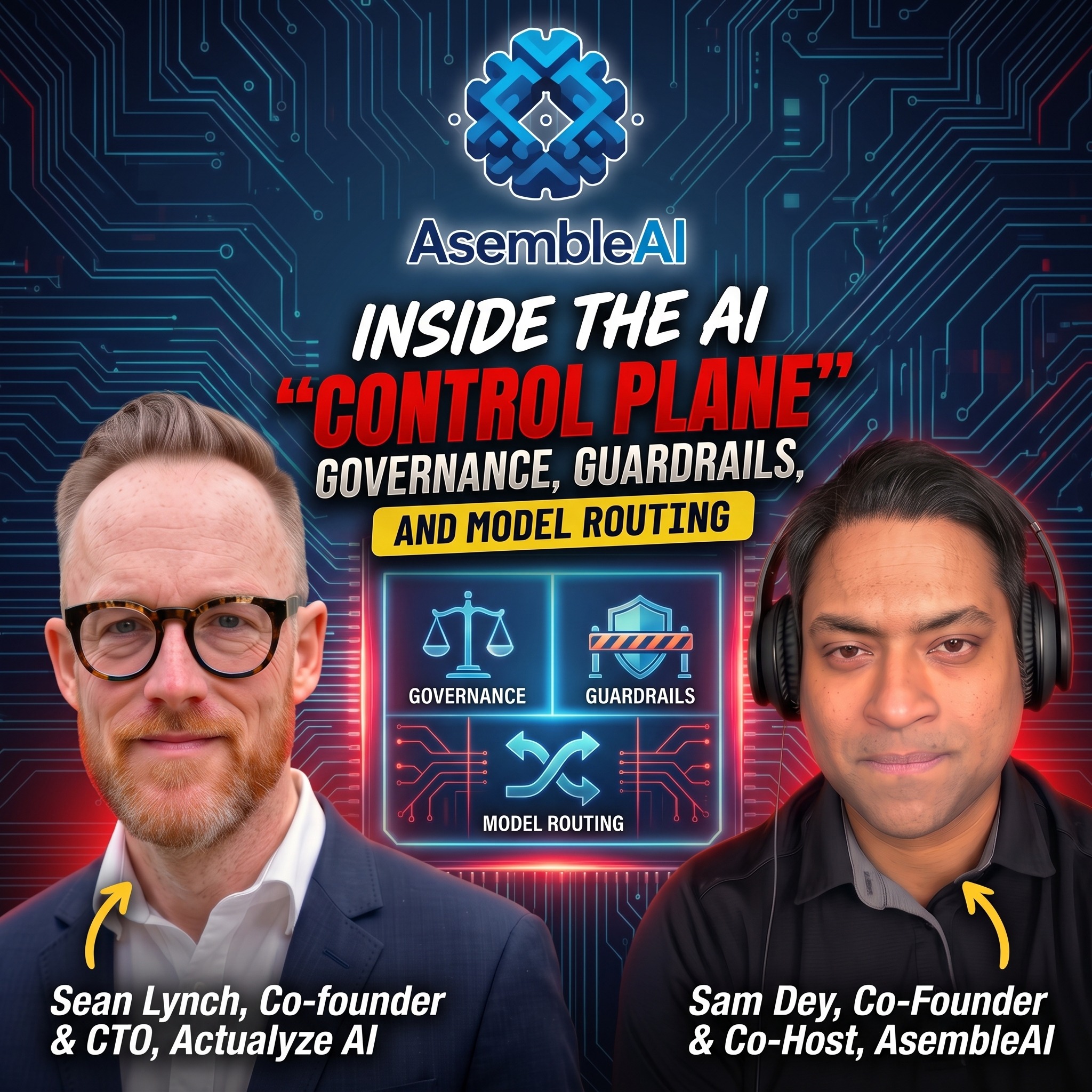
In this 21-minute episode, host Sam interviews Sean Lynch, Co-Founder and CTO of ActualyzeAI, a newly launched enterprise AI governance platform. The conversation centers on ActualyzeAI's core offering: a "control plane" that sits between enterprise applications and multiple AI models, providing centralized…
Worth it if you're an enterprise architect evaluating AI governance platforms, a FinOps leader managing AI infrastructure costs, or someone tracking the emerging control-plane category in enterprise AI.
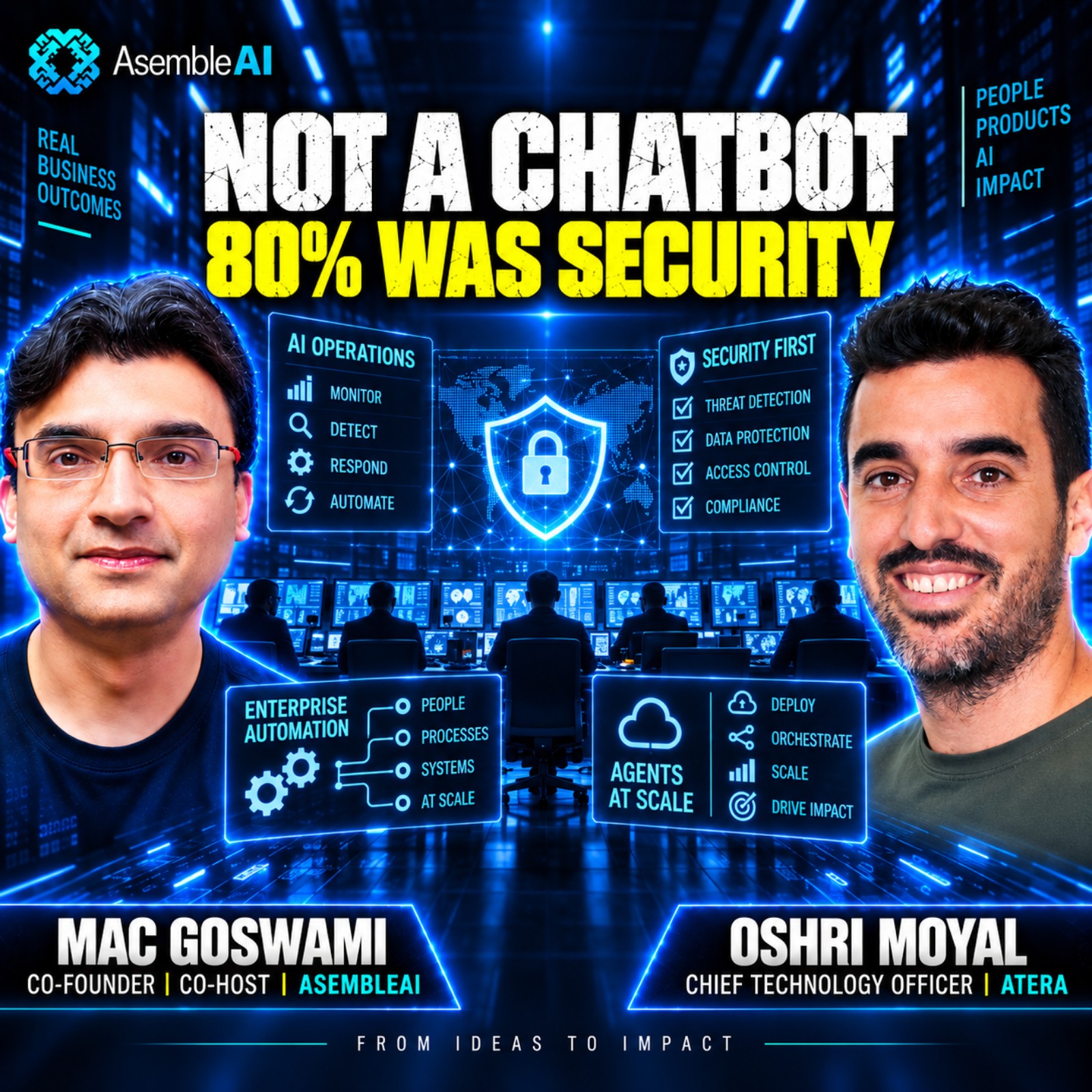
Host Mac Goswami interviews Oshri Moyal, CTO and co-founder of Atera, about Robin, an autonomous IT agent that recently ranked #1 across 15 G2 Summer 2026 reports. Unlike chatbots, Robin actually executes IT tasks end-to-end: navigating networks, logging into servers, and taking real action within policy and approval…
Worth it if you manage IT operations, evaluate automation tools, or want a practical overview of how autonomous agents are moving beyond chatbots into real ticket resolution.
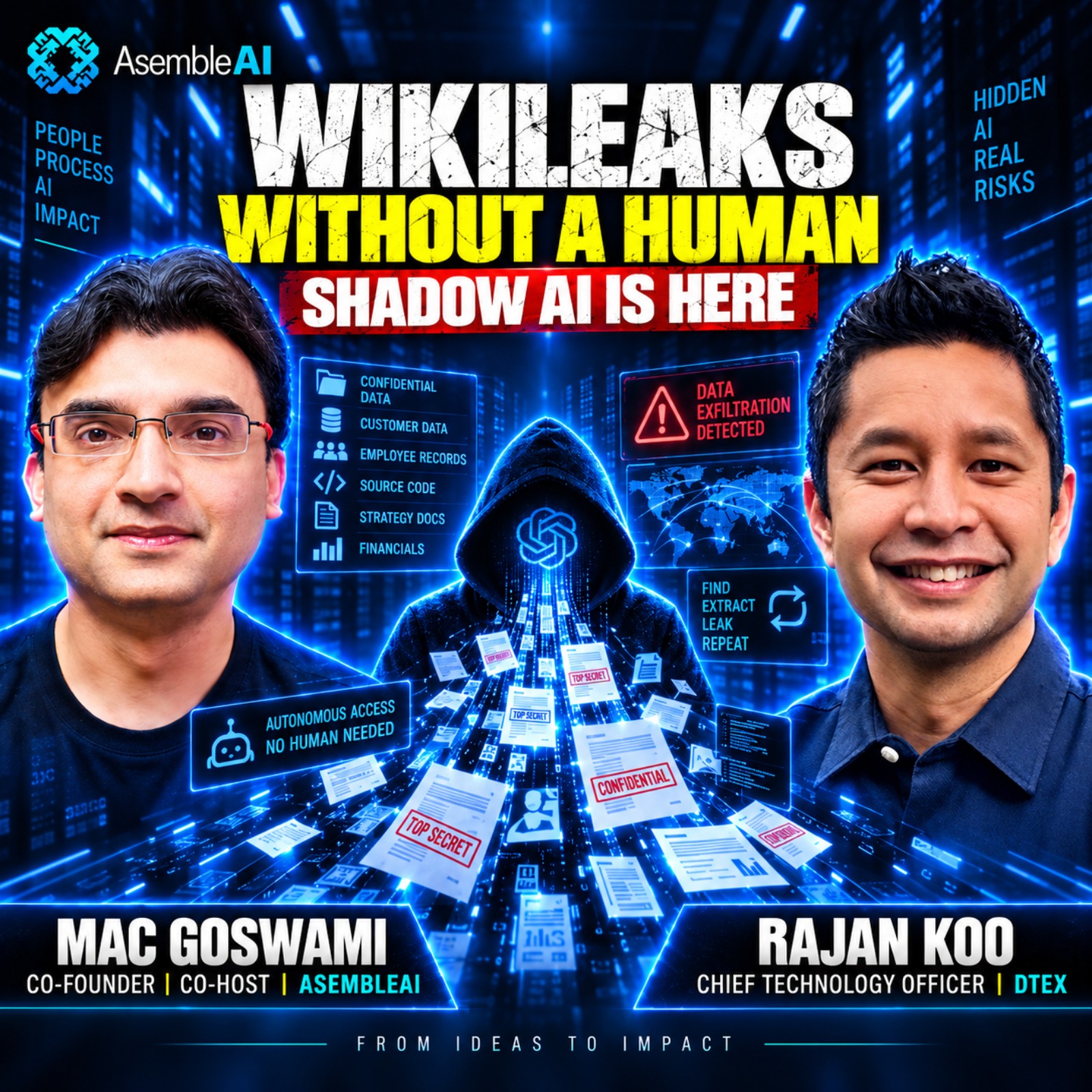
Inside AsembleAI's 25-minute episode features Rajan Koo, CTO of DTEX Systems, discussing how AI has fundamentally transformed insider-threat risks. Recorded live at the AI4 conference, the conversation centers on a paradigm shift: insider threats no longer require human malice or intent. Koo opens with the evolution…
Worth it if you work in cybersecurity, risk management, or AI governance and want to understand how autonomous AI systems are reshaping insider-threat models.