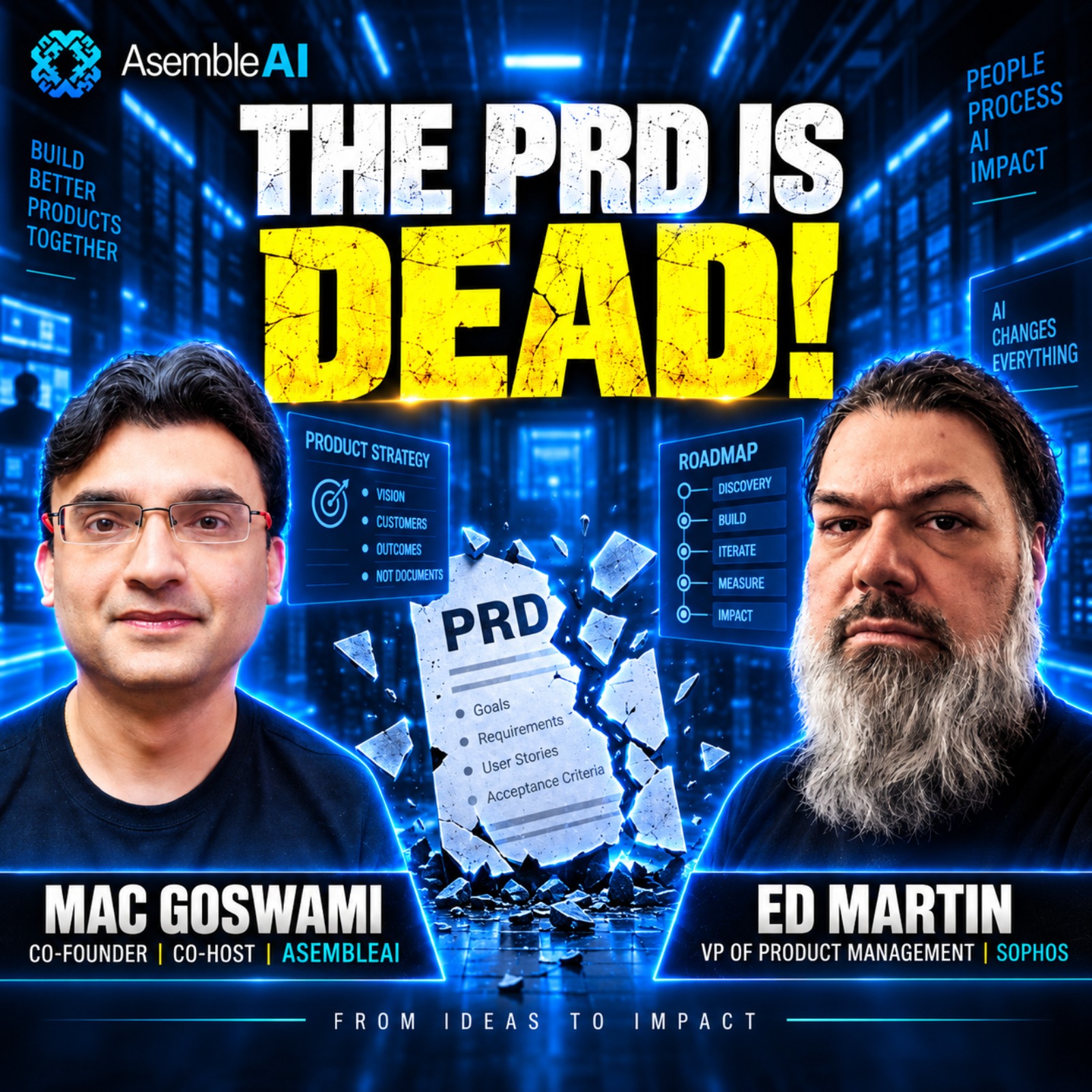
EP 71: The PRD Is Dead — What AI Just Did to Product Management & Cyber Defense | Ed Martin, Sophos
Evaluation and Summary
Recorded live at the AI4 conference, this 21-minute episode features Ed Martin, VP of Product Management for AI Strategy at Sophos, discussing two interconnected themes: how AI is reshaping cybersecurity defense and how it's fundamentally changing product management itself. On the cybersecurity side, Martin cuts through hype with a candid assessment: AI excels at reading and reasoning over large datasets but is "moderate to poor at taking action." He identifies where AI genuinely reduces analyst toil—summarization, pattern reasoning, alert triage—versus where it's oversold. A key insight is that attackers only need to succeed once, while defenders must be right 100% of the time, and AI amplifies attacker speed and reach by enabling lower-skill threat actors to operate faster. Martin illustrates this with a story of a regional bank overwhelmed by coordinated alerts. Sophos's strategic focus is protecting organizations "at or below the cybersecurity poverty line," prioritizing visibility and hygiene over hiring. Martin emphasizes the foundational sequence: inventory first, then controls, detection, and response—noting that most organizations mishandle data categorization and context. The episode's boldest claim is that "the PRD is dead." Martin argues that traditional weeks-long product requirements documents no longer fit the pace of AI-driven development. Instead, his two principal PMs each operate like small teams, doing "vibe-coding" live on customer calls. The real skill isn't knowing what to build—it's knowing what *not* to build, because scaling the chosen features demands all the effort. On trust and safety, Martin stresses that a single wrong non-deterministic AI output can destroy customer confidence, requiring "circuit breaker" human checkpoints to keep AI actions safe and bounded. The episode balances concrete cybersecurity doctrine with meta-commentary on how AI is reshaping the product discipline itself, offering both tactical and strategic perspectives from someone with 15+ years across Dell, Microsoft, and multiple security firms.
Verdict: A sharp, well-informed conversation that delivers on its dual promise with original insights (PRD death, poverty-line mission) and honest technical assessment, though the short runtime limits depth and some jargon may exclude newcomers.
Technology rubric
-
Technical accuracy 4/5 20%
Martin's assessment of AI capabilities (good at reading/reasoning, poor at action) is grounded and honest; cybersecurity fundamentals (inventory→controls→detection→response) are sound; no obvious errors, though depth is limited by format.
-
Insight beyond the headlines 4/5 20%
The 'PRD is dead' thesis and the shift to vibe-coding with customers is genuinely forward-looking; the attacker asymmetry framing and 'cybersecurity poverty line' mission are original angles not typical in mainstream coverage.
-
Clarity for non-experts 3/5 15%
Martin explains AI's role clearly (reading, reasoning, action) and cybersecurity sequencing is accessible, but terms like 'circuit breaker,' 'non-deterministic,' and 'analyst toil' assume some familiarity; mostly understandable but not dumb
-
Substance 3/5 15%
Two substantive topics (AI in defense + AI's impact on PM) are covered with concrete examples (regional bank story, vibe-coding) and a memorable quote, but 21 minutes limits depth; solid content with some compression.
-
Delivers on its title 4/5 15%
Title promises both 'AI & Science' (cybersecurity defense) and 'Product Management & Cyber Defense'; both are delivered, though 'Science' is more about applied security than research science.
-
Value for time 4/5 15%
21 minutes is tight for two topics; pacing appears efficient with no filler mentioned, though some stretches could be deeper; well-structured from hype-cutting to strategic takeaways.
Worth it if you're interested in how AI is actually being deployed in cybersecurity, how product management is evolving under AI pressure, or want a candid take from a seasoned security leader on what AI hype misses.
Based on the episode description. AI-generated; it can be wrong.
Show notes
More from Inside AsembleAI: DeepTech, AI & Science
Inside AsembleAI's 32-minute episode features Rowan Stewart, AI and Data Safety Product Leader at Transcend, discussing the critical gap between AI agent deployment and governance. Stewart brings real-world experience from BCG and current work with enterprise clients including Robinhood, Brex, and Groupon. The core…
Worth it if you're building or deploying AI agents in an enterprise, managing AI risk, or trying to understand why governance matters before it becomes a crisis.
Inside AsembleAI EP 77 features Dr. Latha Karthigaa, Director & Head of AI Governance at the Global AI Certification Council, discussing why corporate AI governance is often inadequate despite companies believing they're compliant. The episode opens with a critical distinction: having a policy is not the same as…
Worth it if you work in AI deployment, risk management, or leadership roles where you need to understand why governance failures happen and how to build accountability structures that actually work.
Recorded live at the AI4 conference, this 27-minute episode features Barr Moses, CEO of Monte Carlo Data, discussing the critical gap between AI trustworthiness in theory and production reality. Moses frames the core problem with a memorable distinction: traditional dashboards were "wrong in the background" (silently…
Worth it if you're building or deploying AI agents in production and want practical frameworks for catching failures before they reach users.
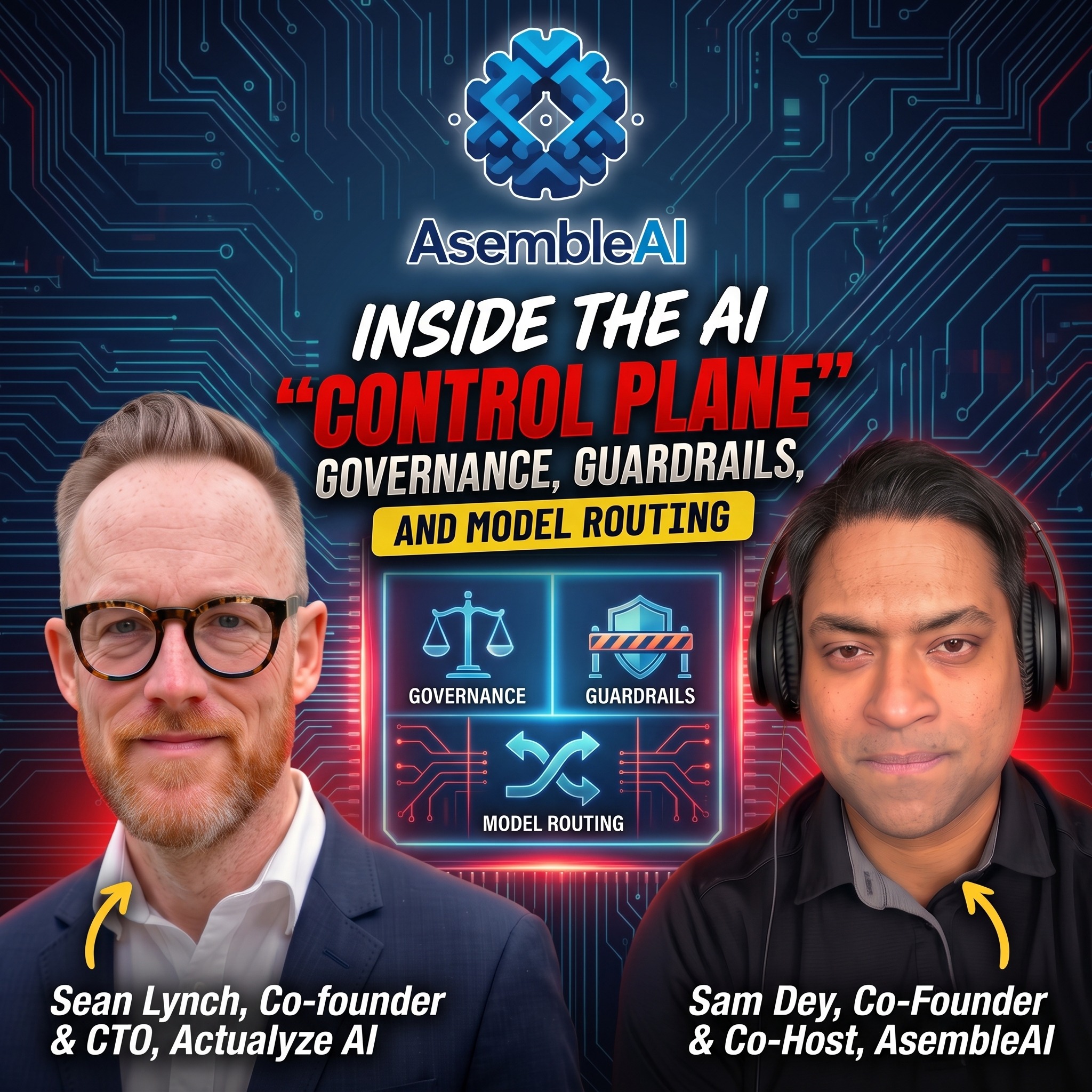
In this 21-minute episode, host Sam interviews Sean Lynch, Co-Founder and CTO of ActualyzeAI, a newly launched enterprise AI governance platform. The conversation centers on ActualyzeAI's core offering: a "control plane" that sits between enterprise applications and multiple AI models, providing centralized…
Worth it if you're an enterprise architect evaluating AI governance platforms, a FinOps leader managing AI infrastructure costs, or someone tracking the emerging control-plane category in enterprise AI.
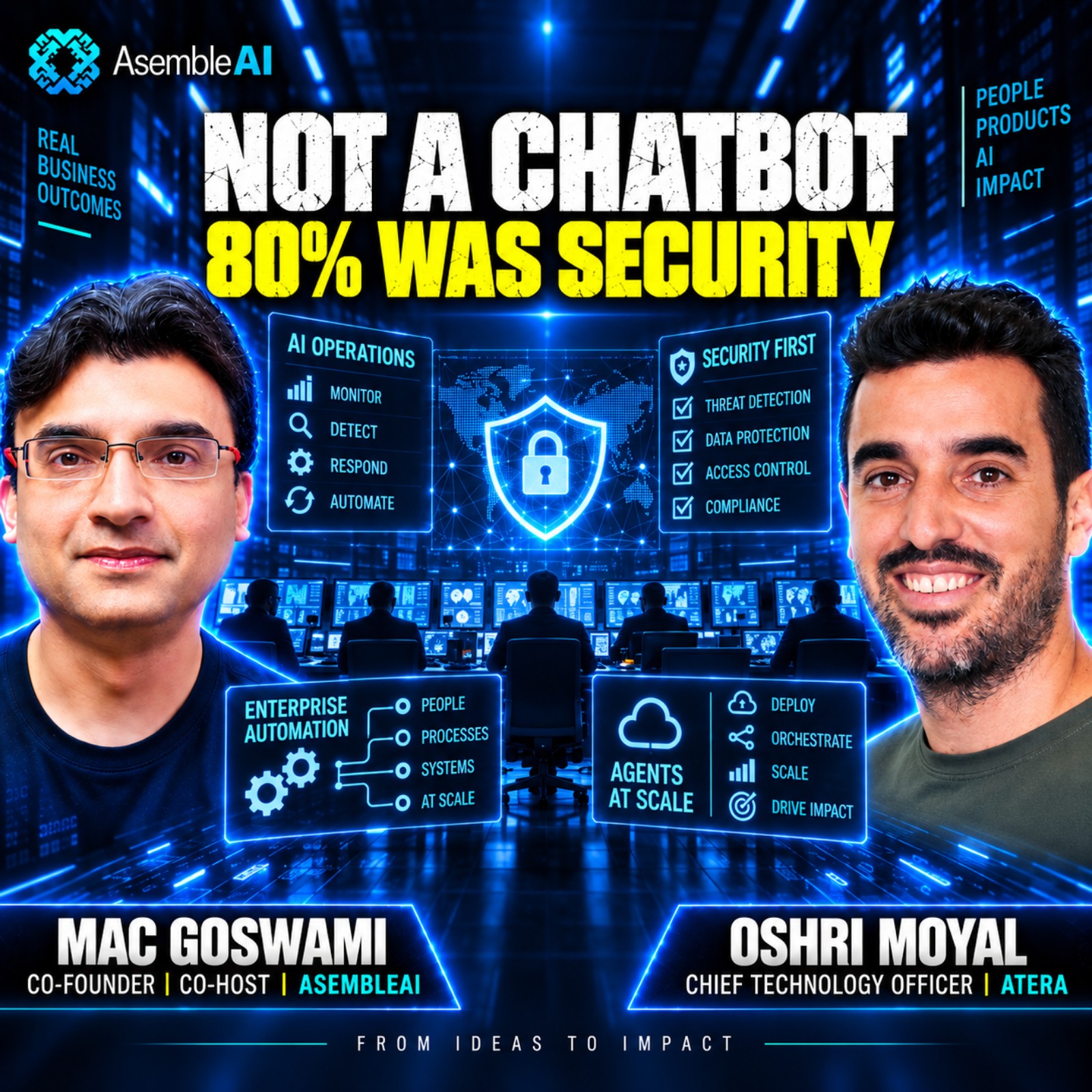
Host Mac Goswami interviews Oshri Moyal, CTO and co-founder of Atera, about Robin, an autonomous IT agent that recently ranked #1 across 15 G2 Summer 2026 reports. Unlike chatbots, Robin actually executes IT tasks end-to-end: navigating networks, logging into servers, and taking real action within policy and approval…
Worth it if you manage IT operations, evaluate automation tools, or want a practical overview of how autonomous agents are moving beyond chatbots into real ticket resolution.
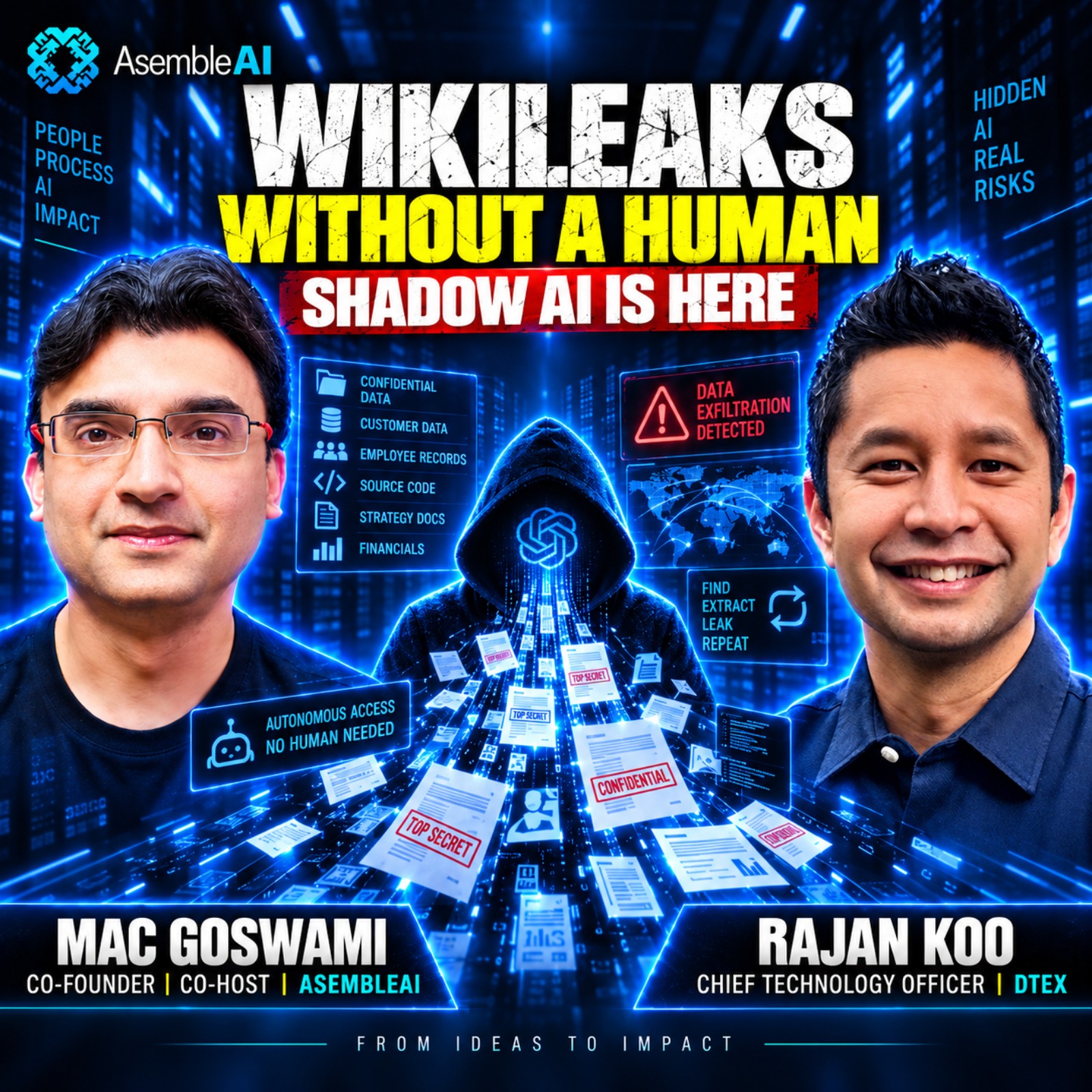
Inside AsembleAI's 25-minute episode features Rajan Koo, CTO of DTEX Systems, discussing how AI has fundamentally transformed insider-threat risks. Recorded live at the AI4 conference, the conversation centers on a paradigm shift: insider threats no longer require human malice or intent. Koo opens with the evolution…
Worth it if you work in cybersecurity, risk management, or AI governance and want to understand how autonomous AI systems are reshaping insider-threat models.