History's Living Voices: The Past, Told by Those Who Lived It
by HLV
History's Living Voices is the ultimate, immersive history podcast that delivers firsthand, first-person historical accounts direct from the source.
In every episode, we cut out the middleman and go straight to the primary documents: personal diaries, battlefield maps with handwritten orders, private letters, and last-will-and-testaments. Through these authentic, unfiltered voices, discover the true human behind the legend. Imagine a seasoned medieval knight storyteller, having just removed his helmet, guiding you through the troop positions in an ancient manuscript, his words grounded in…
This 23-minute episode presents primary source accounts from participants in the First Crusade (1096), drawing from two scholarly compilations: August C. Krey's 'The First Crusade: The Accounts of Eye-Witnesses and Participants' (1921) and Martha Evelyn McGinty's translation of Fulcher of Chartres' 'Chronicle of the…
Worth it if you want authentic medieval crusade accounts and don't mind commercial breaks interrupting a short documentary-style piece.
This 4-minute episode from History's Living Voices presents Tacitus' account of Christians from his Annals, written around 116 AD. The show notes indicate the episode features the oldest surviving Roman reference to Christianity, specifically Tacitus' description of Nero's persecution of Christians in 65 AD. According…
Worth it if you want a quick exposure to Tacitus' actual words on early Christianity, but not if you seek substantive historical analysis or context.
This episode presents an audio reading of the opening section of Procopius of Caesarea's 'History of the Wars of Justinian', a sixth-century historical text that documents the military campaigns of Byzantine Emperor Justinian I (r. 527–565). The episode is part of History Time's 'Living Voices' series, which aims to…
Worth it if you want to hear Procopius's own words read aloud and are already familiar with Late Antique history, or if you prefer unmediated primary sources over expert commentary.
This documentary traces Japan's rapid transformation from an isolated feudal society to a major world power between 1865 and 1905—a 40-year span that fundamentally reshaped the nation. The episode is structured chronologically through key phases: the end of the Edo period and opening to the world, Japan's initial…
Worth it if you want a comprehensive, academically-grounded overview of Japan's Meiji-era transformation and are comfortable with a straightforward documentary approach to history.
This 21-minute episode features a reading from Fukuzawa Yukichi's autobiography, specifically his first-hand account of visiting Europe after Japan's period of sakoku (forced isolation). The episode presents Fukuzawa's observations of England, France, Holland, and Russia during the 1862 Tokugawa Embassy—a historically…
Worth it if you're interested in Japanese history, cross-cultural perspectives on Western modernization, or primary source material from Japan's transformative Meiji era.
This 14-minute episode from History's Living Voices presents a historical account of Native American perspectives on first contact with Europeans, drawn from John Gottlieb Ernestus Heckewelder's 1770s ethnographic work 'History, manners, and customs of the Indian nations who once inhabited Pennsylvania and the…
Worth it if you're interested in early colonial history, Native American perspectives on European contact, or appreciate primary source material presented in audio form.
This episode presents Nostradamus' first 100 quatrains (the 'first century' of his prophecies) from the 16th century, read aloud without editorial commentary or interpretation. The show positions itself as a primary source archive, preserving historical texts in their original form. The episode is approximately 28…
Worth it if you're a Nostradamus enthusiast, primary source archivist, or someone who specifically wants the raw quatrains without interpretation—not for casual listeners seeking historical context or understanding.
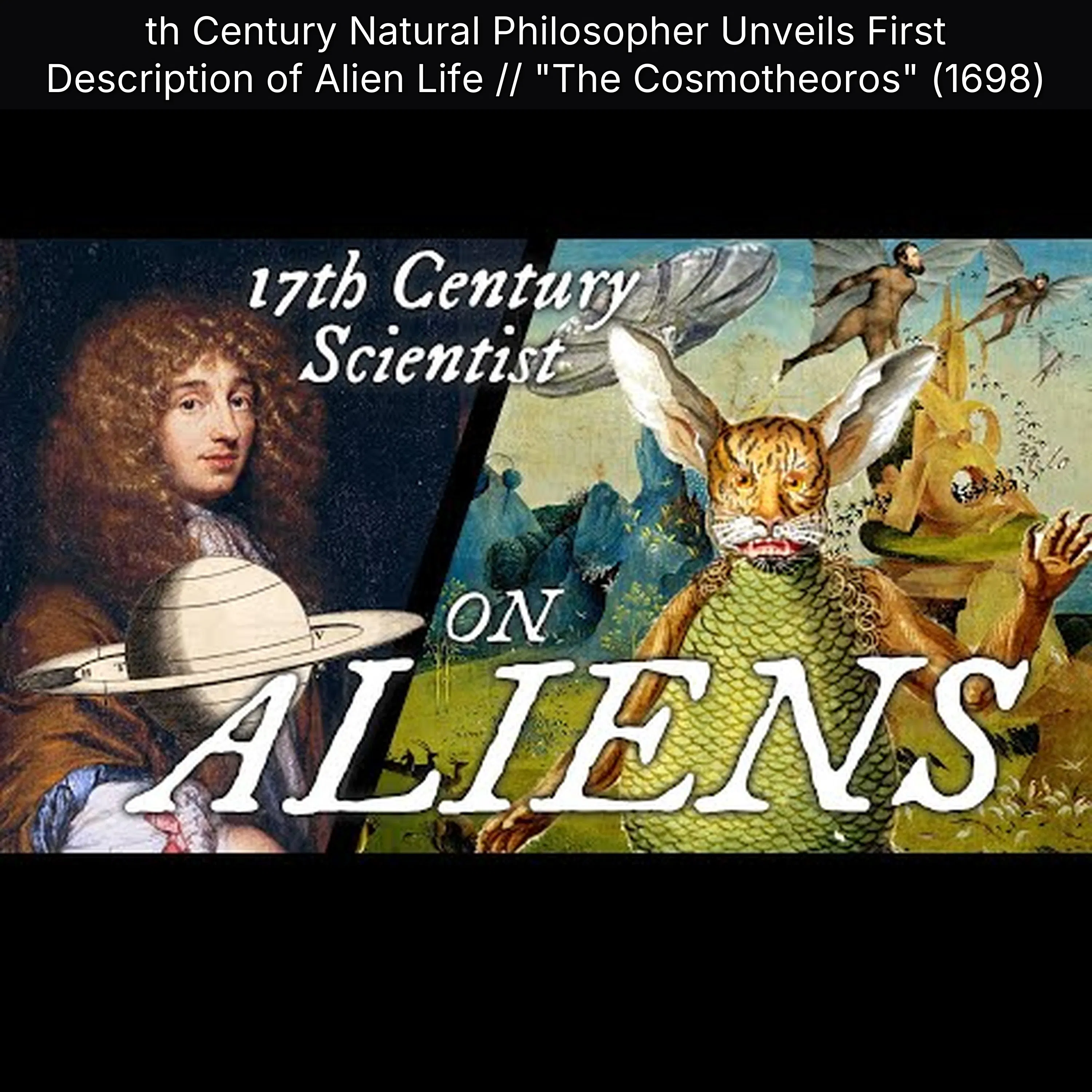
This 18-minute episode from History's Living Voices presents excerpts from Christiaan Huygens's 1698 work 'The Cosmotheoros' (full title: 'The Celestial Worlds Discover'd, or, Conjectures concerning the Inhabitants, Plants and Productions of the Worlds in the Planets'). The episode appears to feature direct readings…
Worth it if you're interested in early modern scientific speculation about extraterrestrial life or enjoy primary historical sources read aloud with period-appropriate production.
This 18-minute episode presents excerpts from Al-Jabarti's Chronicle, a firsthand account by Egyptian scholar Abd al-Rahman al-Jabarti documenting Napoleon's 1798 invasion of Egypt. The episode uses translated passages from al-Jabarti's historical record to convey the perspective of someone who witnessed the French…
Worth it if you want a direct, unfiltered Egyptian perspective on Napoleon's invasion and are comfortable with primary-source material that may require some historical background knowledge.
This 27-minute episode from History's Living Voices features a Roman historian discussing unusual and strange phenomena documented in the ancient world. The episode draws primarily from Pliny the Elder's 'Natural History,' a classical text compiled and presented by Dr. Raoul McLaughlin. The show notes indicate the…
Worth it if you're interested in classical Roman curiosities and Pliny the Elder's observations, and don't mind a brief, production-heavy segment on ancient oddities.
This is an extremely brief episode (4 minutes) from History's Living Voices that presents a direct historical quote from Ibn Rusta, a 10th-century Persian explorer and geographer. Ibn Rusta, born in Isfahan, authored the Book of Precious Records between 903-913 AD, a geographical compendium based on first-hand travel…
Worth it if you're a specialist researcher already familiar with Ibn Rusta seeking the exact primary text, but not for general history learners seeking understanding.
History's Living Voices presents a 24-minute exploration of 17th-century samurai philosophy and martial ethics through primary source material. The episode draws from the Natori-Ryu scrolls, a foundational samurai text, translated by Antony Cummins and Yoshie Minami. Rather than a conventional documentary, this is a…
Worth it if you want direct access to samurai philosophy from a historical source and appreciate dramatized readings of primary texts over conventional analysis.
This episode from History's Living Voices presents a 12-minute dramatized reading of passages from Herodotus, the ancient Greek proto-historian, focusing on his accounts of distant lands at the edge of the known world around 440 BC. The show notes indicate the episode covers Herodotus's descriptions of geographically…
Worth it if you want direct exposure to Herodotus's voice and are comfortable with classical Greek prose read aloud, or if you're researching ancient geographic knowledge.
This is a 4-minute episode from History's Living Voices, a channel dedicated to presenting primary source accounts from historical figures. The episode features an excerpt from Xenophon's *Anabasis*, the ancient Greek general's famous account of leading the Ten Thousand mercenaries home after a Persian civil war.…
Worth it if you want a brief, authentic taste of Xenophon's voice on ancient ruins or are already familiar with the *Anabasis* and want a dramatic reading.
This 8-minute episode is part of 'History's Living Voices,' a series that recreates historical accounts word-for-word from primary sources, accompanied by period-appropriate music and imagery. The episode focuses on the War Scroll, one of the Dead Sea Scrolls—a collection of ancient manuscripts discovered near the…
Worth it if you want a brief, dramatized taste of the War Scroll text rather than scholarly analysis or historical context.
History's Living Voices presents a 24-minute audio dramatization of five first-person narratives drawn from primary historical sources about Roman military conquests and conflicts. The episode features readings of accounts from Polybius (quoted in Plutarch), Caesar's Alexandrian Wars, Flavius Josephus, Ammianus…
Worth it if you're a Roman history enthusiast who values hearing ancient voices directly and don't need scholarly analysis or deep contextual explanation.
This episode from 'History's Living Voices' covers the Magna Carta, the famous 1215 charter of rights agreed to by King John of England. The show notes provide a comprehensive historical overview: the document was drafted by the Archbishop of Canterbury to resolve civil unrest between the unpopular king and rebel…
Worth it if you want a quick, accessible overview of Magna Carta's history and reissues, but not if you expect genuine primary source narratives or expert analysis.
History's Living Voices presents a 27-minute exploration of how ancient civilizations perceived and described the edges of the known world. The episode draws from primary historical texts spanning over 800 years and multiple continents, organized chronologically by source rather than geography.
The episode opens with…
Worth it if you enjoy ancient history, primary source material, and how different civilizations perceived each other across vast distances and time periods.
This 14-minute episode presents five historical accounts of unusual aerial phenomena spanning from 74 BC to 1896, framed as "UFO sightings" from primary sources. The episode opens with Plutarch's account of strange objects in the sky during the Mithridatic Wars, moves to the famous 1561 Nuremberg celestial phenomenon…
Worth it if you enjoy quirky historical trivia and don't mind light entertainment over substantive exploration, or if you want to sample primary sources on unexplained phenomena.
This 7-minute episode from History's Living Voices presents the story of Leif Erikson's voyage to America around 999 AD, drawing from Icelandic sagas. The show notes explain that Leif, son of Erik the Red, is credited with being the first European to make landfall in America (though Bjarni Herjólfsson reportedly saw…
Worth it if you enjoy brief, accessible retellings of Viking history and don't mind prioritizing narrative entertainment over scholarly depth.
This 21-minute episode presents Ibn Fadlan's 10th-century eyewitness account of the Rus' Vikings encountered along the Volga River in 921 AD. Ibn Fadlan, an Arab diplomat on embassy to the Volga Bulgars, provided one of the earliest and most detailed written descriptions of Viking culture by a contemporary observer.…
Worth it if you're interested in Viking history, primary sources, or medieval cross-cultural encounters, and you're comfortable engaging with 10th-century Arab observations without modern editorial guidance.
This 17-minute episode from History's Living Voices presents a primary source reading from the 13th-century Chinese text 'Zhu Fan Zhi' (Records of Foreign Peoples), specifically the section by Chau Ju-Kua documenting Chinese and Arab trade during the 12th-13th centuries. The episode appears to focus on how a medieval…
Worth it if you're interested in medieval cross-cultural perspectives on Islam and have patience for primary-source material without knowing how well it's contextualized.
This 9-minute episode presents a dramatic reading of Hanno the Navigator's account, a primary source document from 5th-century BC Carthage describing an explorer's voyage along the West African coast. The episode frames this as part of 'History's Living Voices,' a series dedicated to recreating historical accounts…
Worth it if you want a dramatic introduction to an ancient text or are part of the #ProjectAfrica community, but not if you seek scholarly context or detailed historical analysis.
This 8-minute episode presents a direct reading from Julius Caesar's 'Commentaries on the Gallic Wars' (58-49 BC), specifically focusing on Caesar's account of the Druids during his military campaigns in Gaul. The show is part of 'History's Living Voices,' a channel dedicated to recreating primary historical sources…
Worth it if you're studying Caesar, the Gallic Wars, or Druidic history, and want to hear the source material directly rather than through modern interpretation.