
What Happens When You Stop Fighting Your Diagnosis? Bipolar Disorder, Mental Health Recovery & Acceptance with Reza Ghaemi
Evaluation and Summary
Notes from the Edge hosts Lisa Lacy in conversation with Reza Ghaemi, author of "Bipolar Is My Superpower" and host of The Rez Podcast, exploring his journey with Bipolar I Disorder. The episode centers on Ghaemi's transformation from fighting and denying his diagnosis to accepting it as a catalyst for recovery and self-awareness. Key topics include his experiences with mania, psychosis, and hospitalization, as well as his initial resistance to treatment. The conversation addresses the critical shift from shame and stigma toward ownership of his story, examining how acceptance—rather than romanticizing the condition—became foundational to building resilience and recovery skills. The episode digs into practical dimensions of living with bipolar disorder: medication and treatment approaches, the role of sleep in managing symptoms, and concrete recovery strategies. Ghaemi and Lacy also explore the interpersonal challenges of disclosure, discussing how to navigate conversations about mental health in professional settings, dating, and relationships. The framing of bipolar as a "superpower" is explicitly contextualized not as glorifying mania or psychosis, but as recognizing the self-awareness, resilience, and responsibility developed through recovery. Additional themes touched on include the role of faith, family support systems, and the psychological shift from hiding one's story to owning it publicly. The episode promises an "honest, funny, and deeply human conversation," suggesting Ghaemi brings both vulnerability and levity to serious subject matter. At 39 minutes, the format appears designed for accessible, focused discussion rather than exhaustive clinical depth. The episode positions acceptance as a turning point—a reframing of surrender into empowerment—which serves as the thematic spine connecting personal narrative to practical recovery insights.
Verdict: A thoughtful, well-framed conversation with a credible guest offering a recontextualized perspective on bipolar disorder recovery, though the compressed runtime may limit substantive depth on its many topics.
Society & Culture rubric
-
Fresh perspective 4/5 20%
The 'superpower' framing recontextualizes bipolar disorder from purely pathological to encompassing resilience and self-awareness, offering a counternarrative to typical mental health discourse without romanticizing symptoms.
-
Storytelling and voices 4/5 20%
Two engaged hosts discussing lived experience with promise of 'honest, funny, and deeply human' conversation suggests strong personal narrative and relational dynamic, though source material doesn't detail specific stories or anecdotes.
-
Thoughtfulness 4/5 15%
The episode explicitly distinguishes between acceptance and romanticization, addresses stigma and shame with nuance, and explores multifaceted dimensions (medication, faith, relationships, disclosure) rather than offering simplistic takes.
-
Substance 3/5 15%
Show notes outline substantial topics (mania, psychosis, hospitalization, medication, disclosure, recovery skills) but 39 minutes limits depth; unclear how thoroughly each area is explored versus mentioned.
-
Delivers on its title 5/5 15%
Title promises exploration of acceptance as recovery catalyst; show notes confirm this is the central arc, with Ghaemi's journey from fighting to accepting his diagnosis as the organizing principle.
-
Value for time 3/5 15%
39 minutes is reasonable for a focused conversation but covering mania, hospitalization, medication, disclosure, faith, and relationships may result in surface-level treatment of complex topics.
How we score Society & Culture
Worth it if you're navigating bipolar disorder, interested in mental health acceptance frameworks, or seeking honest conversations about living with serious psychiatric conditions.
Based on the episode description. AI-generated; it can be wrong.
Show notes
More from Notes from the Edge

Lisa Lacy interviews Kristen Renee Appleby, author and founder of The Rebuild Collective, about the intersection of burnout, autoimmune illness, and high-achiever culture. The core premise is that the drive to push through, perform, and achieve—traits that often lead to success—can become unsustainable when the body…
Worth it if you're a high-achiever experiencing burnout or autoimmune symptoms and want to explore the mind-body-environment connection from someone who's lived it.

Lisa Lacy interviews Jenna Schutt, a former cardiac nurse and stem cell transplant survivor, about living with chronic illness while maintaining an outward appearance of capability. Jenna was diagnosed with a rare, incurable disease at 30 while raising two young children, enduring ten rounds of chemotherapy, serious…
Worth it if you live with chronic illness, care for someone who does, struggle with performing strength, or want to understand the psychological toll of medical trauma and identity loss.
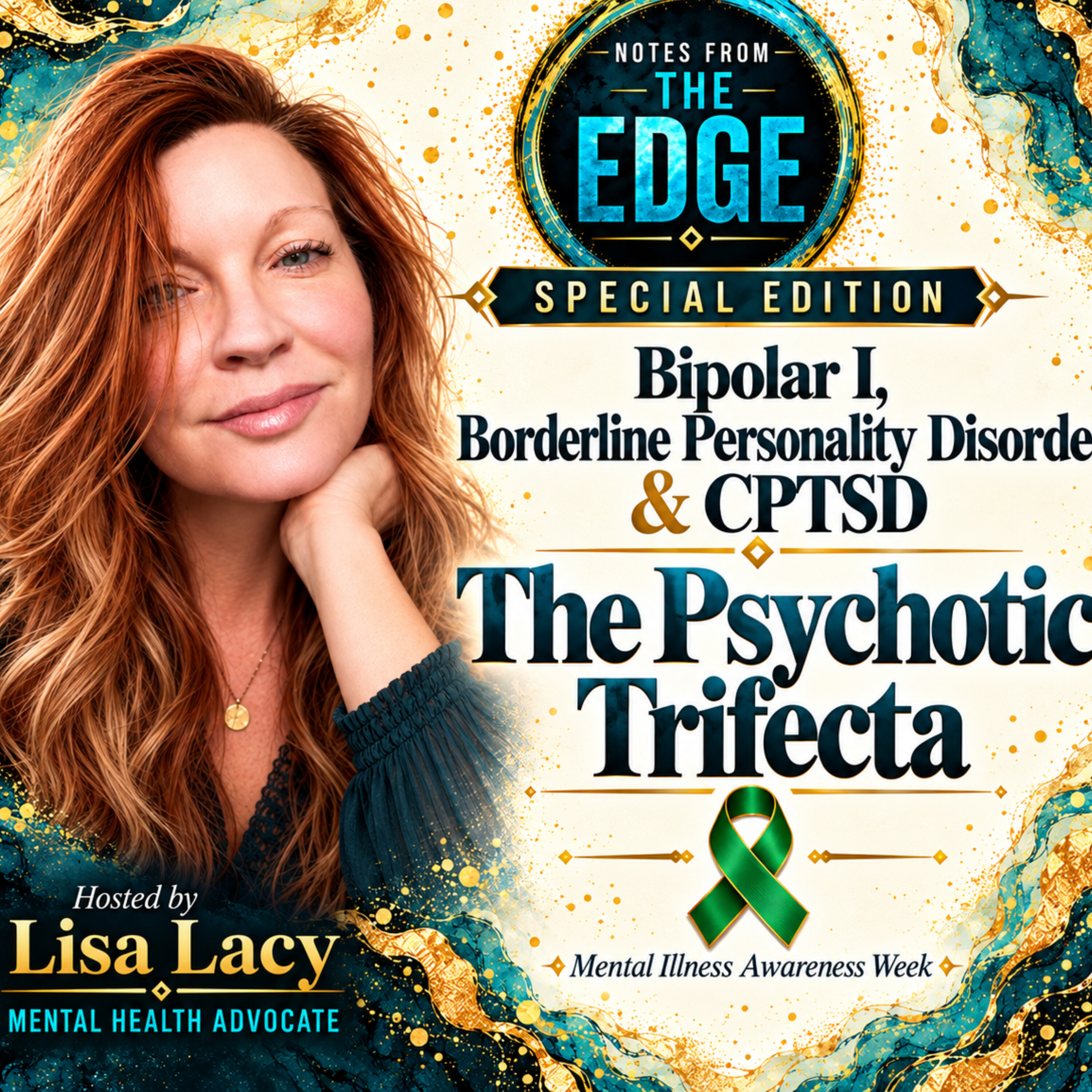
Notes from the Edge presents a special Mental Health Awareness Week episode featuring host Lisa Lacy discussing her lived experience with Bipolar I Disorder, Borderline Personality Disorder, and Complex PTSD—what she calls 'the Psychotic Trifecta.' Rather than offering clinical instruction, Lacy centers personal…
Worth it if you're seeking authentic first-person accounts of mental illness, want to understand psychosis beyond clinical definitions, or are navigating similar diagnoses and need validation that high functionality doesn't equal wellness.

Notes from the Edge hosts Lisa Lacy in conversation with Amy Lenius, a personal development coach and Director of Group Coaching at Next Level University. The episode reframes success as something built from within rather than chased externally, centering on three pillars: self-worth, self-belief, and consistency. Amy…
Worth it if you're interested in reframing success around internal alignment rather than external achievement, or if you resonate with chronic illness narratives and identity reconstruction.

Lisa Lacy interviews Dr. Eric Anderson, a neurologist and CMO at Lin Health, about chronic back pain and alternatives to surgery. The core premise challenges a common assumption: that pain intensity correlates with structural damage visible on MRI scans. Dr. Anderson explains central sensitization—how the nervous…
Worth it if you have chronic back pain, are considering back surgery, or want to understand how the nervous system amplifies pain signals beyond structural damage.

Lisa Lacy's 10-minute Edge Note examines the shadow side of positivity culture—specifically how the relentless push to 'look for the good,' practice gratitude, forgive, and trust that everything happens for a reason can become a form of spiritual bypassing that actually prevents healing and growth. The episode…
Worth it if you've felt pressured by positivity culture to suppress legitimate pain, or if you're curious about spiritual bypassing and how acceptance differs from resignation.