Science of Scale-Up
Evaluation and Summary
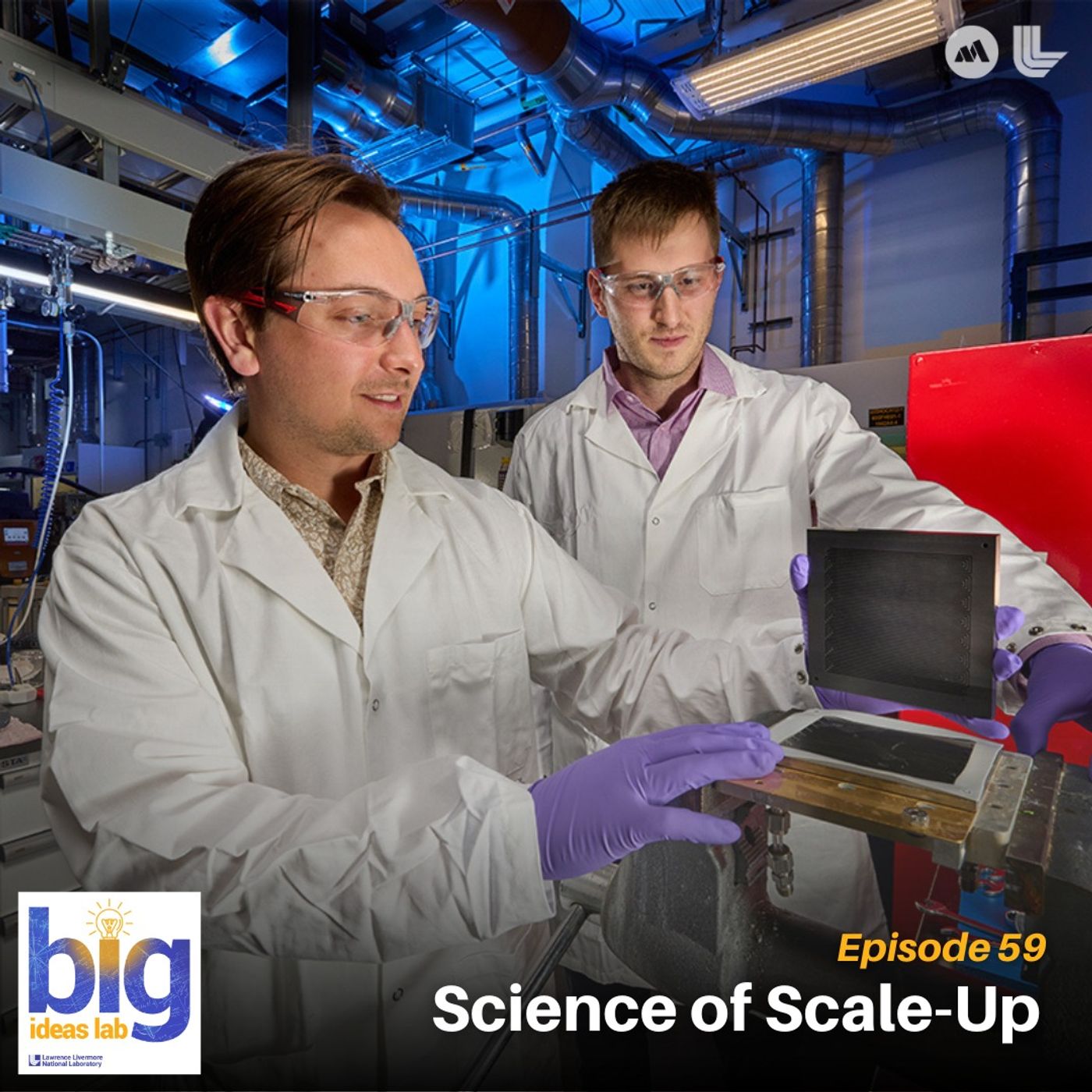
Big Ideas Lab's 'Science of Scale-Up' explores the often-overlooked gap between laboratory breakthroughs and real-world deployment. The episode features Lawrence Livermore National Laboratory (LLNL) researchers Sarah Baker (Group and Program Leader for Carbon Technologies) and Andrew Wong (Materials Scientist) discussing how promising scientific discoveries can take decades to become usable technologies. The core premise addresses a critical challenge in innovation: moving from successful experiments to scalable, durable, cost-effective products that can be manufactured reliably. The episode frames scale-up as a multidisciplinary challenge involving durability testing, cost optimization, manufacturing feasibility, and performance validation. Key themes include unexpected changes in material or system performance when scaling up, risk assessment strategies, and how LLNL combines modeling, experimentation, and industry partnerships to accelerate this transition. The 20-minute format suggests a focused exploration rather than an exhaustive deep-dive. The production credits indicate professional audio design and scripting, suggesting a polished narrative approach rather than a raw interview format.
Verdict: A professionally produced episode addressing a genuinely important but underexplored topic, though the short runtime and lack of detailed content evidence prevent a higher confidence rating.
Science rubric
-
Scientific accuracy 3/5 20%
Show notes describe legitimate LLNL expertise and real scale-up challenges (durability, cost, manufacturing, performance changes), but without episode content we cannot verify specific claims or depth of technical accuracy.
-
Clarity for non-experts 3/5 20%
The framing of scale-up as a bridge between lab and real world is conceptually accessible, though actual clarity depends on how technical the episode becomes—not evident from notes alone.
-
Sense of discovery 3/5 15%
The topic itself—that scale-up is a distinct scientific discipline with its own challenges—offers fresh perspective for general audiences, though originality within science communication cannot be fully assessed from notes.
-
Substance 3/5 15%
Notes promise coverage of multiple substantive areas (durability, cost, manufacturing, risk assessment, modeling, partnerships), suggesting solid content density, but 20 minutes limits depth on each.
-
Delivers on its title 4/5 15%
Title 'Science of Scale-Up' directly matches the episode's stated focus on how LLNL applies scientific methods to scale breakthroughs; notes align well with title promise.
-
Value for time 3/5 15%
20 minutes is tight for covering durability, cost, manufacturing, and risk assessment with two guests; likely efficient but may sacrifice depth for breadth.
Worth it if you're interested in how scientific breakthroughs become real products, or curious about the hidden engineering challenges between lab and market.
Based on the episode description. AI-generated; it can be wrong.
Show notes
More from Big Ideas Lab

Big Ideas Lab explores rare-earth elements (REEs)—materials critical to modern technology like smartphones, electric vehicles, and military hardware—and why the U.S. faces a supply chain crisis despite these elements being relatively abundant in the Earth's crust. The core problem isn't scarcity of the raw materials…
Worth it if you want a quick, accessible primer on why rare-earth elements matter and how cutting-edge science might solve America's supply-chain vulnerability.
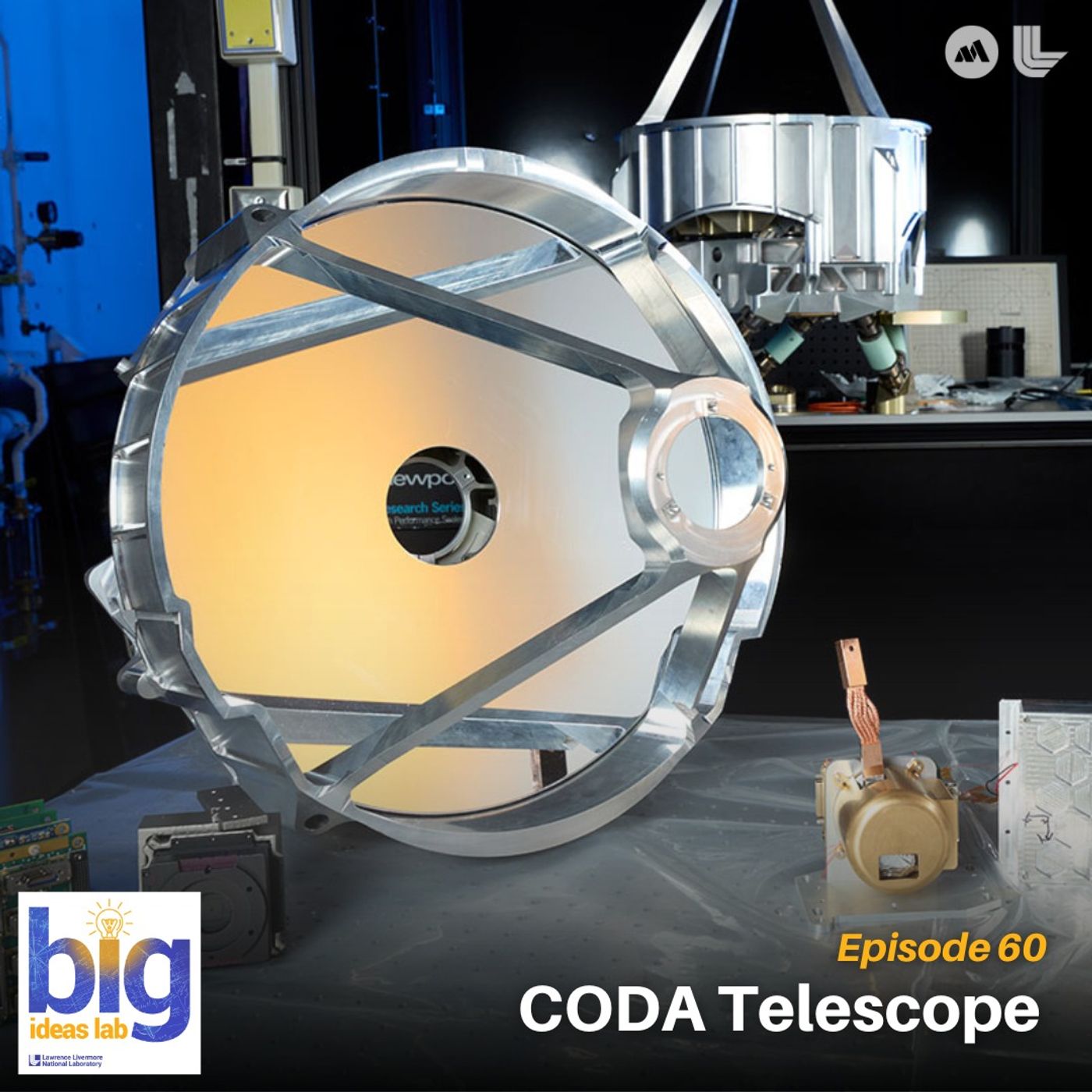
Big Ideas Lab explores how Lawrence Livermore National Laboratory revolutionized space telescope design through the CODA (Coronagraph Optical Design for Astrophysics) telescope. Rather than pursuing the traditional aerospace approach of building exquisite, one-of-a-kind instruments with no margin for error, LLNL…
Worth it if you're interested in how practical engineering thinking can unlock innovation in aerospace, or curious about how NASA missions actually become feasible.