
Rare Earth Elements
Evaluation and Summary
Big Ideas Lab explores rare-earth elements (REEs)—materials critical to modern technology like smartphones, electric vehicles, and military hardware—and why the U.S. faces a supply chain crisis despite these elements being relatively abundant in the Earth's crust. The core problem isn't scarcity of the raw materials themselves, but the extreme difficulty of extracting and separating them from ore, a process so chemically complex that America has outsourced nearly all production to other nations, primarily China. The episode features two experts from Lawrence Livermore National Laboratory: Scott McCall, a materials physicist and group leader in actinide and lanthanide science, and Dan Park, who leads the Synthetic Biology Group. Together they discuss two promising approaches to solving this challenge. First, scientists are studying how nature has already solved rare-earth separation over millions of years of evolution—essentially reverse-engineering biological systems to inform new extraction methods. Second, researchers are developing novel materials that could make currently overlooked or less-valuable rare-earth elements economically viable, thereby expanding the usable supply and reducing dependence on a narrow range of elements. The episode frames this as a national security and economic resilience issue: rebuilding a domestic rare-earth supply chain from scratch. The 21-minute format suggests a focused, accessible deep-dive rather than an exhaustive technical treatise. Key takeaways appear to be: (1) rare-earth scarcity is a processing problem, not a geological one; (2) biomimicry and synthetic biology offer concrete pathways forward; (3) materials innovation could reshape which elements are economically valuable; (4) this is solvable with the right scientific approach and investment.
Verdict: A well-produced, timely episode with credible experts that clearly explains a real problem and promising solutions; solid science communication held back slightly by its brevity and the familiar nature of the supply-chain challenge itself.
Science rubric
-
Scientific accuracy 4/5 20%
Framing is sound (REEs abundant but hard to separate; U.S. supply chain dependency real), and guests are credentialed experts from a national lab; no obvious errors in the description, though depth cannot be verified from notes alone.
-
Clarity for non-experts 4/5 20%
The show notes explain the paradox clearly (abundant but hard to extract) and ground it in relatable examples (phones, EVs); 21 minutes suggests accessible pacing without oversimplification.
-
Sense of discovery 3/5 15%
The biomimicry angle and materials innovation approach are interesting, but rare-earth supply challenges and China's dominance are well-known; the episode appears to offer fresh solutions rather than entirely new insights.
-
Substance 3/5 15%
Two expert guests and a focused topic suggest solid content, but 21 minutes is brief; likely covers main ideas without extensive detail or case studies.
-
Delivers on its title 5/5 15%
Title 'Rare Earth Elements' is directly addressed; the episode explains what they are, why they matter, and how scientists are solving the supply problem—fully on-topic.
-
Value for time 4/5 15%
21 minutes is tight for a complex topic; the structure (problem + two solution approaches) suggests efficient pacing, though brevity may limit depth.
Worth it if you want a quick, accessible primer on why rare-earth elements matter and how cutting-edge science might solve America's supply-chain vulnerability.
Content flags
- Sponsored Episode is produced in partnership with Lawrence Livermore National Laboratory, the source of both experts and likely the research being highlighted; no ads detected, but institutional affiliation should be noted.
Based on the episode description. AI-generated; it can be wrong.
Show notes
More from Big Ideas Lab
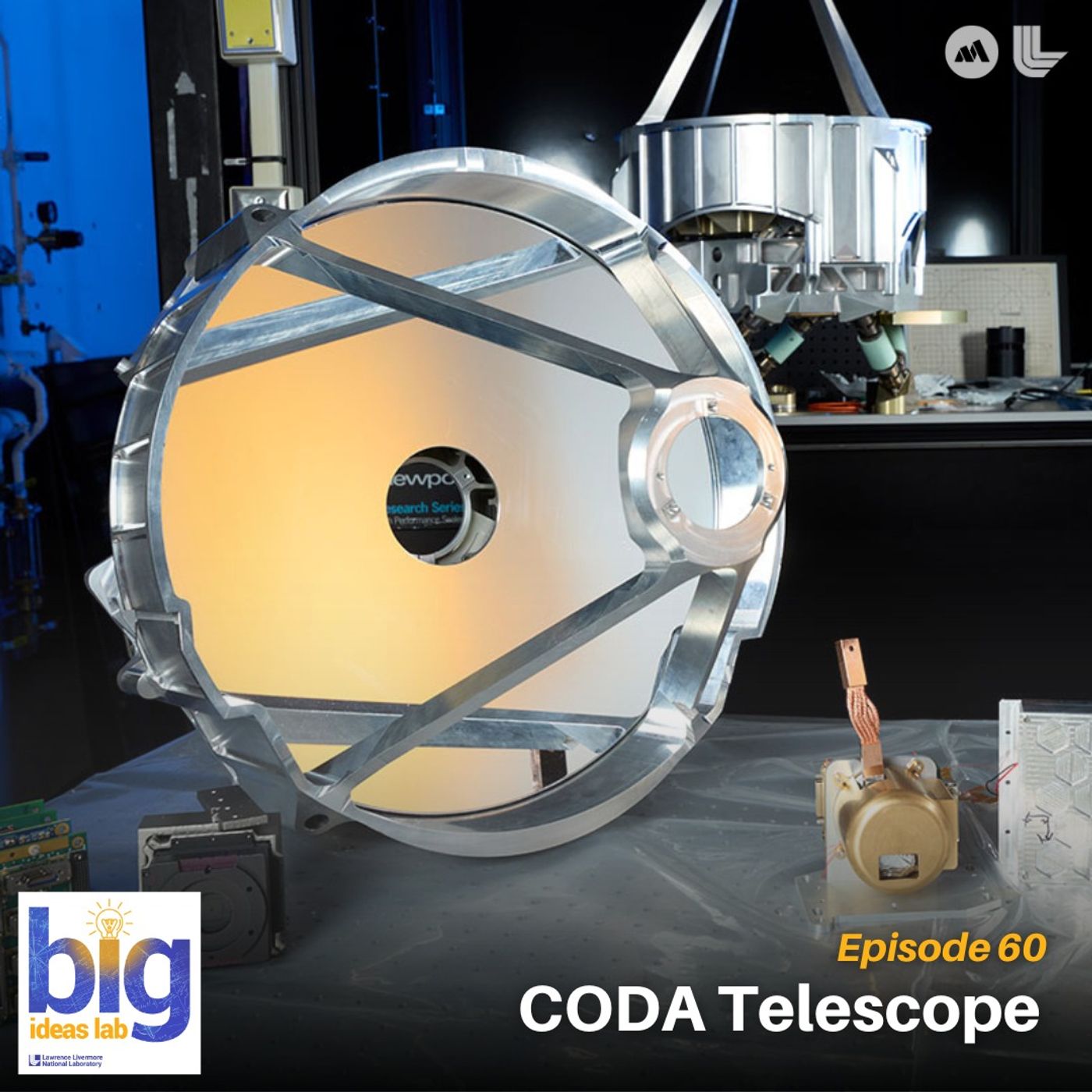
Big Ideas Lab explores how Lawrence Livermore National Laboratory revolutionized space telescope design through the CODA (Coronagraph Optical Design for Astrophysics) telescope. Rather than pursuing the traditional aerospace approach of building exquisite, one-of-a-kind instruments with no margin for error, LLNL…
Worth it if you're interested in how practical engineering thinking can unlock innovation in aerospace, or curious about how NASA missions actually become feasible.
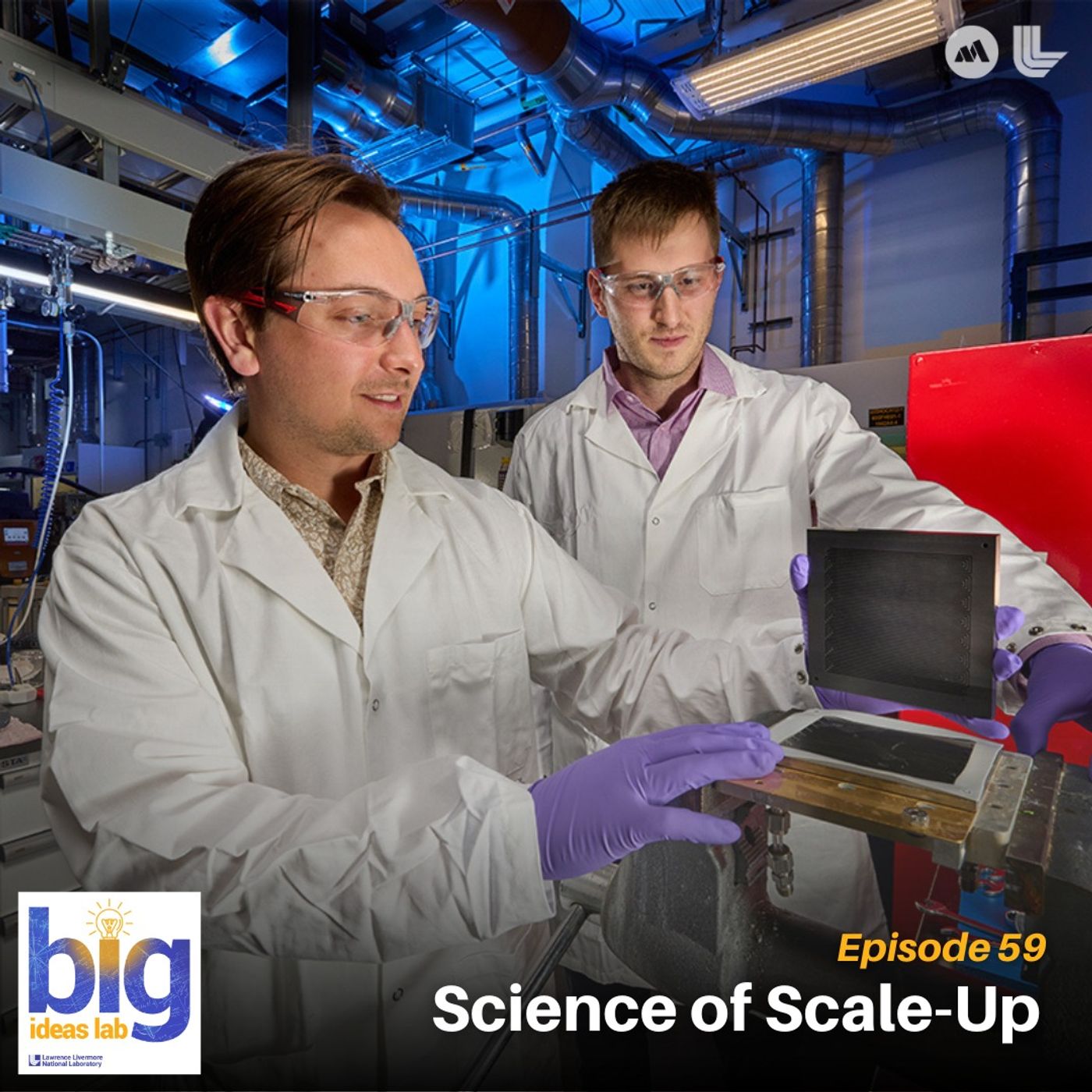
Big Ideas Lab's 'Science of Scale-Up' explores the often-overlooked gap between laboratory breakthroughs and real-world deployment. The episode features Lawrence Livermore National Laboratory (LLNL) researchers Sarah Baker (Group and Program Leader for Carbon Technologies) and Andrew Wong (Materials Scientist)…
Worth it if you're interested in how scientific breakthroughs become real products, or curious about the hidden engineering challenges between lab and market.