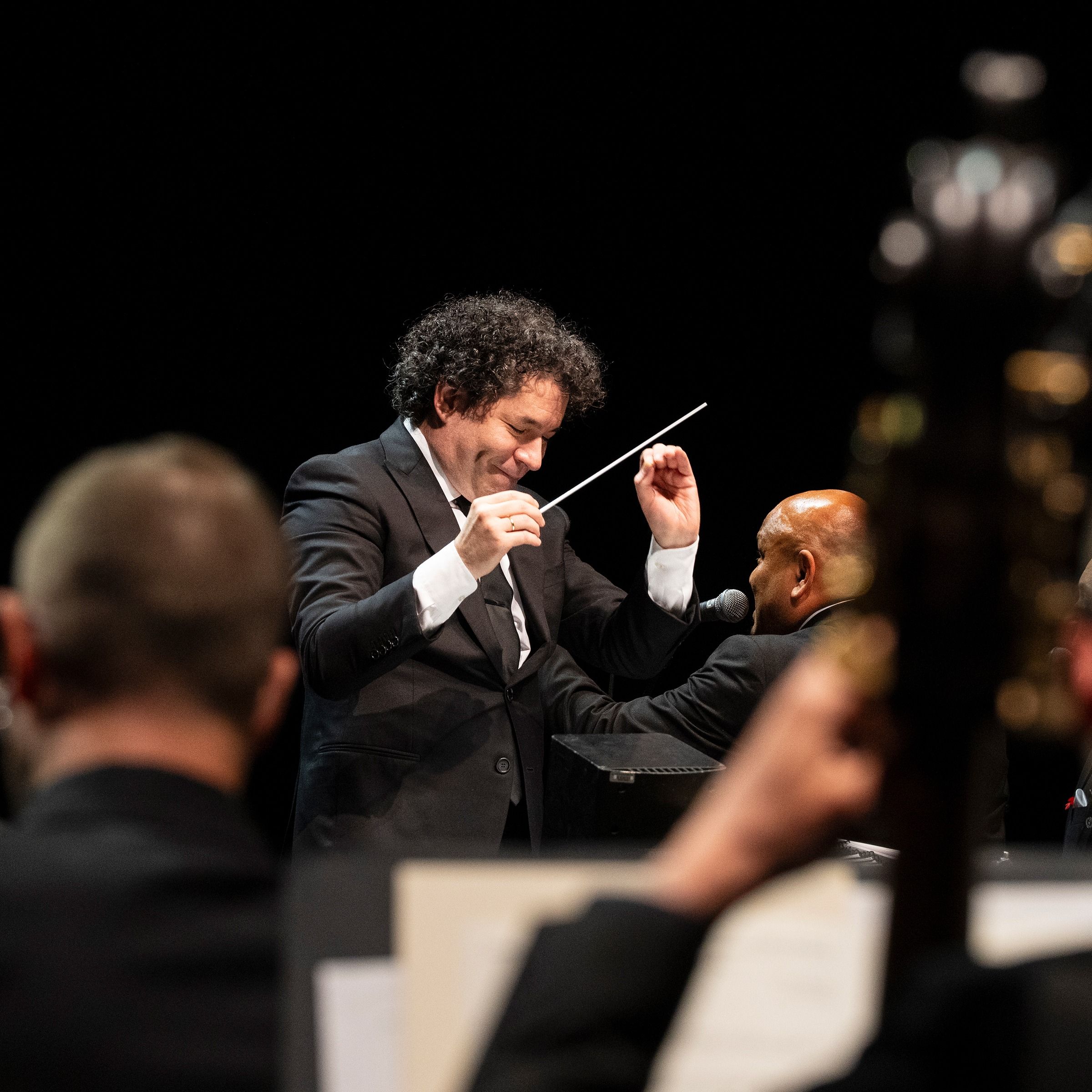
Classical Music Is in Crisis. Gustavo Dudamel Is Here to Save It.
Evaluation and Summary
The Daily examines Gustavo Dudamel's appointment as the new musical director of the New York Philharmonic, marking a significant moment in classical music leadership. Dudamel, a Venezuelan conductor who rose to prominence at age 28 when he took over the Los Angeles Philharmonic in 2009, is now stepping into a role previously held by Leonard Bernstein. The episode, hosted by Joshua Barone (a classical music critic for The New York Times), explores what Dudamel has accomplished during his 17 years in Los Angeles—expanding the orchestra's repertoire, creating youth outreach programs, winning prestigious awards, and building connections with Hollywood. The framing suggests Dudamel aims to follow Bernstein's model of making classical music a more visible part of popular culture. The episode title positions classical music as being 'in crisis,' implying that Dudamel's appointment represents a potential solution or turning point. The show notes reference background articles about Dudamel's transition and what makes him exceptional as a conductor, suggesting the episode likely covers his biography, conducting philosophy, and the hopes pinned on his New York tenure. A diverse musical selection—ranging from classical standards (Beethoven, Mahler, Dvorak) to contemporary composers (John Adams, Thomas Adès) and film scores (John Williams' Star Wars theme)—illustrates Dudamel's broad repertoire and his willingness to blend high art with popular culture. The episode appears designed to introduce listeners to both Dudamel as a figure and the broader question of how classical music institutions can remain relevant and vital in contemporary culture.
Verdict: A timely, well-sourced profile of a major cultural appointment with solid reporting, though the 'crisis' framing appears somewhat promotional and the depth of analysis on classical music's actual challenges remains unclear from available material.
News rubric
-
Accuracy and sourcing 4/5 20%
Guest is a credentialed Times classical music critic; biographical facts about Dudamel (age when appointed, tenure length, El Sistema background) are verifiable; sourced to Times reporting and interviews.
-
Balance and context 3/5 20%
Provides Dudamel's accomplishments and background, but show notes don't indicate whether counterarguments or skeptical perspectives on his appointment are included; framing assumes his appointment is positive.
-
Timeliness and relevance 5/5 15%
Episode published at the exact moment Dudamel's New York tenure begins, making it timely; addresses the broader relevance of classical music's role in contemporary culture.
-
Substance 3/5 15%
Show notes indicate solid biographical and institutional content, but without the full transcript it's unclear how deep the analysis goes; music selections suggest illustrative rather than deeply analytical approach.
-
Delivers on its title 3/5 15%
Title promises both a crisis narrative and Dudamel as savior, but show notes focus primarily on Dudamel's biography and accomplishments; the 'crisis' framing is asserted but not clearly explored in available material.
-
Value for time 3/5 15%
43 minutes is reasonable for a biographical profile with musical interludes, though without the full episode it's unclear if pacing is tight or if there are tangential stretches.
Worth it if you're interested in classical music institutions, conductor profiles, or how orchestras are adapting to stay culturally relevant.
Based on the episode description. AI-generated; it can be wrong.
Show notes
More from The Daily

The Daily episode examines a botched execution in Tennessee where Christa Pike survived two doses of lethal injection drugs, using this incident as a lens to explore broader trends in American capital punishment. Guest Pamela Colloff, an investigative reporter at ProPublica and The New York Times Magazine, discusses…
Worth it if you want current reporting on capital punishment policy and the disconnect between public opinion and state practice, or if you're following the Christa Pike case.

The Daily episode examines a mysterious security incident at RAF Lakenheath, a U.S. Air Force base in Britain. National security correspondent Eric Schmitt from The New York Times walks through what happened: a startling call near the base triggered a massive counterterrorism response and days of uncertainty for both…
Worth it if you follow U.S.-Iran tensions, NATO security issues, or want a quick, authoritative briefing on a major recent incident.

The Daily explores the rapid adoption of AI agents—a new category of artificial intelligence applications that can autonomously perform tasks like sending emails and booking travel. The episode centers on Eli Tan, a New York Times technology reporter, who embedded himself with Muse, Meta's newly released AI agent, to…
Worth it if you're curious about AI agents, considering downloading one, or want a reporter's honest first impression of what these tools can actually do.

The Daily episode examines surprising polling data from The New York Times showing that Democratic Senate candidates are performing unexpectedly well in traditionally Republican-leaning states ahead of the midterm elections, while underperforming in blue states where they should theoretically have advantages. The…
Worth it if you're following the midterm elections closely and want expert analysis of unexpected polling shifts in key Senate races.

The Daily explores the economic crisis gripping the American restaurant industry through the lens of Brett Anderson, a New York Times food reporter. The episode opens with observable changes diners have noticed—counter ordering, QR code menus, proliferation of soft serve—and reframes these not as trendy innovations…
Worth it if you dine out regularly, work in food service, or want to understand why restaurants feel different lately.

This episode of The Daily features an interview with Chris Rock discussing forgiveness, friendship, and his new film 'Misty Green.' Based on the description, Rock reflects on what genuine friendship means to him and explores themes of forgiveness—presumably in connection with recent events in his life that have been…
Worth it if you're interested in Chris Rock's perspective on forgiveness and his creative work, or if you enjoy The Daily's interview format with prominent cultural figures.