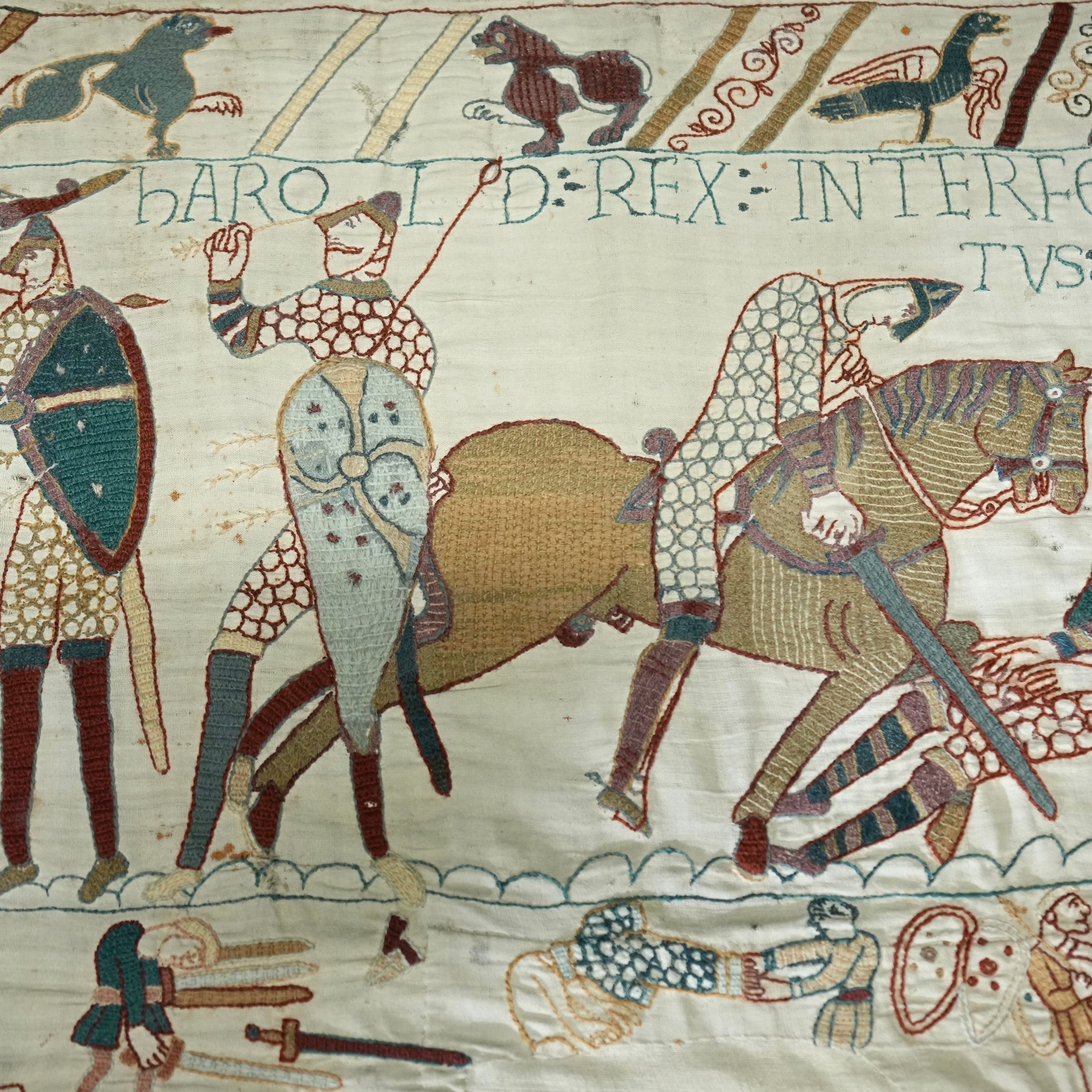
How a 1,000-Year-Old Tapestry Took London by Storm
Evaluation and Summary
The Daily's Sunday edition explores the cultural phenomenon surrounding the Bayeux Tapestry's first display in Britain in centuries. Host Michael Barbaro interviews Alex Marshall, a New York Times culture reporter based in London, to understand why this nearly 1,000-year-old embroidered artifact depicting William the Conqueror's 1066 invasion of England has captivated the British public. The episode frames the story around a remarkable logistical and diplomatic achievement: the tapestry, long considered too fragile to move by art experts, was transported from Bayeux, France to the British Museum in London. The public response was extraordinary—when ticket sales opened, over 80,000 people queued online simultaneously to purchase them, indicating massive public interest. The episode examines what makes this ancient piece of embroidery culturally significant to modern Britain, exploring the intersection of history, national identity, and art appreciation. Marshall, as a culture reporter with European expertise, is well-positioned to contextualize both the historical importance of the tapestry and the contemporary social phenomenon it has generated. The episode appears designed to answer why a medieval textile has become a major cultural event, touching on themes of heritage, accessibility to historical artifacts, and the public's appetite for tangible connections to the past. The show notes reference background reading including pieces on viewing the tapestry and the 'Bayeux Fever' gripping the nation, suggesting the episode engages with broader cultural commentary beyond just the artifact itself.
Verdict: A timely, well-sourced cultural story with a qualified reporter that delivers on its premise, though the show notes suggest limited depth and perspective beyond the immediate phenomenon.
News rubric
-
Accuracy and sourcing 3/5 20%
The Daily is a reputable outlet and Marshall is identified as a credentialed NYT culture reporter; basic facts (tapestry age, 1066 date, ticket demand) are stated but no specific sources or expert interviews are detailed in notes.
-
Balance and context 3/5 20%
Shows notes indicate discussion of why the tapestry matters to British public and mention geopolitical persuasion required for the loan, suggesting some context; however, no indication of competing perspectives or French viewpoint.
-
Timeliness and relevance 5/5 15%
Published September 2026 about a summer exhibition that just happened; the 80,000-person ticket queue and 'Bayeux Fever' indicate this is a live, urgent cultural moment.
-
Substance 3/5 15%
35 minutes with one guest discussing a specific cultural event provides solid content, but show notes don't indicate depth of historical detail, expert analysis, or multiple perspectives that would elevate this beyond surface-level cultural
-
Delivers on its title 5/5 15%
Title promises explanation of why the tapestry 'took London by storm'; the episode directly addresses public response (80,000 tickets) and explores cultural significance through a qualified reporter.
-
Value for time 3/5 15%
35 minutes is reasonable for a cultural feature with one guest; no indication from notes whether pacing is tight or if there are tangents, so middle score is appropriate.
Worth it if you're interested in why cultural artifacts capture public imagination, British history, or want context on a major contemporary art event.
Based on the episode description. AI-generated; it can be wrong.
Show notes
More from The Daily

The Daily episode examines a botched execution in Tennessee where Christa Pike survived two doses of lethal injection drugs, using this incident as a lens to explore broader trends in American capital punishment. Guest Pamela Colloff, an investigative reporter at ProPublica and The New York Times Magazine, discusses…
Worth it if you want current reporting on capital punishment policy and the disconnect between public opinion and state practice, or if you're following the Christa Pike case.

The Daily episode examines a mysterious security incident at RAF Lakenheath, a U.S. Air Force base in Britain. National security correspondent Eric Schmitt from The New York Times walks through what happened: a startling call near the base triggered a massive counterterrorism response and days of uncertainty for both…
Worth it if you follow U.S.-Iran tensions, NATO security issues, or want a quick, authoritative briefing on a major recent incident.

The Daily explores the rapid adoption of AI agents—a new category of artificial intelligence applications that can autonomously perform tasks like sending emails and booking travel. The episode centers on Eli Tan, a New York Times technology reporter, who embedded himself with Muse, Meta's newly released AI agent, to…
Worth it if you're curious about AI agents, considering downloading one, or want a reporter's honest first impression of what these tools can actually do.

The Daily episode examines surprising polling data from The New York Times showing that Democratic Senate candidates are performing unexpectedly well in traditionally Republican-leaning states ahead of the midterm elections, while underperforming in blue states where they should theoretically have advantages. The…
Worth it if you're following the midterm elections closely and want expert analysis of unexpected polling shifts in key Senate races.

The Daily explores the economic crisis gripping the American restaurant industry through the lens of Brett Anderson, a New York Times food reporter. The episode opens with observable changes diners have noticed—counter ordering, QR code menus, proliferation of soft serve—and reframes these not as trendy innovations…
Worth it if you dine out regularly, work in food service, or want to understand why restaurants feel different lately.

This episode of The Daily features an interview with Chris Rock discussing forgiveness, friendship, and his new film 'Misty Green.' Based on the description, Rock reflects on what genuine friendship means to him and explores themes of forgiveness—presumably in connection with recent events in his life that have been…
Worth it if you're interested in Chris Rock's perspective on forgiveness and his creative work, or if you enjoy The Daily's interview format with prominent cultural figures.