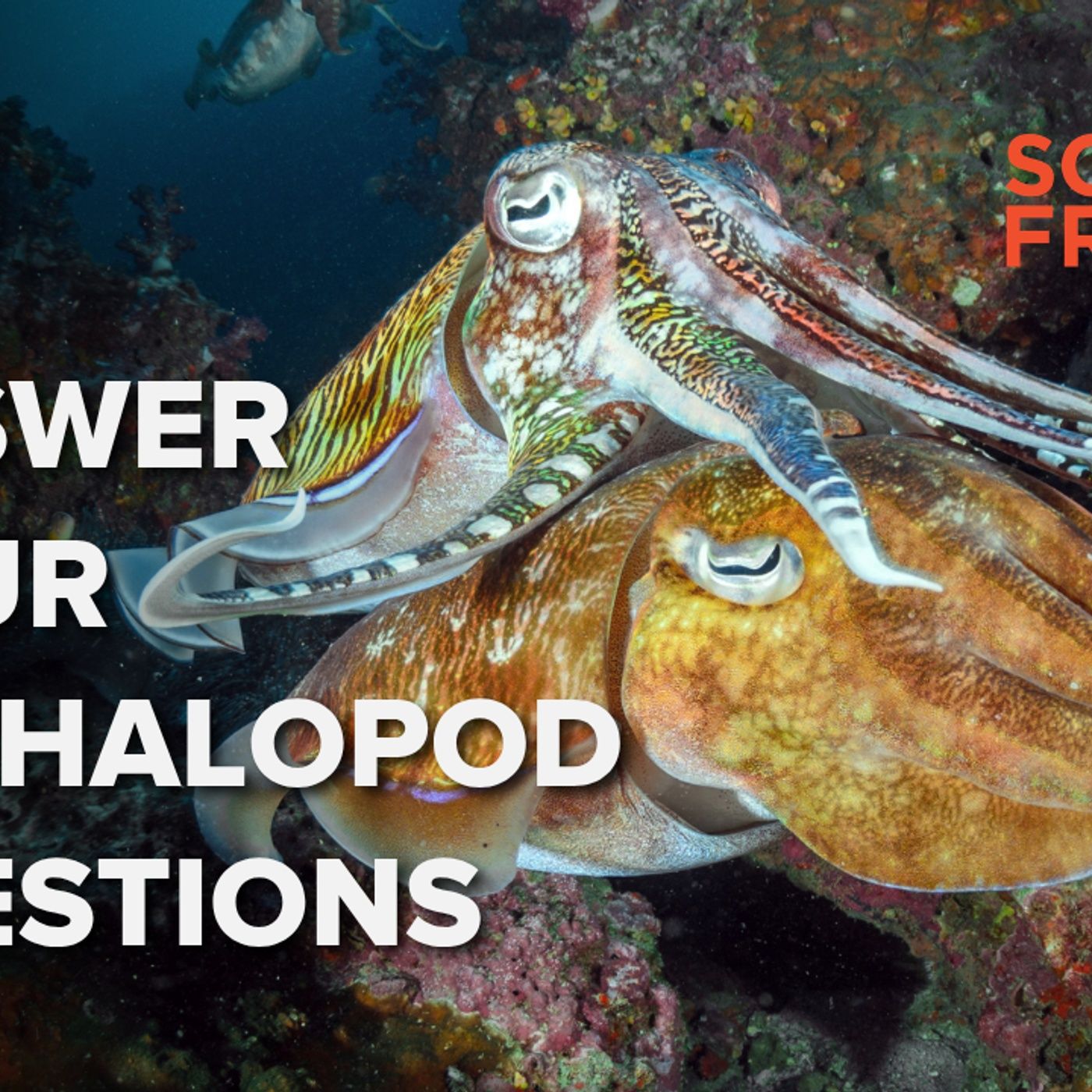
1410: The punk rock life of cephalopods
Evaluation and Summary
Science Friday's 18-minute episode dives into the darker, grittier side of cephalopod biology—a refreshing counterpoint to their typical "smart and majestic" reputation. Host Flora Lichtman interviews two cephalopod experts: Dr. Heather Judkins (integrative biology professor at University of South Florida St. Petersburg) and Dr. Z. Yan Wang (assistant professor of psychology and biology at University of Washington). The episode explores unusual and disturbing cephalopod behaviors, specifically mentioning octopus death spirals and cephalopod cannibalism as focal points. The framing positions these as the "weirdest parts of being a cephalopod," suggesting the episode balances scientific explanation with the sensational aspects of their biology. The episode also incorporates listener questions, making it interactive and audience-focused. The show notes reference "Cephalopod Week," indicating this is part of a themed content series, which adds context to the episode's scope. At 18 minutes, this is a tight, focused segment rather than a deep dive—appropriate for Science Friday's format of accessible science journalism. The episode appears designed to entertain while educating, using provocative hooks (death spirals, cannibalism) to draw listeners into legitimate biological science. The presence of two credentialed experts suggests the content is grounded in actual research rather than speculation, though the show notes don't detail specific studies or findings discussed.
Verdict: A well-executed, focused episode that delivers exactly what its title promises with credible experts and a fresh angle on familiar subjects, though its brevity limits depth.
Society & Culture rubric
-
Fresh perspective 4/5 20%
Reframing cephalopods as 'dark and gritty' rather than merely intelligent subverts common popular science narratives and offers a genuinely different angle on familiar creatures.
-
Storytelling and voices 3/5 20%
Two credentialed experts plus host and listener questions suggest varied voices, but show notes don't detail specific personal stories or anecdotes that would elevate this to rich storytelling.
-
Thoughtfulness 3/5 15%
Pairing sensational behaviors (death spirals, cannibalism) with expert analysis suggests nuance, but show notes don't reveal depth of discussion or self-awareness about why these topics matter.
-
Substance 3/5 15%
Two expert guests and listener Q&A indicate solid content, but 18 minutes limits how much depth is possible; likely covers key phenomena without exhaustive exploration.
-
Delivers on its title 5/5 15%
Title promises 'punk rock life of cephalopods' and episode explicitly delivers on the dark, gritty, weird side with named examples (death spirals, cannibalism) and expert discussion.
-
Value for time 4/5 15%
18 minutes is tight and appropriate for the format; likely well-paced for accessible science journalism, though brevity may leave some topics underdeveloped.
How we score Society & Culture
Worth it if you enjoy accessible science journalism, want a quick fascinating detour into cephalopod biology, or appreciate irreverent takes on nature documentaries.
Based on the episode description. AI-generated; it can be wrong.
Show notes
More from Science Friday

Science Friday's 13-minute episode explores Kelvin waves, a phenomenon currently affecting the West Coast of North America. Host Flora Lichtman interviews Dr. Andrew Leising, a research oceanographer at NOAA's Southwest Fisheries Science Center in San Diego, to explain what Kelvin waves are and their potential…
Worth it if you're curious about current oceanographic phenomena affecting the U.S. West Coast or want a quick, accessible explanation of Kelvin waves from a reliable source.

Science Friday marks Nobel Prize week with a timely interview featuring Dr. Francis Halzen, the 2026 Nobel Prize in Physics recipient, who won for his decisive contributions to the IceCube Neutrino Observatory and the discovery of high-energy neutrinos of astrophysical origin. The episode explores the IceCube, an…
Worth it if you're curious about cutting-edge physics, neutrino astronomy, or want a quick introduction to this year's Nobel Prize winner and his groundbreaking work.
Science Friday's 16-minute episode features David Byrne, the artist, musician, and Talking Heads frontman, discussing his new book 'Sleeping Beauties: Why Good Ideas Go Dormant and How They Wake Up.' The episode explores why groundbreaking ideas—whether from laboratories or art studios—often fail to gain traction…
Worth it if you're curious about why innovations fail to gain immediate traction or interested in David Byrne's thinking beyond music.