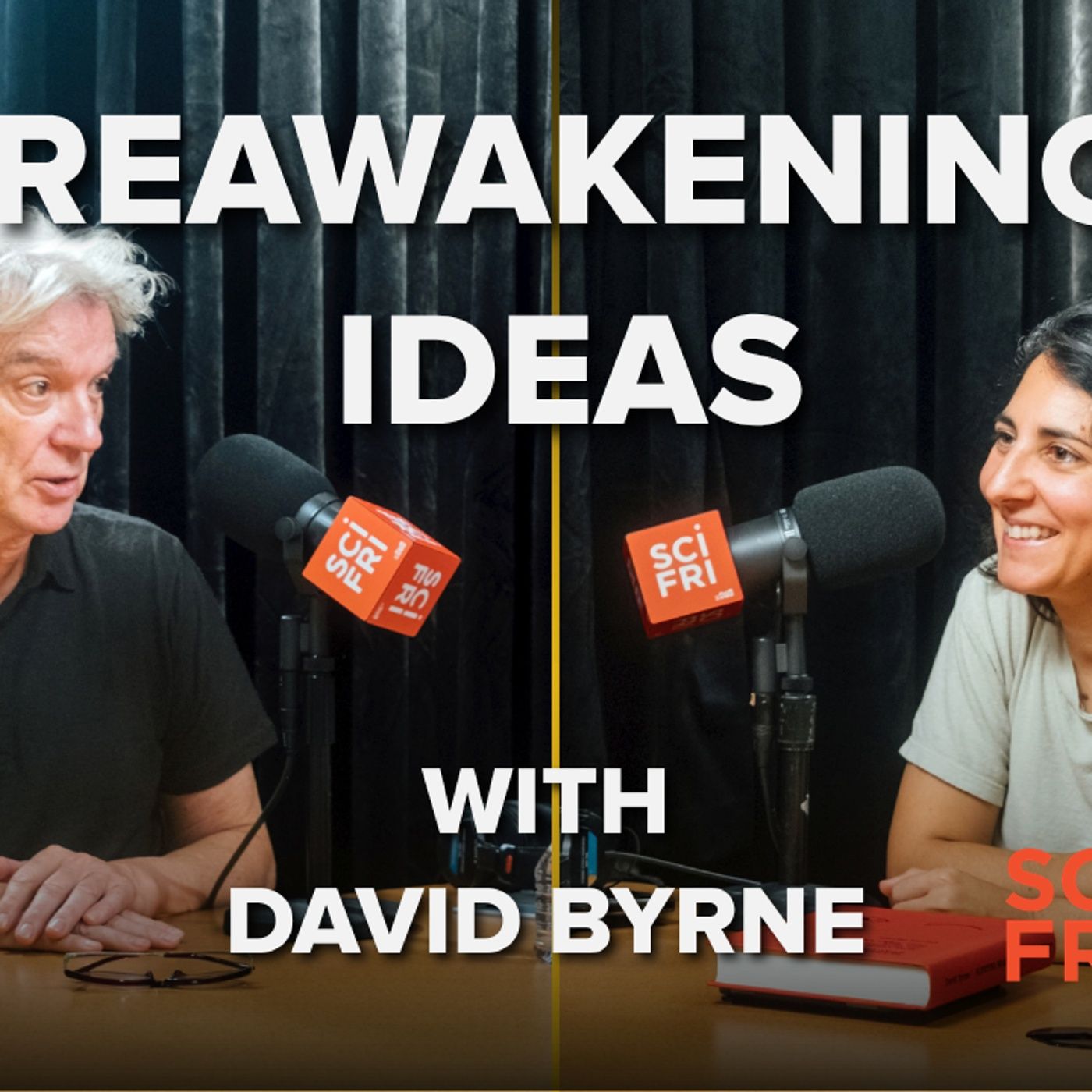
1408: How important ideas get reawakened, with David Byrne
Evaluation and Summary
Science Friday's 16-minute episode features David Byrne, the artist, musician, and Talking Heads frontman, discussing his new book 'Sleeping Beauties: Why Good Ideas Go Dormant and How They Wake Up.' The episode explores why groundbreaking ideas—whether from laboratories or art studios—often fail to gain traction immediately and instead enter a period of dormancy before being rediscovered and revived years later. Byrne examines the mechanisms behind this phenomenon: what causes promising innovations to be shelved, forgotten, or overlooked, and what conditions allow them to resurface and gain momentum. The conversation is framed around the central question of why some ideas have the power to shape the future while others languish in obscurity. Host Flora Lichtman guides the discussion, and an excerpt from the book is made available to listeners. The episode taps into Science Friday's stated love of ideas with transformative potential, positioning the conversation as an exploration of innovation cycles and cultural memory. The show notes promise insight into why this happens—suggesting the episode will offer explanatory frameworks or case studies—though the specific examples and mechanisms aren't detailed in the available material.
Verdict: A competent, well-matched interview with an interesting guest and topic, but the short format and book-promotion framing limit substantive exploration.
Society & Culture rubric
-
Fresh perspective 3/5 20%
The topic of dormant ideas and their reawakening is somewhat novel framing, though the underlying concept (innovation cycles, delayed recognition) is familiar in business and history discourse.
-
Storytelling and voices 3/5 20%
Features a distinctive guest (David Byrne) with credibility across art and music, but the 16-minute format limits depth of storytelling or multiple voices.
-
Thoughtfulness 3/5 15%
The premise suggests a nuanced exploration of why ideas fail or succeed, but the show notes don't indicate whether the episode engages with complexity or offers surface-level answers.
-
Substance 2/5 15%
At 16 minutes with a single guest discussing a book, the episode likely offers limited concrete examples, case studies, or deep explanations; mostly promotional overview of Byrne's thesis.
-
Delivers on its title 4/5 15%
The title and description align well: the episode directly addresses why ideas go dormant and how they wake up, with Byrne as the expert source.
-
Value for time 3/5 15%
16 minutes is brief enough to avoid padding, but may feel rushed for a complex topic requiring examples and explanation.
How we score Society & Culture
Worth it if you're curious about why innovations fail to gain immediate traction or interested in David Byrne's thinking beyond music.
Based on the episode description. AI-generated; it can be wrong.
Show notes
More from Science Friday
Science Friday's 13-minute episode explores Kelvin waves, a phenomenon currently affecting the West Coast of North America. Host Flora Lichtman interviews Dr. Andrew Leising, a research oceanographer at NOAA's Southwest Fisheries Science Center in San Diego, to explain what Kelvin waves are and their potential…
Worth it if you're curious about current oceanographic phenomena affecting the U.S. West Coast or want a quick, accessible explanation of Kelvin waves from a reliable source.

Science Friday's 18-minute episode dives into the darker, grittier side of cephalopod biology—a refreshing counterpoint to their typical "smart and majestic" reputation. Host Flora Lichtman interviews two cephalopod experts: Dr. Heather Judkins (integrative biology professor at University of South Florida St.…
Worth it if you enjoy accessible science journalism, want a quick fascinating detour into cephalopod biology, or appreciate irreverent takes on nature documentaries.

Science Friday marks Nobel Prize week with a timely interview featuring Dr. Francis Halzen, the 2026 Nobel Prize in Physics recipient, who won for his decisive contributions to the IceCube Neutrino Observatory and the discovery of high-energy neutrinos of astrophysical origin. The episode explores the IceCube, an…
Worth it if you're curious about cutting-edge physics, neutrino astronomy, or want a quick introduction to this year's Nobel Prize winner and his groundbreaking work.