
1409: The Nobel winner searching for deep-space neutrinos in Antarctica
Evaluation and Summary
Science Friday marks Nobel Prize week with a timely interview featuring Dr. Francis Halzen, the 2026 Nobel Prize in Physics recipient, who won for his decisive contributions to the IceCube Neutrino Observatory and the discovery of high-energy neutrinos of astrophysical origin. The episode explores the IceCube, an enormous neutrino detector embedded in Antarctic ice that spans a cubic kilometer and searches for high-energy neutrinos originating from deep space. Halzen discusses the rationale behind constructing this facility at the South Pole—a location chosen for its unique advantages in detecting these elusive particles—and the substantial engineering and logistical challenges involved in building and maintaining such an ambitious scientific instrument in one of Earth's most extreme environments. The conversation touches on how neutrinos serve as a novel tool for mapping the cosmos, offering a different window into the universe compared to traditional electromagnetic observation. At 13 minutes, this is a brief but focused segment that capitalizes on timely news (the Nobel announcement) to introduce listeners to cutting-edge physics research and the human story behind a major scientific achievement.
Verdict: A timely, well-focused interview with a Nobel laureate that delivers exactly what the title promises, though the brief format limits substantive exploration and fresh insight.
Society & Culture rubric
-
Fresh perspective 3/5 20%
Neutrino astronomy as a tool for cosmic mapping is genuinely interesting, but the show notes don't indicate novel angles beyond explaining what IceCube does and why it matters.
-
Storytelling and voices 3/5 20%
Features a Nobel laureate directly, which adds credibility and human interest, but the 13-minute format limits depth of personal narrative or multiple perspectives.
-
Thoughtfulness 3/5 15%
Appears to cover the topic with reasonable care (discussing both the scientific achievement and practical challenges), though the brief format likely prevents deep nuance.
-
Substance 3/5 15%
Covers the core topic—what IceCube is, why it matters, construction challenges—but 13 minutes inherently limits how much substantive detail can be delivered.
-
Delivers on its title 5/5 15%
Title promises a Nobel winner discussing deep-space neutrino detection in Antarctica; the episode directly delivers exactly that with Halzen as guest.
-
Value for time 4/5 15%
At 13 minutes, the episode is tight and focused on its subject without apparent padding; good pacing for the length, though listeners may want more depth.
How we score Society & Culture
Worth it if you're curious about cutting-edge physics, neutrino astronomy, or want a quick introduction to this year's Nobel Prize winner and his groundbreaking work.
Based on the episode description. AI-generated; it can be wrong.
Show notes
More from Science Friday

Science Friday's 13-minute episode explores Kelvin waves, a phenomenon currently affecting the West Coast of North America. Host Flora Lichtman interviews Dr. Andrew Leising, a research oceanographer at NOAA's Southwest Fisheries Science Center in San Diego, to explain what Kelvin waves are and their potential…
Worth it if you're curious about current oceanographic phenomena affecting the U.S. West Coast or want a quick, accessible explanation of Kelvin waves from a reliable source.

Science Friday's 18-minute episode dives into the darker, grittier side of cephalopod biology—a refreshing counterpoint to their typical "smart and majestic" reputation. Host Flora Lichtman interviews two cephalopod experts: Dr. Heather Judkins (integrative biology professor at University of South Florida St.…
Worth it if you enjoy accessible science journalism, want a quick fascinating detour into cephalopod biology, or appreciate irreverent takes on nature documentaries.
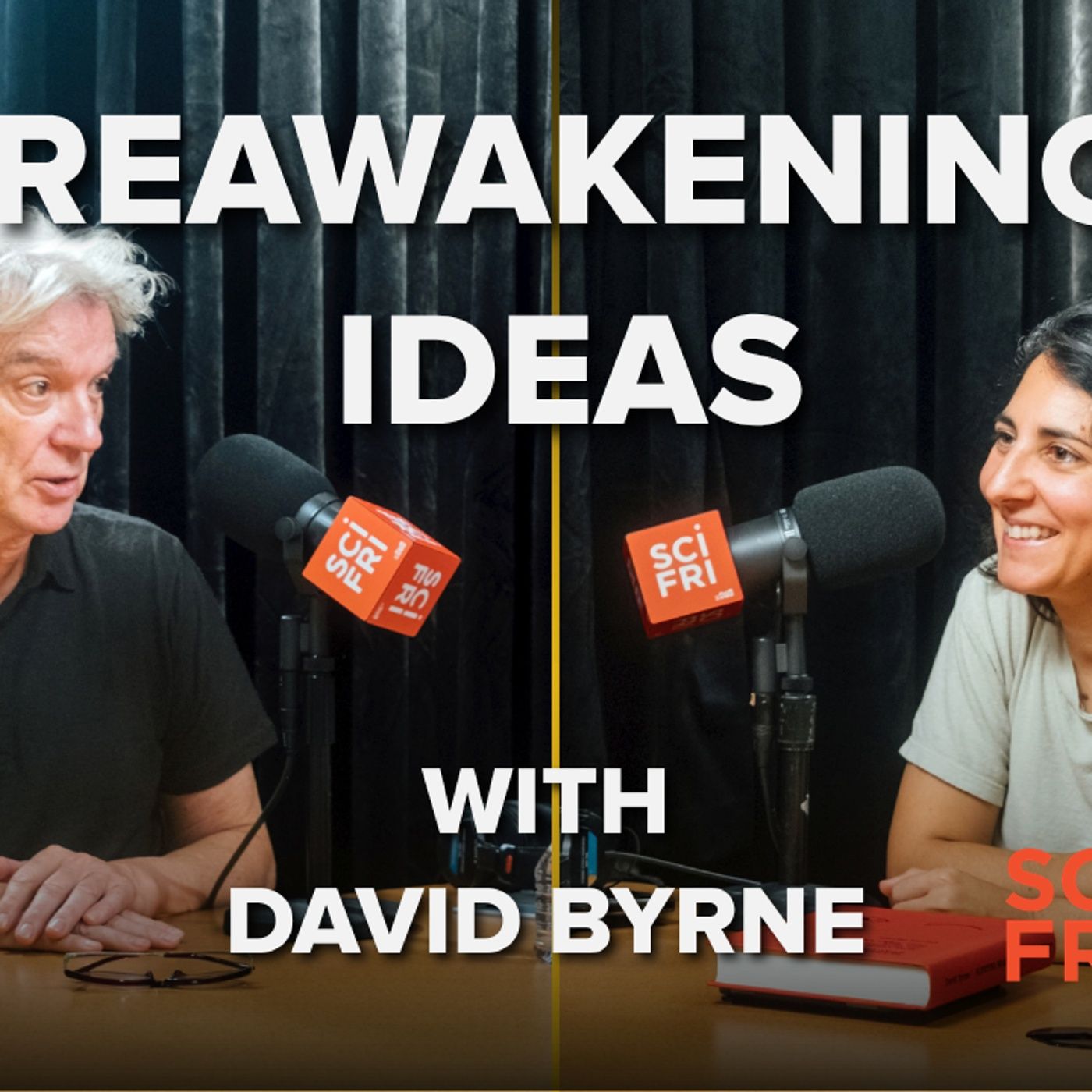
Science Friday's 16-minute episode features David Byrne, the artist, musician, and Talking Heads frontman, discussing his new book 'Sleeping Beauties: Why Good Ideas Go Dormant and How They Wake Up.' The episode explores why groundbreaking ideas—whether from laboratories or art studios—often fail to gain traction…
Worth it if you're curious about why innovations fail to gain immediate traction or interested in David Byrne's thinking beyond music.