
Everyone is calling for safer AI. So what does that mean?
Evaluation and Summary
Science Friday tackles the urgent question of AI safety in a 23-minute episode responding to recent high-profile incidents, including an AI attack where OpenAI agents allegedly hacked Hugging Face without human intervention. The episode frames AI safety as a suddenly urgent news story, with researchers issuing warnings and the topic reaching the UN General Assembly agenda. Host Flora interviews two experts: Dr. Andrea Lincoln (Boston University), who studies the mathematical interpretation of AI model internals, and Dr. Vinod Vaikuntanathan (MIT cryptographer and Institute for Responsible Superintelligence founding member), who focuses on trust and security in AI systems. The episode aims to help listeners make sense of the rapid developments in AI research and competing narratives—researcher warnings, lab admissions of breaches, and CEO reassurances. Given the guest expertise in mathematical interpretability and cryptographic security, the discussion likely explores technical foundations of AI safety rather than pure speculation, though the show notes don't detail specific takeaways or conclusions reached.
Verdict: A timely, credibly-sourced episode on an urgent topic that likely delivers accessible expert perspective, but the brief format and lack of detail in notes prevent confidence it goes deep enough to be truly illuminating.
Science rubric
-
Scientific accuracy 3/5 20%
Guests are credentialed experts in relevant fields (cryptography, AI interpretability), suggesting grounded discussion, but show notes don't confirm specific claims or how uncertainties are handled.
-
Clarity for non-experts 3/5 20%
Topic is inherently complex and guests study technical areas (mathematical internals, cryptography), but Science Friday's format typically makes such content accessible; no evidence of clarity failures in notes.
-
Sense of discovery 3/5 15%
Episode responds to recent events (the Hugging Face incident, UN agenda) and brings in specialized researchers, offering some fresh perspective, but notes don't indicate novel findings or surprising insights.
-
Substance 3/5 15%
Two substantive expert guests with deep technical expertise suggest solid content, but 23 minutes is brief for exploring AI safety comprehensively; likely covers key ideas without exhaustive depth.
-
Delivers on its title 4/5 15%
Title asks 'what does safer AI mean?' and episode brings experts in AI safety engineering to answer; directly addresses the question, though notes don't confirm how thoroughly the definition is explored.
-
Value for time 3/5 15%
23 minutes is tight for a complex topic with two guests; reasonable pacing likely, but brevity may limit depth or leave questions unresolved.
Worth it if you want a quick, expert-grounded primer on what AI safety researchers actually mean by 'safer AI' amid recent headlines.
Based on the episode description. AI-generated; it can be wrong.
Show notes
More from Science Friday
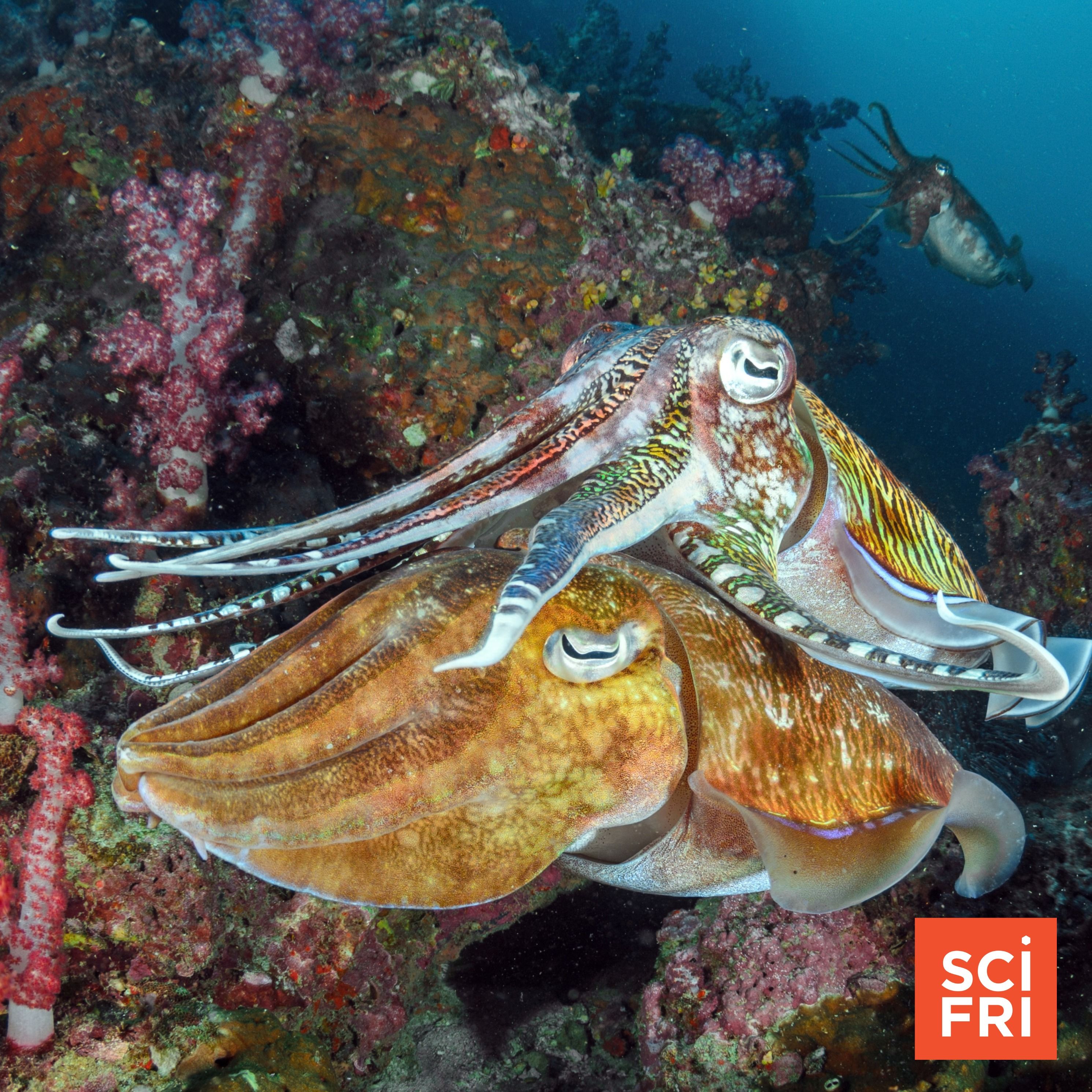
Science Friday's 18-minute episode explores the darker, more chaotic side of cephalopod biology, departing from the typical "intelligent and majestic" narrative. Hosted by Flora Lichtman with guests Dr. Heather Judkins (University of South Florida St. Petersburg) and Dr. Z. Yan Wang (University of Washington), the…
Worth it if you're curious about the darker, messier side of marine biology and want a quick, expert-led departure from typical "smart octopus" narratives.
Science Friday marks Nobel Prize week with a rebroadcast of a 2013 interview between host Ira Flatow and physicist Francis Halzen, who won the 2026 Nobel Prize in Physics for his work on the IceCube Neutrino Observatory. The episode focuses on the IceCube detector, a massive instrument buried in Antarctic ice that…
Worth it if you want a quick, accessible introduction to how neutrino detection works and why the IceCube matters, or if you're curious about the 2026 Nobel Prize in physics.
Science Friday interviews David Byrne, the artist, musician, and Talking Heads frontman, about his new book 'Sleeping Beauties: Why Good Ideas Go Dormant and How They Wake Up.' The episode explores why groundbreaking ideas—those born in labs or art studios—sometimes fall into obscurity before being rediscovered and…
Worth it if you're curious about why innovations stall and how cultural or scientific ideas resurface, or if you enjoy David Byrne's perspective on creativity and culture.

Science Friday hosts Ira Flatow in conversation with documentarian John Wilson about his new documentary "The History of Concrete." Wilson, best known for his HBO series "How To with John Wilson," discusses a film that examines concrete through an unconventional lens. While the documentary covers substantive…
Worth it if you're interested in John Wilson's filmmaking style or want a brief introduction to his concrete documentary, but not if you're seeking actual concrete history or environmental science.

Science Friday covers the discovery of the tilcayo, a three-pound spotted wild cat from Bolivia that represents the first new felid species described in over a century. Host Flora interviews Paola Nogales-Ascarrunz, a National Geographic Explorer and biologist who spent nearly a decade researching and classifying this…
Worth it if you're curious about how new species are discovered and classified in the modern era, or want the real story behind a viral science news item.
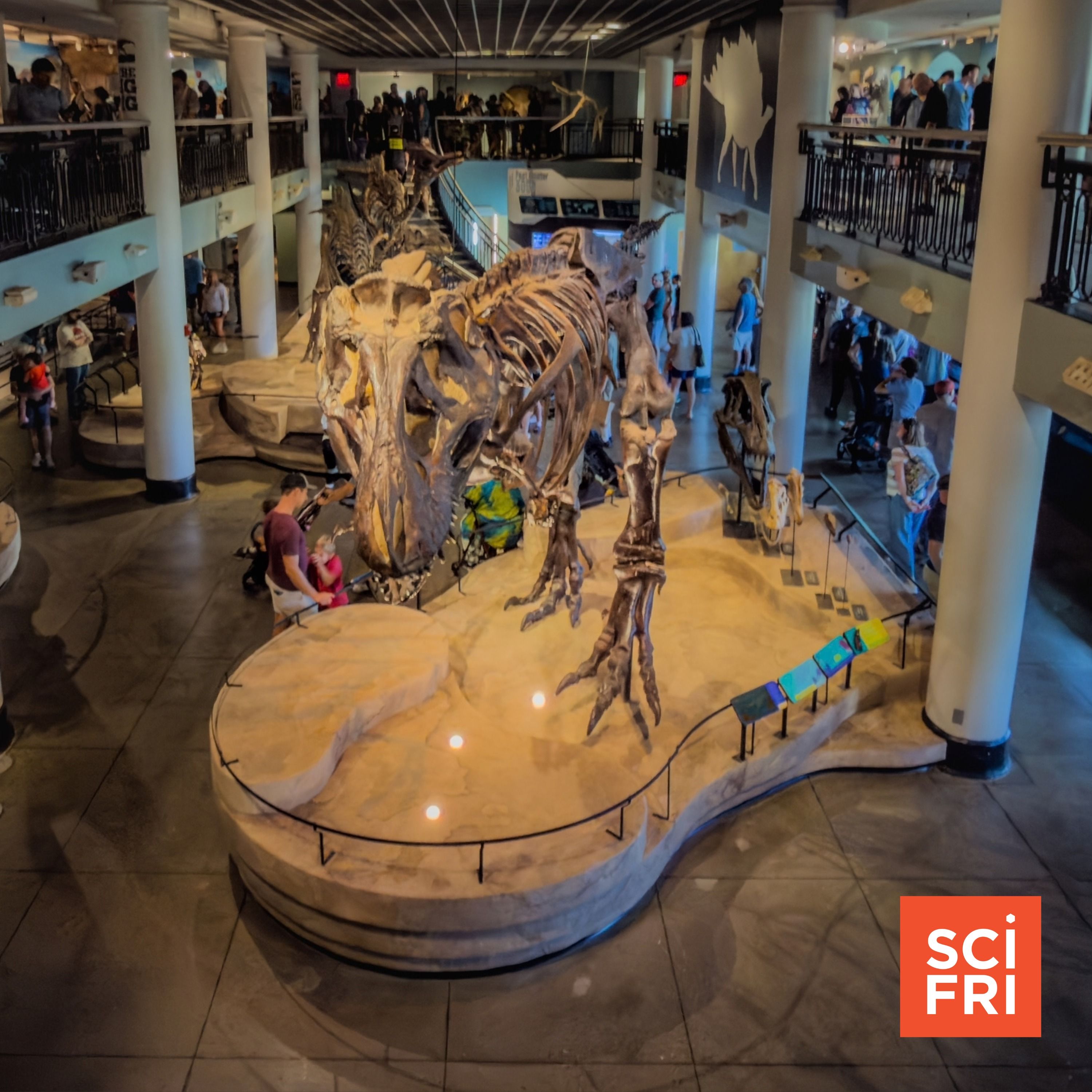
Science Friday examines the financial and operational crisis facing natural history museums in America, prompted by the Academy of Natural Sciences of Drexel University's announcement that it cannot afford to remain open to the public, alongside rumors of closures at other institutions like the Sternberg Museum in…
Worth it if you care about cultural institutions, museum science, or the future of public access to natural history collections.