
Did the COVID pandemic stunt kids’ development?
Evaluation and Summary
Science Friday tackles a widespread parental concern: did pandemic lockdowns and remote schooling stunt children's development? Host Flora Lichtman speaks with two leading child development researchers—Dr. Anna Johnson from Georgetown University and Dr. Stephanie Jones from Harvard's Graduate School of Education—to examine what the scientific evidence actually shows about COVID's impact on kids' emotional, social, and academic growth. The episode promises to move beyond anecdotal playground worry and ground the discussion in peer-reviewed research. At 22 minutes, it's a tight format designed to deliver actionable insight into a question that affects millions of families. The show notes indicate the conversation will explore whether stay-at-home life during formative years created lasting developmental setbacks, and what longitudinal or recent studies reveal about resilience, catch-up effects, or genuine concerns. Science Friday's typical approach would involve clear explanation of research methodology, honest discussion of what we know versus what remains uncertain, and practical context for parents and educators.
Verdict: A timely, well-credentialed episode on a question parents genuinely care about, likely to deliver solid science communication in a tight format, though the show notes reveal little about the specific findings or depth of analysis.
Science rubric
-
Scientific accuracy n/a
Show notes do not describe specific claims, findings, or how evidence is presented; cannot assess accuracy without hearing the episode
-
Clarity for non-experts n/a
No detail on how complex developmental science is explained; Science Friday's track record suggests clarity, but this episode's approach is not described
-
Sense of discovery 3/5 25%
Topic is timely and addresses genuine public uncertainty, but the question itself is well-known; freshness depends on what new research or perspectives the experts bring, which is not detailed
-
Substance 3/5 25%
22 minutes with two credentialed experts suggests solid content, but length limits depth; likely covers key findings without exhaustive detail
-
Delivers on its title 4/5 25%
Title directly matches the episode's stated focus on pandemic impact on child development; show notes confirm the episode examines research evidence on this specific question
-
Value for time 4/5 25%
22 minutes is efficient for a focused conversation with expert guests; appropriate length for a news-magazine format without obvious padding mentioned
Worth it if you're a parent, educator, or caregiver concerned about pandemic effects on child development and want evidence-based perspective from leading researchers.
Based on the episode description. AI-generated; it can be wrong.
Show notes
More from Science Friday

Science Friday's 18-minute episode explores the darker, more chaotic side of cephalopod biology, departing from the typical "intelligent and majestic" narrative. Hosted by Flora Lichtman with guests Dr. Heather Judkins (University of South Florida St. Petersburg) and Dr. Z. Yan Wang (University of Washington), the…
Worth it if you're curious about the darker, messier side of marine biology and want a quick, expert-led departure from typical "smart octopus" narratives.
Science Friday marks Nobel Prize week with a rebroadcast of a 2013 interview between host Ira Flatow and physicist Francis Halzen, who won the 2026 Nobel Prize in Physics for his work on the IceCube Neutrino Observatory. The episode focuses on the IceCube detector, a massive instrument buried in Antarctic ice that…
Worth it if you want a quick, accessible introduction to how neutrino detection works and why the IceCube matters, or if you're curious about the 2026 Nobel Prize in physics.
Science Friday interviews David Byrne, the artist, musician, and Talking Heads frontman, about his new book 'Sleeping Beauties: Why Good Ideas Go Dormant and How They Wake Up.' The episode explores why groundbreaking ideas—those born in labs or art studios—sometimes fall into obscurity before being rediscovered and…
Worth it if you're curious about why innovations stall and how cultural or scientific ideas resurface, or if you enjoy David Byrne's perspective on creativity and culture.

Science Friday hosts Ira Flatow in conversation with documentarian John Wilson about his new documentary "The History of Concrete." Wilson, best known for his HBO series "How To with John Wilson," discusses a film that examines concrete through an unconventional lens. While the documentary covers substantive…
Worth it if you're interested in John Wilson's filmmaking style or want a brief introduction to his concrete documentary, but not if you're seeking actual concrete history or environmental science.
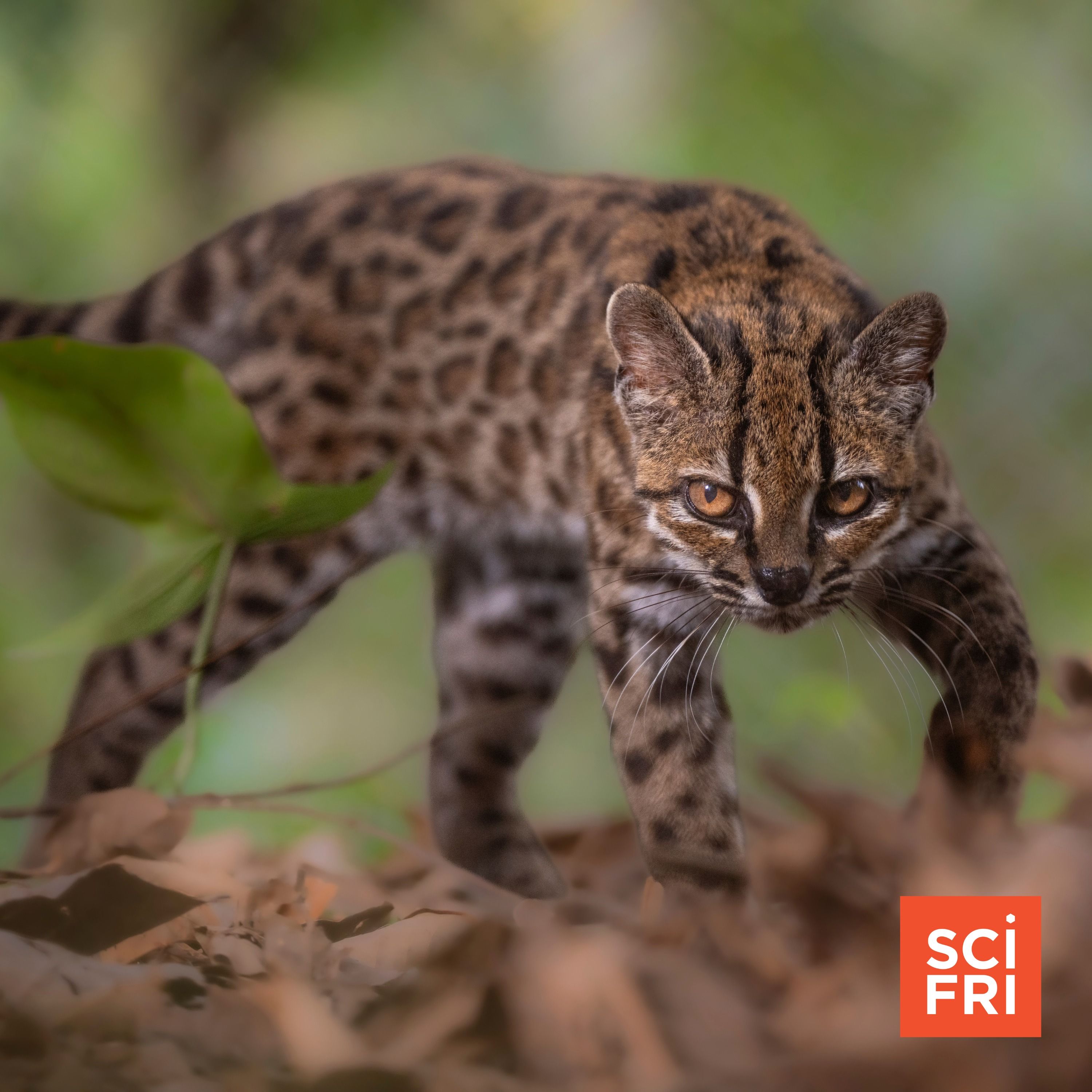
Science Friday covers the discovery of the tilcayo, a three-pound spotted wild cat from Bolivia that represents the first new felid species described in over a century. Host Flora interviews Paola Nogales-Ascarrunz, a National Geographic Explorer and biologist who spent nearly a decade researching and classifying this…
Worth it if you're curious about how new species are discovered and classified in the modern era, or want the real story behind a viral science news item.

Science Friday examines the financial and operational crisis facing natural history museums in America, prompted by the Academy of Natural Sciences of Drexel University's announcement that it cannot afford to remain open to the public, alongside rumors of closures at other institutions like the Sternberg Museum in…
Worth it if you care about cultural institutions, museum science, or the future of public access to natural history collections.