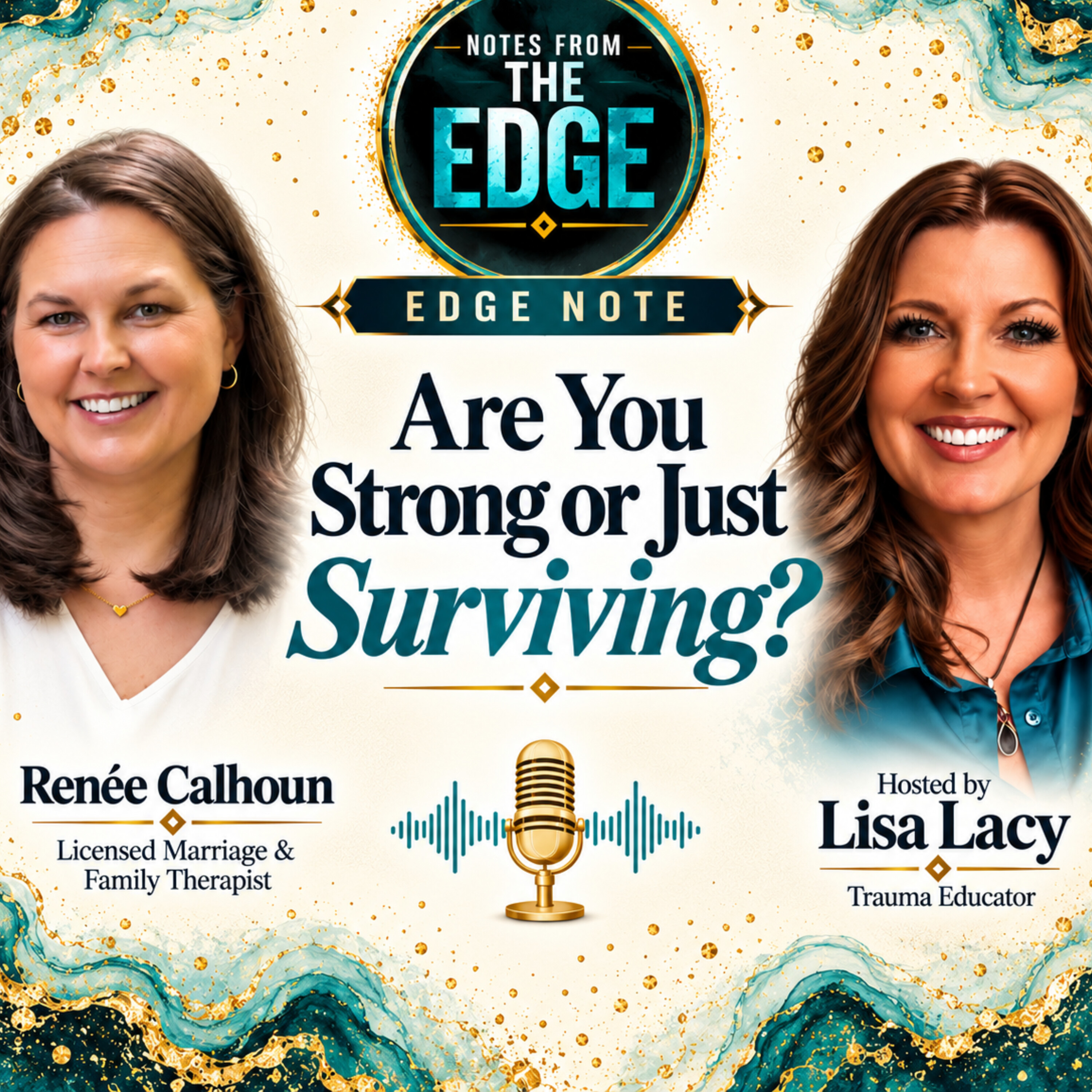
Edge Note: Are You Strong or Just Surviving?
Evaluation and Summary
Licensed marriage and family therapist Renée Calhoun joins host Lisa Lacy to explore the distinction between genuine resilience and survival mode—a deceptively simple question that unpacks why high-functioning, capable people often appear successful externally while their nervous systems remain in a state of chronic activation. The episode examines how trauma adaptations and survival responses become so normalized that people mistake them for personality traits, making it difficult to recognize when they're operating from a place of fear rather than genuine strength. Key topics covered include the nervous system's role in maintaining survival responses, why intelligence alone cannot logic us out of patterns our nervous systems associate with safety and connection, and how people-pleasing and overfunctioning serve as trauma adaptations. The conversation addresses why rest can feel unsafe or uncomfortable for those stuck in survival mode, and explores the guilt that often accompanies attempts to slow down. Calhoun and Lacy discuss family systems theory and how our earliest experiences of love and belonging shape our relational patterns, including why we repeat toxic relationship dynamics. The episode introduces Internal Family Systems (parts work) as a framework for understanding different aspects of ourselves, and distinguishes between emotional safety and emotional discomfort—recognizing that healing sometimes requires sitting with discomfort rather than avoiding it. A central theme is that boundaries, self-worth, and learning to say no are interconnected skills that help people move from autopilot into conscious choice and curiosity about their own behavior. The overarching message frames healing not as becoming someone new, but as discovering who you authentically are when you no longer need to survive. This reframes the therapeutic journey as a process of uncovering rather than transformation, suggesting that the person you are beneath survival mode already exists. The episode targets people who recognize themselves as high-functioning but feel exhausted, those caught in repetitive relationship patterns, and anyone whose nervous system remains activated despite external success. It combines clinical insight with accessible language about trauma, nervous system regulation, and relational patterns.
Verdict: A thoughtful, well-structured conversation that delivers directly on its title and covers substantive therapeutic ground, though the core concepts are increasingly familiar in wellness spaces.
Society & Culture rubric
-
Fresh perspective 3/5 25%
The distinction between resilience and survival mode is well-articulated but not entirely novel; the nervous system framework and trauma adaptation concepts are increasingly mainstream in wellness discourse.
-
Storytelling and voices n/a
Show notes provide no information about whether personal stories, anecdotes, or specific examples were shared during the conversation, or how the two voices interacted.
-
Thoughtfulness 4/5 19%
The episode demonstrates nuance by acknowledging that high-functioning appearance masks nervous system dysregulation, and by reframing healing as discovery rather than transformation—showing self-aware complexity.
-
Substance 4/5 19%
The topic list is dense with interconnected concepts (family systems, IFS, trauma adaptations, boundaries, emotional safety) suggesting substantive exploration rather than surface-level discussion.
-
Delivers on its title 5/5 19%
The title directly asks 'Are You Strong or Just Surviving?' and the episode explicitly unpacks this distinction as its central question, exploring when strength becomes survival mode.
-
Value for time 3/5 19%
At 36 minutes with a licensed therapist and substantial topic coverage, the length seems reasonable, though without hearing the episode it's unclear if pacing is tight or if there are tangential stretches.
How we score Society & Culture
Worth it if you're a high-functioning person who feels chronically exhausted, struggle with people-pleasing or rest, or want to understand why intelligence hasn't solved your relational patterns.
Based on the episode description. AI-generated; it can be wrong.
Show notes
More from Notes from the Edge

Lisa Lacy interviews Kristen Renee Appleby, author and founder of The Rebuild Collective, about the intersection of burnout, autoimmune illness, and high-achiever culture. The core premise is that the drive to push through, perform, and achieve—traits that often lead to success—can become unsustainable when the body…
Worth it if you're a high-achiever experiencing burnout or autoimmune symptoms and want to explore the mind-body-environment connection from someone who's lived it.

Lisa Lacy interviews Jenna Schutt, a former cardiac nurse and stem cell transplant survivor, about living with chronic illness while maintaining an outward appearance of capability. Jenna was diagnosed with a rare, incurable disease at 30 while raising two young children, enduring ten rounds of chemotherapy, serious…
Worth it if you live with chronic illness, care for someone who does, struggle with performing strength, or want to understand the psychological toll of medical trauma and identity loss.
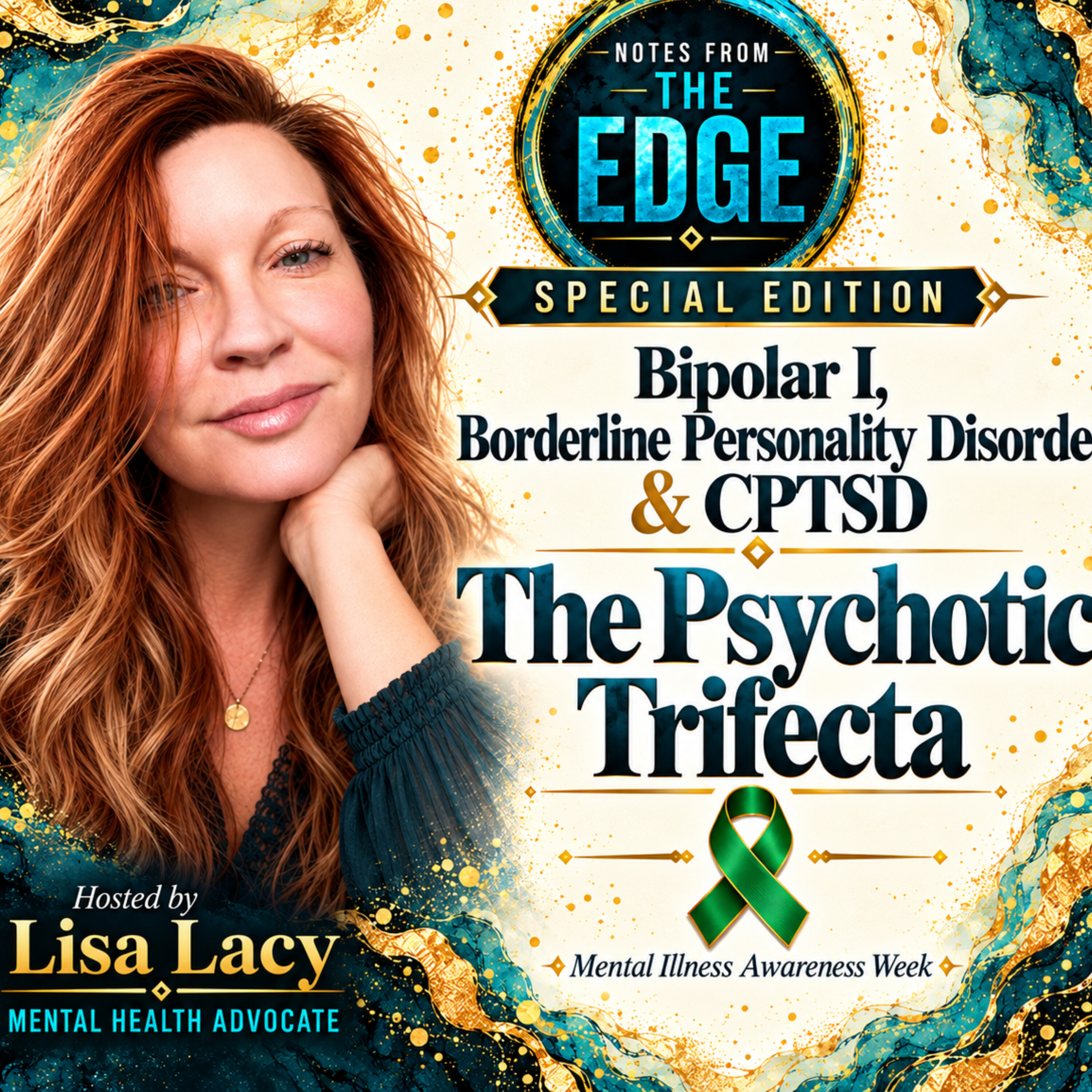
Notes from the Edge presents a special Mental Health Awareness Week episode featuring host Lisa Lacy discussing her lived experience with Bipolar I Disorder, Borderline Personality Disorder, and Complex PTSD—what she calls 'the Psychotic Trifecta.' Rather than offering clinical instruction, Lacy centers personal…
Worth it if you're seeking authentic first-person accounts of mental illness, want to understand psychosis beyond clinical definitions, or are navigating similar diagnoses and need validation that high functionality doesn't equal wellness.

Notes from the Edge hosts Lisa Lacy in conversation with Amy Lenius, a personal development coach and Director of Group Coaching at Next Level University. The episode reframes success as something built from within rather than chased externally, centering on three pillars: self-worth, self-belief, and consistency. Amy…
Worth it if you're interested in reframing success around internal alignment rather than external achievement, or if you resonate with chronic illness narratives and identity reconstruction.

Lisa Lacy interviews Dr. Eric Anderson, a neurologist and CMO at Lin Health, about chronic back pain and alternatives to surgery. The core premise challenges a common assumption: that pain intensity correlates with structural damage visible on MRI scans. Dr. Anderson explains central sensitization—how the nervous…
Worth it if you have chronic back pain, are considering back surgery, or want to understand how the nervous system amplifies pain signals beyond structural damage.
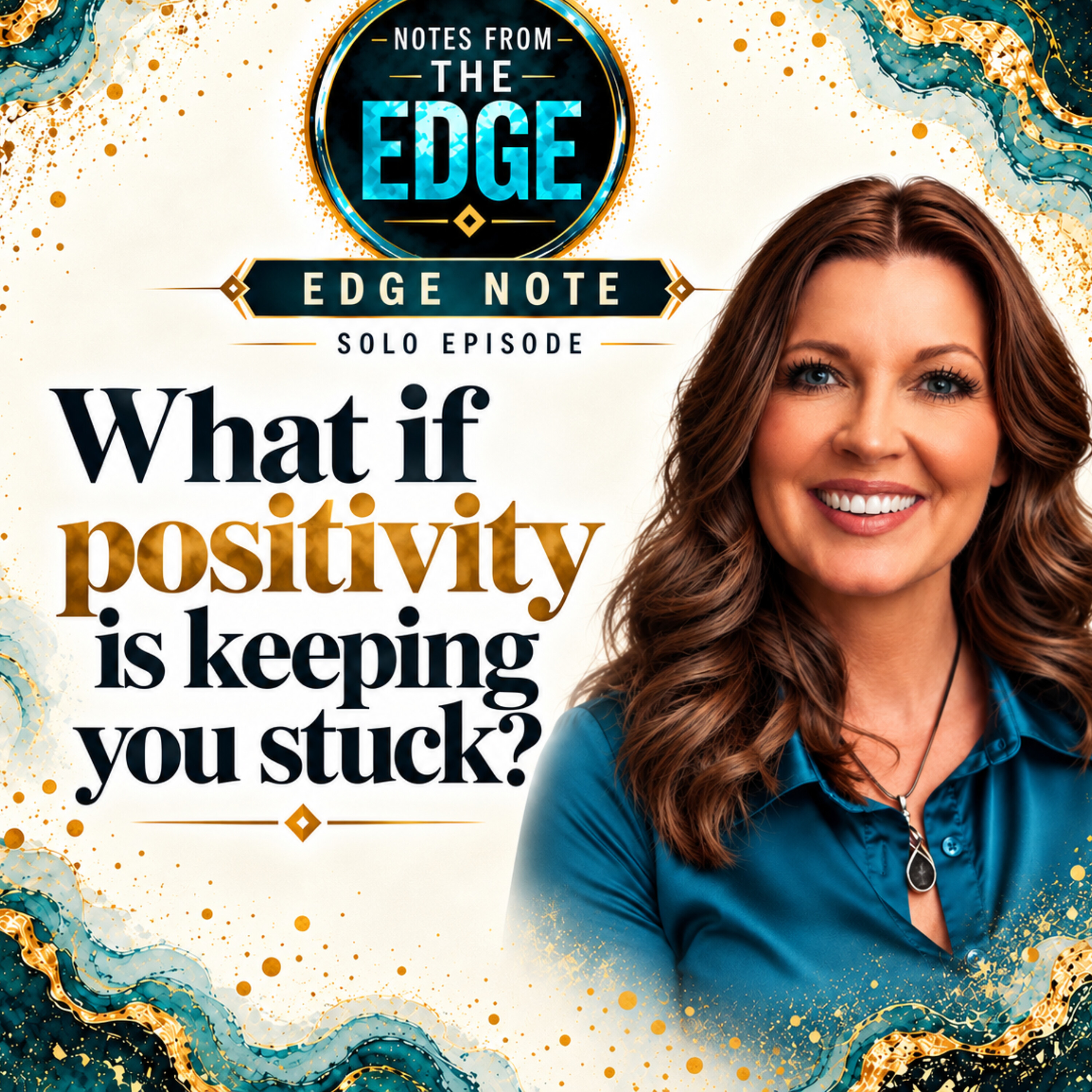
Lisa Lacy's 10-minute Edge Note examines the shadow side of positivity culture—specifically how the relentless push to 'look for the good,' practice gratitude, forgive, and trust that everything happens for a reason can become a form of spiritual bypassing that actually prevents healing and growth. The episode…
Worth it if you've felt pressured by positivity culture to suppress legitimate pain, or if you're curious about spiritual bypassing and how acceptance differs from resignation.