Proof Positive's episode on AlphaBay presents a 12-minute investigation into how Alexandre Cazes built and operated the dark web's largest drug marketplace. Host Daniel Torres guides listeners through a three-year international manhunt that ultimately dismantled a platform processing over $1 billion in illegal…
Worth it if you're a true crime fan seeking a quick, accessible overview of the AlphaBay takedown and enjoy narratives emphasizing detective work over technical detail.
Proof Positive's 12-minute episode examines the engineering and cultural differences between American and European toilet systems. Host Daniel Torres walks through why American toilets consume 3–5 times more water per flush (1.6–3.5 gallons) compared to European models, tracing this back to design choices rooted in…
Worth it if you enjoy quirky deep-dives into how design reflects culture, or if you're curious about the practical and historical reasons everyday objects work the way they do.
BioGraphics' 'Apollo Program Part 1: America's Race to Space' covers the origins and early momentum of the U.S. space program, beginning with the Soviet launch of Sputnik in October 1957 and concluding with President Kennedy's May 1961 commitment to land a man on the moon by decade's end. The episode traces the…
Worth it if you want a solid, accessible introduction to how the space race began and why Kennedy committed America to the moon.
This 23-minute episode presents primary source accounts from participants in the First Crusade (1096), drawing from two scholarly compilations: August C. Krey's 'The First Crusade: The Accounts of Eye-Witnesses and Participants' (1921) and Martha Evelyn McGinty's translation of Fulcher of Chartres' 'Chronicle of the…
Worth it if you want authentic medieval crusade accounts and don't mind commercial breaks interrupting a short documentary-style piece.
Cosmic Peach presents an episode examining Ryan Murphy, described as "the most powerful man in TV," with a focus on Murphy as a person rather than just his body of work. The host indicates this is a long-overdue deep dive into Murphy's character and influence, framed provocatively as examining "horrifying work" and…
Worth it if you're a devoted Ryan Murphy critic looking for casual commentary, but the vague premise and inflammatory language suggest this may prioritize entertainment over insight.
This is a 22-minute 'Behind the Scenes Minis' episode from Stuff You Missed in History Class, a show known for deep dives into overlooked historical topics. Based on the show notes, the episode appears to be a brief, informal discussion between hosts Tracy and Holly about behind-the-scenes production matters rather…
Worth it if you're a devoted fan of the show's hosts and enjoy meta-commentary about their research process, but not if you expect a focused historical narrative.
BioGraphics examines the Roman Emperor Domitian through the lens of historical bias, asking whether he was truly a power-hungry madman or a victim of ancient propaganda. The episode is 25 minutes long and appears to be part of Simon Whistler's biographical series that explores historical figures. Based on the title…
Worth it if you're interested in Roman history, historical bias in ancient sources, or revisionist takes on infamous historical figures.
This 4-minute episode from History's Living Voices presents Tacitus' account of Christians from his Annals, written around 116 AD. The show notes indicate the episode features the oldest surviving Roman reference to Christianity, specifically Tacitus' description of Nero's persecution of Christians in 65 AD. According…
Worth it if you want a quick exposure to Tacitus' actual words on early Christianity, but not if you seek substantive historical analysis or context.
Proof Positive's 13-minute episode investigates the persistent influence of Nazi-era fortunes on modern German business. Host Daniel Torres frames the investigation around a central claim: that major German family companies built their wealth on forced labor during World War II and continue to wield economic power…
Worth it if you want a quick introduction to how Nazi-era corporate exploitation connects to modern German business, but not if you need detailed evidence, named companies, or nuanced historical analysis.
BioGraphics' episode on John Quincy Adams explores the life of the sixth U.S. President through the lens of his paradoxical legacy—a man who achieved remarkable things despite a failed presidency. The show notes reference comprehensive source material including the Miller Center, Biography.com, Britannica, the…
Worth it if you're interested in American history, presidential legacies, or how historical figures' reputations can shift based on their later work.
This episode presents an audio reading of the opening section of Procopius of Caesarea's 'History of the Wars of Justinian', a sixth-century historical text that documents the military campaigns of Byzantine Emperor Justinian I (r. 527–565). The episode is part of History Time's 'Living Voices' series, which aims to…
Worth it if you want to hear Procopius's own words read aloud and are already familiar with Late Antique history, or if you prefer unmediated primary sources over expert commentary.
This Timeline documentary examines Britain's critical desert campaign in North Africa during 1942, focusing on the strategic and tactical battles that prevented Axis forces from capturing Egypt and its vital oilfields. The episode frames the conflict as a pivotal moment in WWII—had the British lost, the Allies would…
Worth it if you're interested in WWII military tactics, desert warfare strategy, or how historical Middle East conflicts shaped modern geopolitics.
Pattern Break's 18-minute episode examines the Great Pyramid as an engineering and logistical marvel, arguing that its construction was achieved through sophisticated organization rather than supernatural means. Host Casey frames pyramid-building as ancient Egypt's equivalent of the Manhattan Project, emphasizing how…
Worth it if you want a quick, accessible overview of pyramid logistics and engineering for casual learning, but not if you seek scholarly depth or engagement with historical debate.
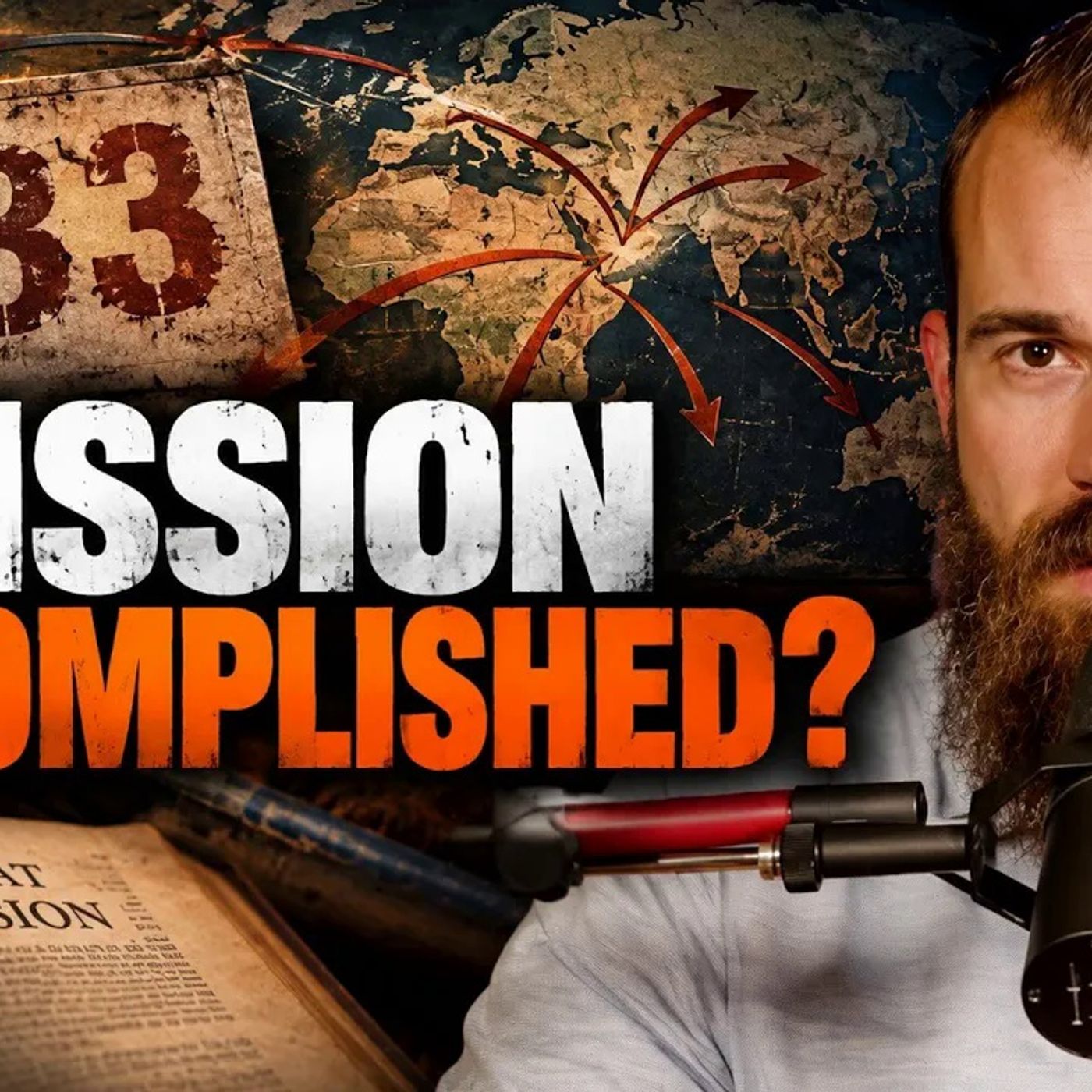
Eschatology Matters examines whether the Great Commission—Jesus's command to make disciples of all nations—has already been completed or remains an ongoing task for the church. Host Alex Kocman challenges two competing theological positions: the view that apostles fulfilled the Great Commission in the first century,…
Worth it if you're interested in Christian eschatology, missiology, or want a quick theological pushback against deadline-driven mission movements.
My Lunch Break's episode on "The Hidden History of Texas?" promises an investigation into Galveston's history, focusing on a mysterious figure connected to old-world buildings who allegedly served as a pawn for 1800s leaders. The show notes hint at investigations into lodges, mysterious fires, and unspecified…
Worth it if you enjoy speculative conspiracy narratives framed as entertainment rather than rigorous history, and don't require sourced evidence or verifiable claims.
BioGraphics presents the story of Lady Jane Grey, the nine-day queen of England in 1553. The episode covers her lineage as a descendant of Henry VII and cousin to Edward VI, Mary I, and Elizabeth I, establishing her claim to the throne through Edward VI's will. The narrative traces how Jane's Protestant faith made her…
Worth it if you're interested in Tudor history, religious conflict in Renaissance England, or tragic historical figures, and enjoy narrative-driven biographical podcasts.
This documentary traces Japan's rapid transformation from an isolated feudal society to a major world power between 1865 and 1905—a 40-year span that fundamentally reshaped the nation. The episode is structured chronologically through key phases: the end of the Edo period and opening to the world, Japan's initial…
Worth it if you want a comprehensive, academically-grounded overview of Japan's Meiji-era transformation and are comfortable with a straightforward documentary approach to history.
BioGraphics' episode on Abraham Zapruder focuses on the man behind the most famous piece of footage in American history—the 8mm film he shot on November 22, 1963, that captured President John F. Kennedy's assassination in Dallas. The episode is part of BioGraphics' ongoing series on fascinating historical figures and…
Worth it if you're interested in JFK assassination history or want a quick biographical overview of an overlooked historical figure.
This 21-minute episode features a reading from Fukuzawa Yukichi's autobiography, specifically his first-hand account of visiting Europe after Japan's period of sakoku (forced isolation). The episode presents Fukuzawa's observations of England, France, Holland, and Russia during the 1862 Tokugawa Embassy—a historically…
Worth it if you're interested in Japanese history, cross-cultural perspectives on Western modernization, or primary source material from Japan's transformative Meiji era.
Timeline's episode on Captain Kidd's lost fortune follows forensic investigator Scott Walter as he traces the historical mystery of whether America's first millionaire pirate actually discovered and hid a legendary treasure. The investigation spans from 17th-century Boston jail cells to the crumbling mansions of the…
Worth it if you enjoy pirate history, unsolved mysteries, and forensic investigation approaches to historical questions, and don't mind dramatic framing of historical ambiguity.
Proof Positive's 12-minute episode examines how McDonald's operates differently across Europe compared to the United States, with host Daniel Torres exploring the intersection of design, regulation, and cultural adaptation. The episode's central claim is that European McDonald's locations function as fundamentally…
Worth it if you're curious about how regulation shapes consumer experience, interested in sustainability innovations, or want to understand brand localization strategies.
Pattern Break's 14-minute episode explores how Augustus weaponized Vergil's Aeneid as a propaganda tool to reshape Rome's cultural identity. The core argument is that educated Romans of Augustus's time were culturally dominated by Greek literature, particularly Homer's Iliad, which portrayed their Trojan ancestors as…
Worth it if you want a quick, accessible introduction to the Aeneid's political context, but not if you seek rigorous historical analysis or deep textual engagement.
This episode features Matthew LaCroix, an ancient history researcher and author, discussing his work on lost civilizations and spiritual mysteries. LaCroix has published three books: The Illusion of Us, The Stage of Time (exploring lost civilizations and ancient catastrophes), and The Epic of Humanity (co-written with…
Worth it if you're interested in alternative ancient history theories, lost civilizations, and the Anunnaki hypothesis, and you enjoy long-form spiritual podcast conversations.
Western Civ Episode 560 covers the December 7, 1941 attack on Pearl Harbor and its historical consequences, with particular focus on the Japanese strategic rationale for the bombing and Hitler's subsequent decision-making in response. The episode title 'The Longest Sunday' appears to reference the extended impact and…
Worth it if you want a straightforward historical overview of Pearl Harbor and its immediate consequences, or are new to Western Civ's format.