
Shame Is Not A Health Plan: Coach Bill Hogarty On Our Kids and Families
Evaluation and Summary
This episode features Coach Bill Hogarty, a former competitive bodybuilder and founder of the Kids Diabetes Foundation, in conversation with host Corinna about childhood health, insulin resistance, and the counterproductive role of shame in family wellness. Hogarty's arc—from peak athletic condition to weight gain following injury—gave him empathy for struggling families, which now informs his work preventing childhood insulin resistance. The conversation centers on several key themes: why BMI is an inadequate health marker compared to A1C levels and body composition; how muscle functions as an endocrine organ that protects aging bodies; and why shame-based approaches to health fail while moderation-based strategies succeed. The hosts discuss diet culture's generational toll, with Corinna pushing back on shame-laden health messaging while Hogarty validates her concerns. They explore practical, low-pressure tactics for families: involving children in produce selection, daily 30-minute walks with loved ones, and understanding A1C as a critical health metric many doctors overlook. The episode positions itself against abstinence-based dietary rules, arguing they backfire, and advocates instead for sustainable behavioral change rooted in compassion rather than guilt. The conversation is framed as candid and sometimes disagreeing, suggesting genuine dialogue rather than scripted alignment. A disclaimer notes neither host nor guest are medical professionals, and the episode is for informational and entertainment purposes only.
Verdict: A thoughtful, practically grounded conversation on family health that challenges shame-based messaging, but limited by non-expert hosts and reliance on show notes that cannot confirm depth or pacing.
Science rubric
-
Scientific accuracy 3/5 20%
Shows notes reference legitimate health concepts (A1C, body composition, muscle as endocrine organ, insulin resistance) but lack specifics; disclaimer acknowledges non-expert hosts, which is responsible but limits depth.
-
Clarity for non-experts 3/5 20%
Practical examples (produce selection, walking) and accessible framing suggest clarity, but without hearing the episode itself, the depth of explanation for concepts like A1C or endocrine function cannot be verified.
-
Sense of discovery 3/5 15%
Hogarty's personal transformation and empathy-driven approach offer fresh perspective, but the core ideas (BMI limitations, moderation over restriction, shame backfiring) are established in health literature.
-
Substance 3/5 15%
Shows notes promise substantive topics (insulin resistance, diet culture critique, practical tactics) and note disagreement between hosts, suggesting real dialogue; 57 minutes suggests adequate depth, though padding cannot be assessed from
-
Delivers on its title 4/5 15%
Title 'Shame Is Not A Health Plan' is directly addressed throughout the description; episode explicitly critiques shame-based approaches and offers compassion-centered alternatives for kids and families.
-
Value for time 3/5 15%
57 minutes for a two-person conversation with practical takeaways suggests reasonable pacing, but without audio evidence, efficiency cannot be fully assessed; structure appears focused on core themes.
Worth it if you're a parent concerned about childhood metabolic health, skeptical of diet culture, or seeking compassion-centered approaches to family wellness.
Based on the episode description. AI-generated; it can be wrong.
Show notes
More from Care More Be Better: A Podcast For Sustainable Social Impact and Regeneration

This 59-minute episode features Monica Sanders, a Georgetown Law professor, author, and founder of The Undivide Project, discussing her book 'Climate and Code' and the intersection of digital access, climate resilience, and disaster equity. Sanders, a Hurricane Katrina survivor, brings personal and professional…
Worth it if you care about climate justice, disaster resilience, digital equity, or how technology can serve marginalized communities—or if you want to understand why digital infrastructure matters during environmental crises.
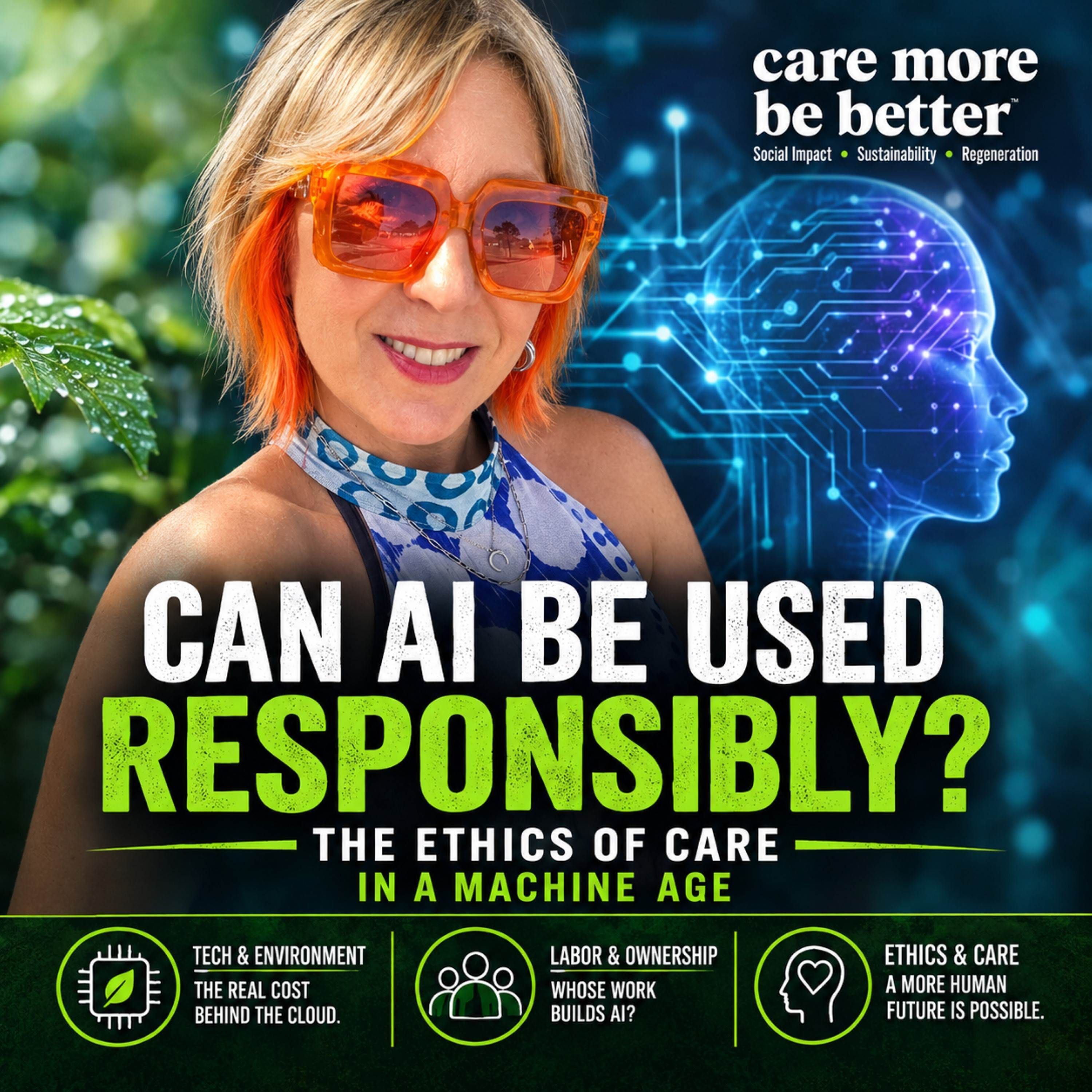
Host Corinna Bellizzi delivers a solo episode reframing AI ethics through the lens of care rather than power. Drawing on Carol Gilligan's ethics of care tradition and her own doctoral research into regenerative enterprise, Bellizzi argues that AI can amplify care—but only with intention, transparency, and…
Worth it if you want to move beyond AI fear-mongering or cheerleading and explore what responsible, intentional use actually means through a care-centered ethical framework.