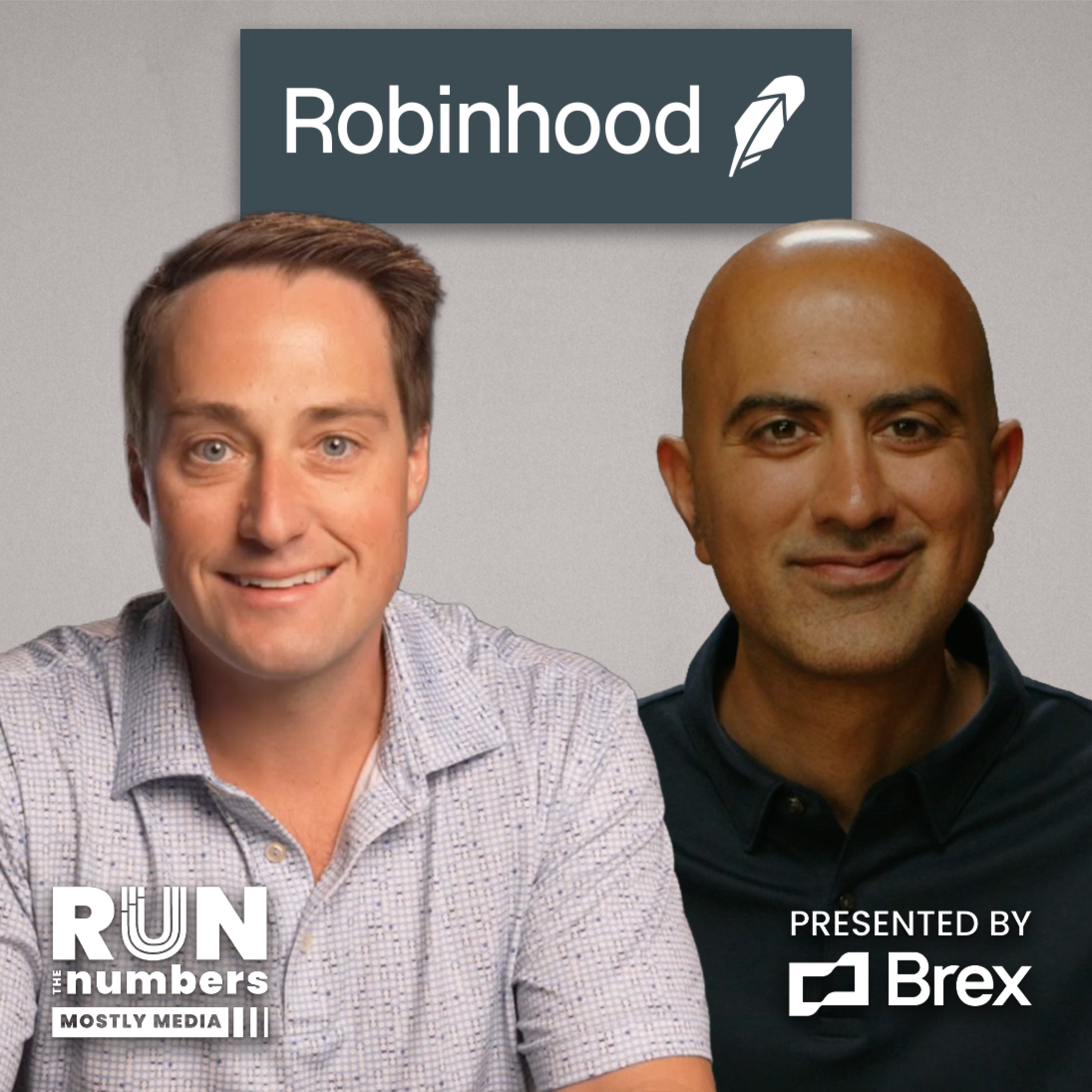
Robinhood's CFO on Refounding & the Art of Capital Allocation | Shiv Verma
Evaluation and Summary
Run the Numbers hosts CJ Gustafson in conversation with Shiv Verma, CFO of Robinhood, to explore the fintech company's 2022 "refounding" and its approach to capital allocation at scale. The episode centers on how Robinhood operates with unusual discipline: Verma personally approves every headcount and marketing dollar despite the company's $100B+ valuation, a practice rooted in the company's core philosophy of avoiding loss leaders, minimizing variable costs, and enforcing a hard $100 million ARR threshold for new product launches. Key topics covered include Robinhood's shift from traditional committee-based decision-making to a DRI (Directly Responsible Individual) model, the adoption of NPS as a core metric, and a transition to a GM (General Manager) model for accountability. Verma discusses the company's three-tier capital allocation framework: Core (existing revenue-generating products), Scaling (proven products expanding), and New Seeds (experimental bets). The episode explores specific applications of this philosophy, including the rapid development of prediction markets and the company's entry into private-market investing, both constrained by the $100M ARR bar. Verma articulates a strong stance against variable costs and market-share-at-all-costs strategies, emphasizing unit economics and profitability from inception. The conversation touches on forecasting challenges in a volatile business, the abandonment of OKRs in favor of simpler goal-setting, and lessons drawn from the Oakland A's moneyball approach to resource allocation. The episode includes substantial sponsor content (eight integrated reads) and concludes with personal reflections: Verma's biggest mistake, advice to his younger self, and a brief tour of Robinhood's finance tech stack. The material suggests a deep, operator-level conversation grounded in real constraints and decision-making frameworks rather than abstract theory. Verma's willingness to discuss specific operational choices—personal headcount sign-offs, killing committees, rejecting OKRs—indicates concrete experience. However, the show notes provide limited detail on concrete examples, data points, or pushback that might validate claims, making it difficult to assess the depth of evidence versus assertion.
Verdict: A credible, framework-rich conversation with a proven operator that delivers on its promise, though it relies more on philosophy and assertion than hard data or detailed case studies.
Business rubric
-
Actionable takeaways 4/5 20%
Clear frameworks (DRI model, three-tier capital allocation, $100M ARR bar, no loss leaders) that listeners can adapt; personal approval processes and metric choices are specific enough to implement, though real-world applicability varies by
-
Evidence over hype 3/5 20%
Verma speaks from direct CFO experience at a major company, but show notes lack concrete metrics, case studies, or data points to validate claims about efficiency gains or capital allocation outcomes.
-
Guest and host credibility 5/5 15%
Shiv Verma is CFO of a $100B+ fintech company with direct responsibility for capital allocation and operational decisions; this is proven, high-stakes experience directly relevant to the topic.
-
Substance 4/5 15%
Dense with operational frameworks and decision-making philosophy across 67 minutes; timestamps show 13 distinct topics with minimal filler, though sponsor reads consume notable time.
-
Delivers on its title 5/5 15%
Title promises insight into Robinhood's refounding and capital allocation; episode directly addresses both, with substantial time on the philosophy and mechanics of how capital is deployed.
-
Value for time 3/5 15%
Solid pacing with substantive content, but eight sponsor reads and personal anecdotes (Oakland A's, younger-self advice) add length without direct relevance to core topics; could be tighter.
Worth it if you're a founder, CFO, or finance leader interested in capital discipline, operational frameworks, and how a major fintech company thinks about resource allocation and product prioritization.
Content flags
- Ad-heavy Eight sponsor reads (RightRev, Fidelity, Rillet, Cloud Capital, Brex, Abacum, EY, Mostly Talent) integrated throughout a 67-minute episode; typical for the show but notable density.
Based on the episode description. AI-generated; it can be wrong.
Show notes
More from Run the Numbers

Run the Numbers Part 1 explores the emerging challenge of AI token spend as a significant and growing line item on corporate P&Ls. Host CJ Gustafson interviews Ali Hussain from Tabs, a revenue platform specializing in usage-based billing, to unpack how companies are grappling with AI inference costs. The episode…
Worth it if you're a finance leader, CFO, or CTO grappling with AI cost allocation, or building tools in the AI finance stack.