
Token Series Part 1 | How AI Created a New Budget
Evaluation and Summary
Run the Numbers Part 1 explores the emerging challenge of AI token spend as a significant and growing line item on corporate P&Ls. Host CJ Gustafson interviews Ali Hussain from Tabs, a revenue platform specializing in usage-based billing, to unpack how companies are grappling with AI inference costs. The episode frames AI spend as fundamentally different from earlier technology transitions, moving from experimental "play money" budgets into real operating expenses that force organizational questions about ownership and accountability. A central tension emerges: should AI costs live with the CTO (engineering) or CFO (finance)? The hosts explore why this matters more than it might initially appear, given that AI spend is becoming a material cost driver for many companies. They draw parallels to the cloud transition but argue AI differs in important ways—particularly its rapid proliferation across multiple LLM providers (OpenAI, Anthropic, Google, etc.) rather than consolidation around one or two vendors. The episode positions AI spend as "electricity through the house," a utility-like cost that's hard to meter and allocate. Two contrasting approaches to solving this problem are highlighted: OpenRouter (acquired by Stripe), which takes an engineering-first aggregation layer approach, and Ramp's new offering, which approaches the problem from a finance-first perspective. The discussion touches on the emerging finance stack needed to handle AI spend—billing, collections, revenue recognition, and cost allocation—and hints at the downstream question of whether and how companies pass these costs to customers. The episode is positioned as Part 1 of a series, suggesting deeper dives are planned. The guest brings relevant domain expertise from Tabs, a company directly solving these problems for customers like Cortex, Statsik, and Cursor.
Verdict: A timely, well-structured exploration of a real and growing business problem with credible guests, but limited by brevity and lack of concrete data or actionable steps for most listeners.
Business rubric
-
Actionable takeaways 2/5 20%
Show notes hint at frameworks (CTO vs. CFO ownership, engineering vs. finance tools) but provide no specific steps, metrics, or implementation guidance listeners can immediately apply.
-
Evidence over hype 2/5 20%
Discussion references real companies (OpenRouter, Ramp, Tabs customers) and contrasts approaches, but no concrete data, cost examples, or case study details are provided in the notes.
-
Guest and host credibility 4/5 15%
Ali Hussain works at Tabs, a company directly solving AI spend problems with proven customers; CJ Gustafson hosts a business metrics show, giving both relevant domain positioning.
-
Substance 3/5 15%
Timestamps show structured coverage of distinct topics (ownership, cloud lessons, provider proliferation, tool approaches, finance stack), but 15 minutes limits depth; likely solid content with some surface-level treatment.
-
Delivers on its title 4/5 15%
Title promises insight into how AI created a new budget line item; episode directly addresses this through organizational ownership, cost transition, and emerging tools, though as Part 1 it may not fully resolve the topic.
-
Value for time 3/5 15%
15 minutes is tight for covering organizational structure, cloud parallels, multiple tool approaches, and finance stack—likely efficient but may feel rushed or leave questions unanswered.
Worth it if you're a finance leader, CFO, or CTO grappling with AI cost allocation, or building tools in the AI finance stack.
Content flags
- Sponsored Episode is presented as part of a Tabs-sponsored series; guest is from Tabs and the episode promotes Tabs' approach to AI spend management.
Based on the episode description. AI-generated; it can be wrong.
Show notes
More from Run the Numbers
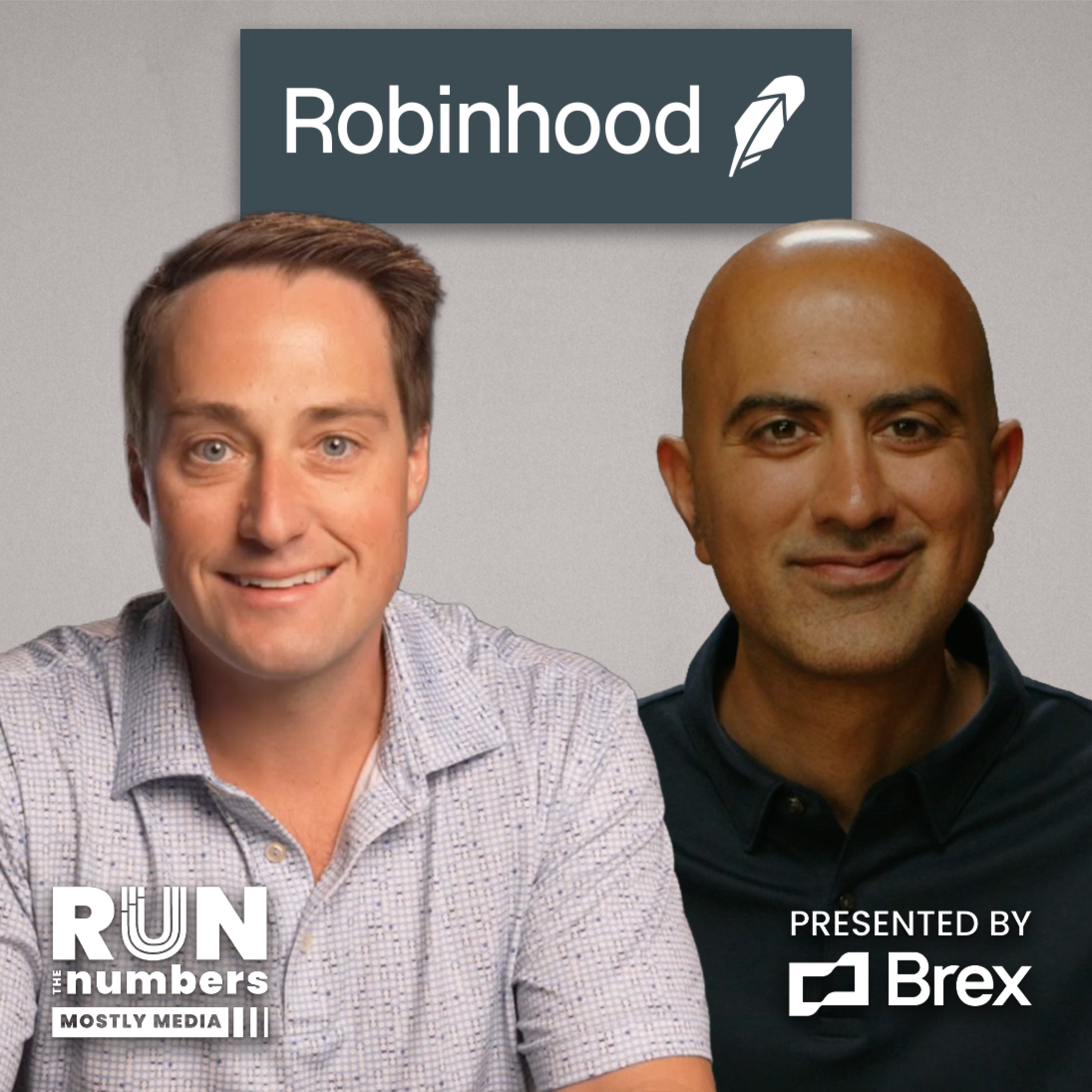
Run the Numbers hosts CJ Gustafson in conversation with Shiv Verma, CFO of Robinhood, to explore the fintech company's 2022 "refounding" and its approach to capital allocation at scale. The episode centers on how Robinhood operates with unusual discipline: Verma personally approves every headcount and marketing dollar…
Worth it if you're a founder, CFO, or finance leader interested in capital discipline, operational frameworks, and how a major fintech company thinks about resource allocation and product prioritization.