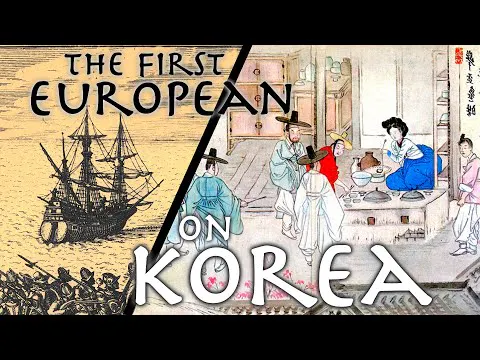
First European Description of Life in Korea // 1668 'Hamel's Journal' // Primary Source
Evaluation and Summary
This 22-minute episode from History's Living Voices presents Hendrick Hamel's 1668 journal account, the first known Western first-hand description of life in Korea. Hamel was shipwrecked on the Korean peninsula in 1653 and spent years there before escaping, making him a unique historical witness to the Joseon Kingdom during the mid-17th century. The episode draws from an 1885 publication 'Corea, Without and Within' by William Elliot Griffis that compiled Hamel's observations. The show notes indicate Hamel documented a society of striking contrasts: people he perceived as simultaneously dishonest yet gullible, highly educated yet deeply misogynistic. Among his observations were technological and cultural details, notably the advanced underfloor heating system (ondol) used in Korean homes—presented as a remarkable example of Korean ingenuity. The episode appears to be a narrated reading of primary source material rather than a documentary analysis, with voice acting by David Kelly and supporting historical imagery. The framing emphasizes the value of preserving primary sources and positions this as a rare window into pre-modern Korean society from a European perspective. The episode is part of a channel focused on historical primary sources, with cross-promotion of the creator's brother's documentary channel and a Patreon appeal. A MagellanTV sponsorship is included offering viewers an extra free month of streaming access.
Verdict: A solid educational resource for history enthusiasts interested in primary sources and East Asian history, but limited by reliance on secondary compilation and unclear analytical depth.
Education rubric
-
Clarity of explanation 3/5 20%
Show notes suggest narrated primary source reading, which can be clear but lacks analytical framing; characterizations like 'blatant liars, yet incredibly credulous' are presented without deeper context or explanation
-
Accuracy 3/5 20%
Primary source material from 1653 shipwreck is historically documented; however, sourcing through an 1885 secondary compilation rather than original texts introduces potential interpretation layers not disclosed
-
Structure 3/5 15%
Appears to follow Hamel's journal structure with thematic observations (education, gender, technology) but show notes don't indicate clear narrative arc or analytical progression
-
Substance 3/5 15%
Primary source content is inherently substantive, but 22 minutes for a complex historical account suggests selective excerpting; specific examples like underfloor heating are mentioned but depth unclear
-
Delivers on its title 4/5 15%
Title promises 'First European Description' and 'Hamel's Journal'—both delivered; episode directly addresses the primary source and its historical significance
-
Value for time 3/5 15%
22 minutes is reasonable for a primary source reading, but without knowing pacing, editorial choices, or analytical depth, efficiency cannot be fully assessed
Worth it if you're interested in primary historical sources, 17th-century Korea, or early Western accounts of Asian societies, and enjoy narrated historical readings.
Content flags
- Ad-heavy MagellanTV sponsorship with extended offer takes up significant portion of show notes relative to episode length
Based on the episode description. AI-generated; it can be wrong.
Show notes
More from History's Living Voices: The Past, Told by Those Who Lived It

This 23-minute episode presents primary source accounts from participants in the First Crusade (1096), drawing from two scholarly compilations: August C. Krey's 'The First Crusade: The Accounts of Eye-Witnesses and Participants' (1921) and Martha Evelyn McGinty's translation of Fulcher of Chartres' 'Chronicle of the…
Worth it if you want authentic medieval crusade accounts and don't mind commercial breaks interrupting a short documentary-style piece.

This 4-minute episode from History's Living Voices presents Tacitus' account of Christians from his Annals, written around 116 AD. The show notes indicate the episode features the oldest surviving Roman reference to Christianity, specifically Tacitus' description of Nero's persecution of Christians in 65 AD. According…
Worth it if you want a quick exposure to Tacitus' actual words on early Christianity, but not if you seek substantive historical analysis or context.

This episode presents an audio reading of the opening section of Procopius of Caesarea's 'History of the Wars of Justinian', a sixth-century historical text that documents the military campaigns of Byzantine Emperor Justinian I (r. 527–565). The episode is part of History Time's 'Living Voices' series, which aims to…
Worth it if you want to hear Procopius's own words read aloud and are already familiar with Late Antique history, or if you prefer unmediated primary sources over expert commentary.

This documentary traces Japan's rapid transformation from an isolated feudal society to a major world power between 1865 and 1905—a 40-year span that fundamentally reshaped the nation. The episode is structured chronologically through key phases: the end of the Edo period and opening to the world, Japan's initial…
Worth it if you want a comprehensive, academically-grounded overview of Japan's Meiji-era transformation and are comfortable with a straightforward documentary approach to history.

This 21-minute episode features a reading from Fukuzawa Yukichi's autobiography, specifically his first-hand account of visiting Europe after Japan's period of sakoku (forced isolation). The episode presents Fukuzawa's observations of England, France, Holland, and Russia during the 1862 Tokugawa Embassy—a historically…
Worth it if you're interested in Japanese history, cross-cultural perspectives on Western modernization, or primary source material from Japan's transformative Meiji era.

This 14-minute episode from History's Living Voices presents a historical account of Native American perspectives on first contact with Europeans, drawn from John Gottlieb Ernestus Heckewelder's 1770s ethnographic work 'History, manners, and customs of the Indian nations who once inhabited Pennsylvania and the…
Worth it if you're interested in early colonial history, Native American perspectives on European contact, or appreciate primary source material presented in audio form.