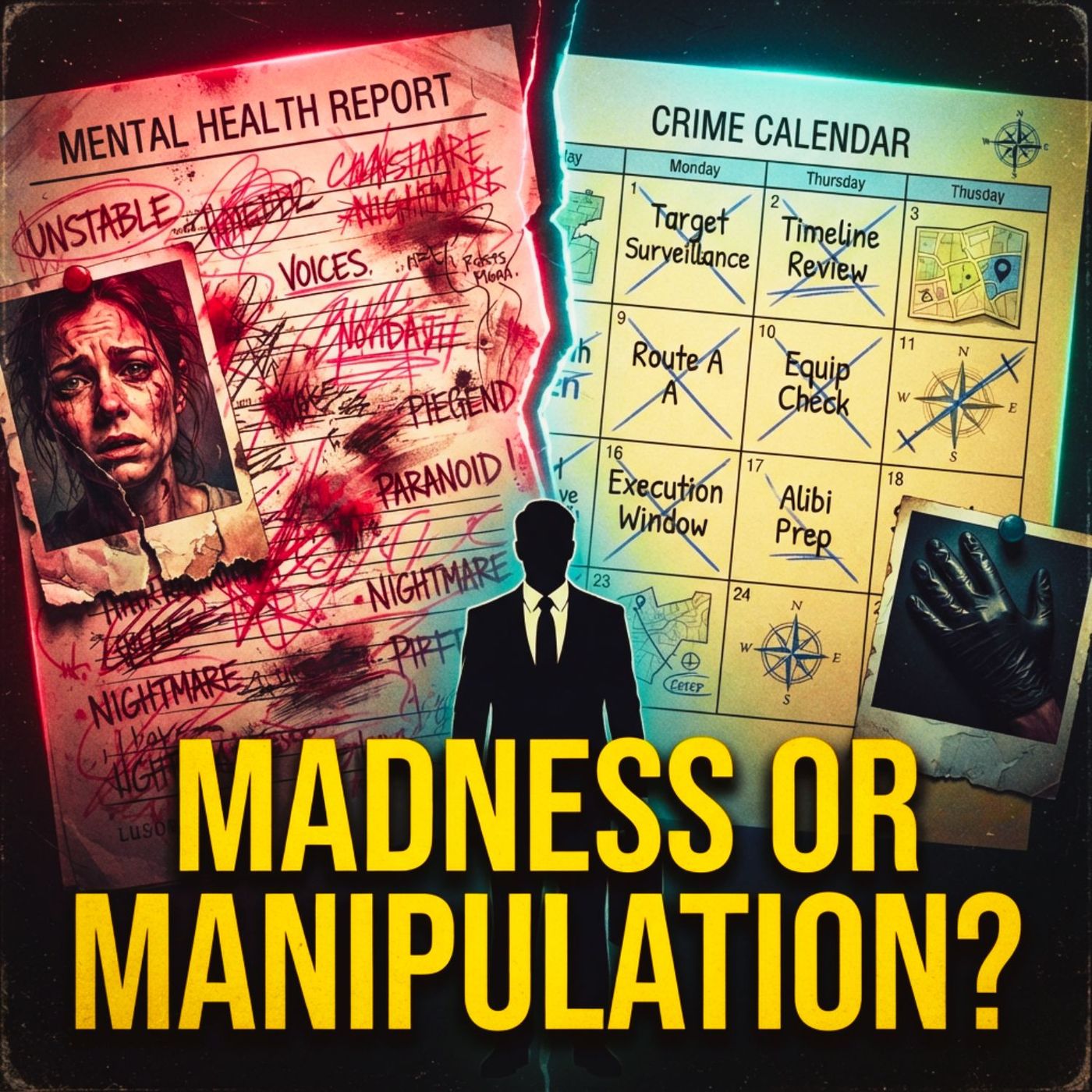
GUILTY by Choice or CRAZY by Design?
Evaluation and Summary
Thrilling Threads examines the insanity defense in criminal law, exploring the tension between genuine psychiatric illness and calculated malingering by defendants seeking to evade accountability. The episode promises to dissect how defense teams allegedly weaponize mental health claims, using case studies of notorious criminals to illustrate the stakes. The show notes outline four main areas of focus: the tactics of malingering (how defendants stage psychological breakdowns), prosecutorial strategies (using evidence of planning and organization to counter fake pleas), real-world trial case studies that shaped justice precedent, and the challenge experts face in distinguishing authentic trauma from performance. The framing positions the insanity defense as a legal gray zone where psychiatric reality blurs with courtroom theater, targeting an audience interested in true crime, forensic psychology, and legal drama. However, the source material provides only promotional description—no actual case names, guest credentials, specific examples, or substantive details about what the episode actually covers. The show notes use sensationalized language ('weaponize,' 'cheat the law,' 'scam') that suggests a prosecutorial bias rather than balanced exploration. There's no indication of whether the episode features forensic psychologists, defense attorneys, prosecutors, or other expert voices, nor any hint of the specific cases discussed or the depth of analysis provided. The description emphasizes shock value and courtroom drama over rigorous examination of a genuinely complex legal and psychiatric question.
Verdict: Promising topic with sensationalized framing and no verifiable content details; middle-of-the-road rating reflects genuine uncertainty about execution quality.
Society & Culture rubric
-
Fresh perspective 2/5 40%
The insanity defense debate is well-trodden ground in true crime; show notes offer no novel angle or surprising insight beyond the familiar 'guilty or crazy' binary.
-
Storytelling and voices n/a
No information about guest experts, case details, or narrative structure; impossible to assess voice range or storytelling quality from promotional copy alone.
-
Thoughtfulness 2/5 30%
Framing language ('weaponize,' 'scam,' 'cheat') suggests a one-sided prosecutorial stance rather than nuanced exploration of psychiatric complexity and legal ethics.
-
Substance n/a
Show notes list promised topics but provide zero actual content, case names, expert analysis, or evidence of substantive material; cannot assess density or filler.
-
Delivers on its title 3/5 30%
Title and description align on the core question (choice vs. design/illness), but without episode content, unclear if it genuinely explores both sides or leans heavily prosecutorial.
-
Value for time n/a
52 minutes is moderate length for the topic, but pacing and tightness cannot be judged from show notes alone.
How we score Society & Culture
Worth it if you enjoy true crime podcasts and don't mind a prosecutorial lean on the insanity defense debate, but verify episode quality before committing 52 minutes.
Content flags
- Clickbait Title and emojis promise 'shocking' courtroom drama and psychological games, but show notes reveal no specific cases, guests, or evidence of the promised revelations.
Based on the episode description. AI-generated; it can be wrong.
Show notes
More from Thrilling Threads - Conspiracy Theories, Strange Phenomena, True Crime, Unsolved Mysteries, etc!
Thrilling Threads examines the CIA's Stargate Project, a classified Cold War program that allegedly investigated remote viewing and psychic phenomena for intelligence gathering. The episode frames this around a recent interview with Dr. Edwin May, a physicist who spent decades researching whether psychic abilities…
Worth it if you're already fascinated by CIA conspiracy lore and don't mind speculative framing over skeptical inquiry.

Thrilling Threads explores Rentosertib, a pharmaceutical compound initially developed to treat a lung disease that unexpectedly showed anti-aging effects in trial participants. The episode frames this as an accidental breakthrough in AI-driven drug discovery, examining how the compound emerged from computational…
Worth it if you're curious about longevity biotech and don't mind sensationalist framing, but skip it if you want rigorous scientific analysis or expert interviews.

Thrilling Threads examines a reported story from Breaking Points about Anthropic AI and alleged secret meetings between tech CEOs and the Vatican. The episode frames this around the idea of 'AI confession booths' and explores whether industry leaders are losing control of their own technology. The show notes promise…
Worth it if you enjoy speculative tech-skepticism and don't mind unverified claims mixed with philosophical musing, but skip it if you want grounded reporting or expert analysis.
Thrilling Threads presents a reaction-based deep dive into CIA history and modern surveillance, framed around insights from Annie Jacobsen's appearance on the Dalton Fischer Podcast. The episode promises to explore the CIA's evolution from WWII 'dirty work' through contemporary operations, with particular focus on the…
Worth it if you enjoy conspiracy-adjacent content about government secrecy and don't require primary sources or fact-checking, but skip it if you want rigorous analysis or documented evidence.
Thrilling Threads examines a reported pneumonic plague death at a Siberian laboratory, framing it as a potential biological weapons leak or containment breach. The episode draws on author Annie Jacobsen's research and positions the incident as evidence of dangerous dual-use research in state-run facilities. The show…
Worth it if you enjoy conspiracy-adjacent content and don't mind speculative framing, but skip it if you want evidence-based reporting on biosecurity issues.

Thrilling Threads promises a deep exploration of history's most infamous figures—dictators, cult leaders, serial killers, and tyrants—examining how absolute power corrupts and what psychological mechanisms enable mass atrocities. The episode description frames this as a 'raw, unfiltered look' at despotism across eras,…
Worth it if you enjoy true-crime and historical documentaries, but verify the episode delivers substantive analysis rather than sensationalized storytelling before committing 67 minutes.