Your Twenty Dollar Employee Is Running On Borrowed Money
Evaluation and Summary
AI Breakdown examines the financial underpinnings of the AI boom, specifically how cheap AI tools mask an unsustainable debt structure. The episode's central metaphor—a "$20 employee" running on borrowed money—frames the concern that while AI capabilities have improved, the financial markets pricing these companies have shifted from valuing the technology itself to scrutinizing the debt financing it. The show notes reference Anthropic's IPO delay (moved to November), citing a former Nasdaq executive's observation that the listing went from a "no brainer to not a no brainer" despite the company turning slightly profitable. The key insight: when a business improves but market appetite shrinks, investors stop pricing the company and start pricing "the thing underneath it"—debt. The episode presents three concrete data points: a data centre's bonds issued at 8.9% in August now trading at 11.3% (indicating rising default risk), Oracle debt quoted as low as 89 cents on the dollar against $18 billion exposure, and Meta's first junk bond issuance of $2.3 billion, signaling borrowing patterns typical of companies in financial difficulty. The episode argues that nothing has made AI tools worse technically, but the financing risk has shifted. The practical takeaway is a simple audit: list AI spending, note what you'd do if prices tripled, and ensure your most critical AI dependency is portable rather than locked into a single vendor. The episode runs 9 minutes and includes AI-generated voices alongside human commentary.
Verdict: A sharp, original financial angle on AI economics with concrete data and clear framing, though the short format and unverifiable specifics prevent a higher score.
Technology rubric
-
Technical accuracy 3/5 20%
Bond pricing and debt metrics appear plausible (8.9% to 11.3% spreads, 89 cents on dollar) but cannot be verified from show notes alone; the framing of AI cost economics is sound but lacks technical depth on model pricing or infrastructure
-
Insight beyond the headlines 4/5 20%
The connection between improving AI capabilities and deteriorating debt markets is a genuinely original angle not typical of mainstream tech coverage; the insight that investors have shifted from pricing technology to pricing financial risk
-
Clarity for non-experts 4/5 15%
The $20 employee metaphor is accessible and the debt mechanics are explained clearly; bond pricing and junk bond concepts are introduced without excessive jargon, though some financial literacy helps.
-
Substance 3/5 15%
Three concrete financial data points plus a coherent thesis provide solid content, but the 9-minute format limits depth; the practical advice (audit spending, ensure portability) is useful but brief.
-
Delivers on its title 5/5 15%
The title directly names the central claim—that a $20 AI employee is financed by borrowed money—and the episode delivers exactly that argument with supporting evidence.
-
Value for time 4/5 15%
9 minutes is tight for the scope; pacing appears efficient with specific examples and actionable takeaway, though the brevity limits exploration of counterarguments or nuance.
Worth it if you're an AI investor, startup founder, or tech professional concerned with the sustainability of current AI spending and financing trends.
Based on the episode description. AI-generated; it can be wrong.
Show notes
More from AI Breakdown
AI Breakdown examines a significant market shift: four major AI models released within 72 hours in October 2026, with the headline story not about improved capabilities but about dramatically reduced pricing. The episode's central thesis is that AI has entered an unprecedented cost-deflation cycle—roughly 47% price…
Worth it if you're a business leader, product manager, or AI strategist who needs to understand how rapidly shifting AI economics are invalidating existing budgets and opening new opportunities.
AI Breakdown examines Amazon's decision to block Meta's shopping agent from its platform, framing it as a pivotal moment in the emerging conflict between AI automation and e-commerce business models. The episode argues that Amazon's move wasn't primarily about capability concerns but about economics: AI agents that…
Worth it if you're interested in AI's impact on retail, e-commerce business models, or the emerging conflict between automation and platform monetization strategies.
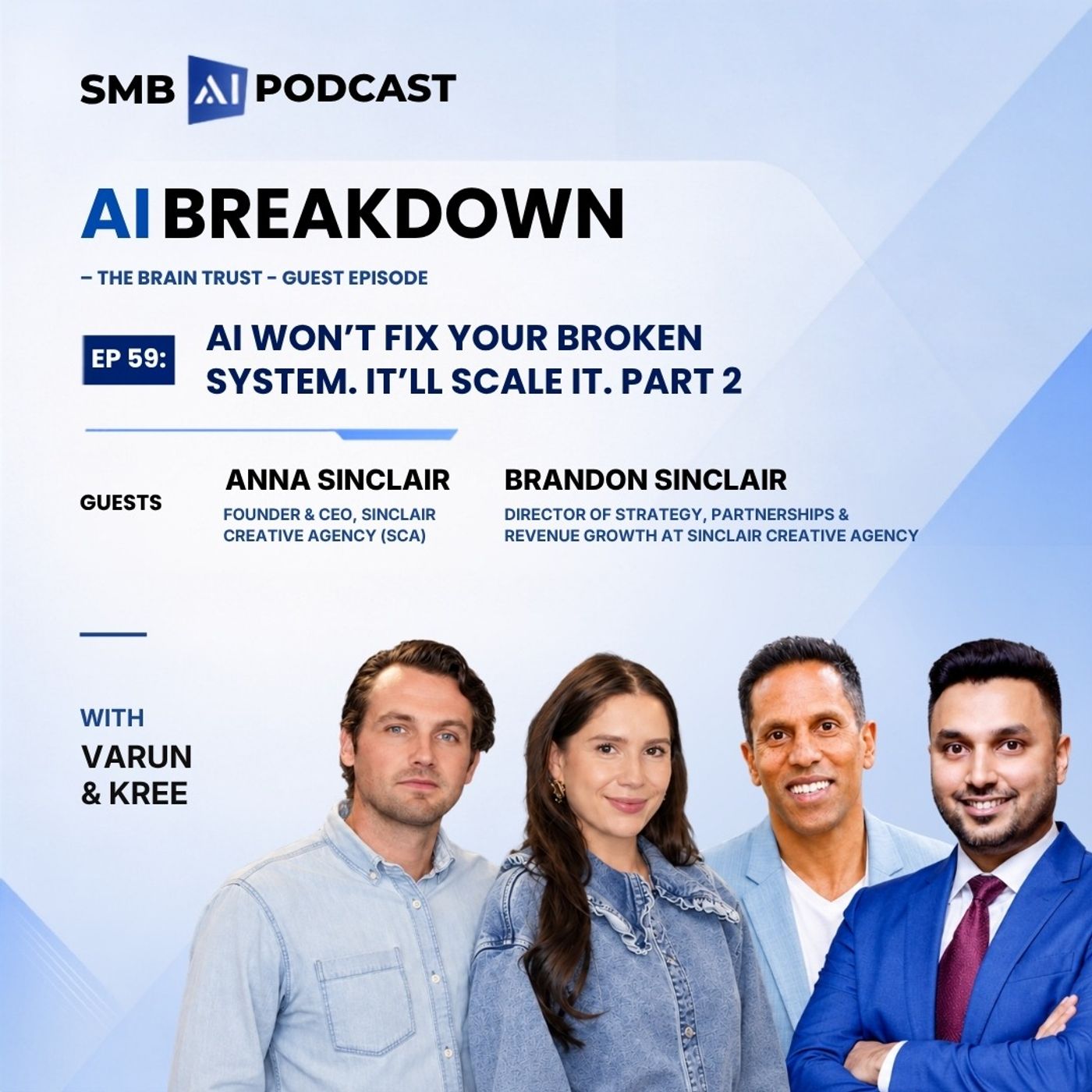
AI Breakdown Part 2 continues a conversation with Anna and Brandon Sinclair, who run a six-person creative agency serving 350+ brands and have deep experience in enterprise revenue systems. The episode frames itself as "the honest half of the conversation," suggesting a more critical, grounded take on AI's actual…
Worth it if you're a small business owner or leader skeptical of AI automation claims and want practical guidance on where AI actually adds value versus where human judgment remains essential.
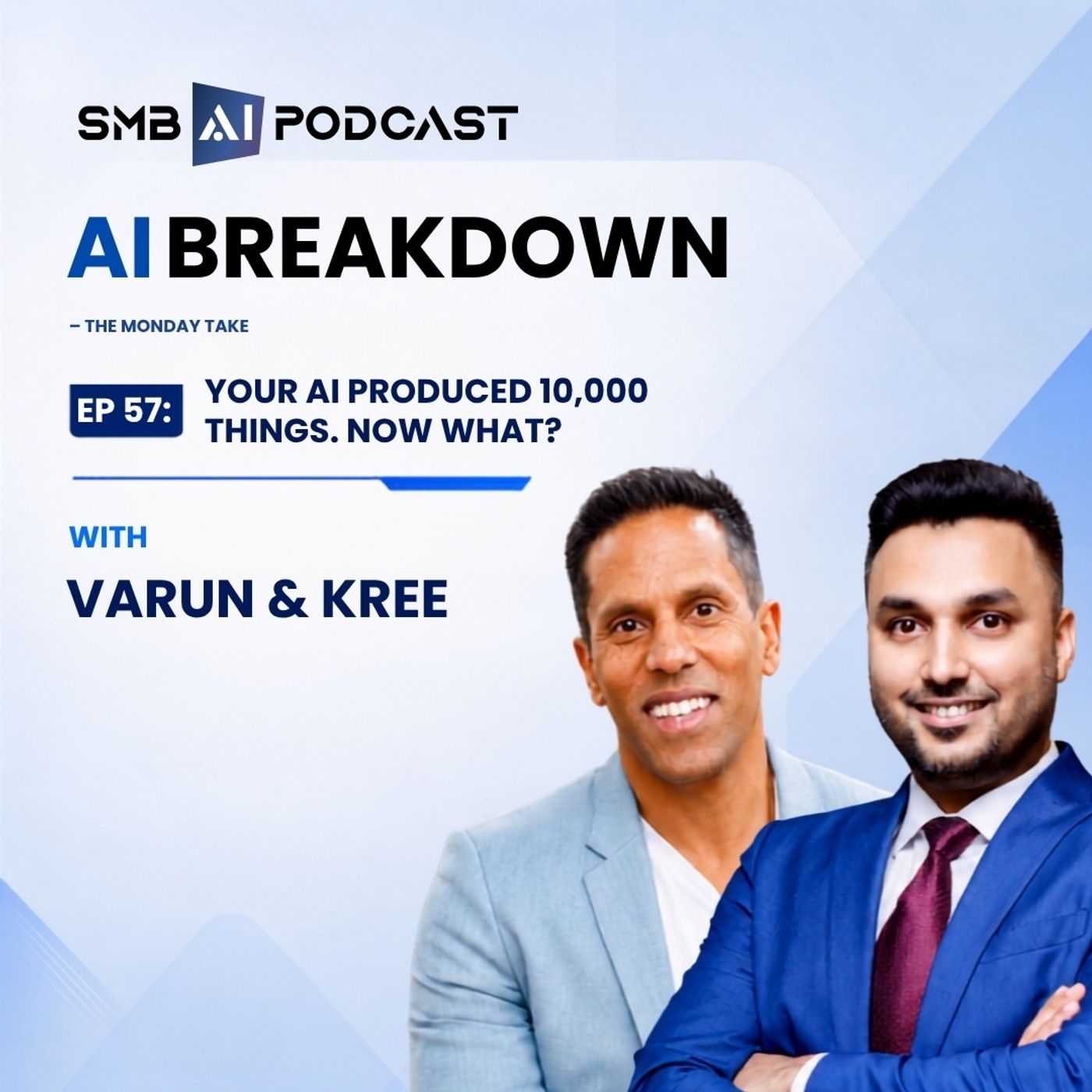
This 22-minute episode tackles a critical problem in AI adoption: companies generating massive volumes of AI output that produces no measurable business value. The hosts frame this as "AI theatre"—outputs created primarily to demonstrate that AI tools are working rather than to solve real problems. The episode centers…
Worth it if you're running a small business, managing AI adoption, or skeptical of productivity claims around AI tools—especially if you've felt the pressure to deploy AI without seeing results.