
The Home Depot
Evaluation and Summary
Acquired's 3.5-hour deep dive into The Home Depot chronicles the company's founding through its evolution into the highest-returning equity in US stock market history. The episode opens with the dramatic origin story: Bernie Marcus and Arthur Blank, fired at ages 48 and 35 from Handy Dan hardware chain, were encouraged by banker Ken Langone (who inadvertently caused their firing) to pursue their vision. The narrative traces key inflection points: the company's 1979 launch with a revolutionary retail model emphasizing customer service and massive warehouse stores, the 1981 IPO, early expansion, and the company's unique operating system that differentiated it from competitors. The hosts examine leadership transitions, including Arthur Blank's move to CEO in 1997, the controversial Bob Nardelli era (2000-2007) marked by operational efficiency gains but cultural deterioration, and Frank Blake's successful turnaround (2007 onward) that restored culture while modernizing e-commerce and distribution. The episode features analysis of Home Depot's competitive advantages through the lens of 7 Powers framework, exploring how the company achieved and maintained its market dominance. The show notes reference cameos from Sol Price, Jamie Dimon, and Ross Perot (who nearly acquired the company), suggesting rich historical context and multiple perspectives on the company's trajectory. The episode includes a detailed operating system breakdown, e-commerce revolution coverage, and contemporary analysis of Home Depot's dual focus on professional and DIY customers. The companion materials—including a PDF guide, visual artifacts page, and references to Marcus and Blank's memoirs—indicate substantial research depth. The episode structure follows a chronological narrative arc with thematic analysis sections, suggesting both storytelling rigor and strategic business insight. Carve-outs (personal recommendations) and sponsor integrations are noted but appear standard for the show format.
Verdict: A meticulously researched, well-structured deep dive into one of America's greatest business stories, combining compelling narrative with rigorous strategic analysis and delivering substantial value for business-minded listeners.
Technology rubric
-
Technical accuracy 4/5 20%
Show notes reference primary sources (Marcus/Blank memoirs, Ken Langone interviews, Worldly Partners study) and specific dates/facts (1981 IPO, leadership transitions), suggesting well-researched content with minimal room for error
-
Insight beyond the headlines 4/5 20%
Episode structure includes 7 Powers analysis and 'Paradox of Specialness' section, indicating forward-looking strategic frameworks beyond surface-level narrative; references to operating system and competitive advantages suggest original sy
-
Clarity for non-experts 4/5 15%
Chronological narrative structure with clear chapter markers and thematic sections (e.g., 'Home Depot's Unique Operating System') suggests accessibility; no evidence of impenetrable jargon in show notes
-
Substance 5/5 15%
3.5-hour runtime with 16 distinct chapter sections covering founding, multiple CEO eras, operational evolution, e-commerce transformation, and strategic analysis indicates dense content throughout
-
Delivers on its title 5/5 15%
Title promises Home Depot story; episode covers founding through 2024 with comprehensive leadership, operational, and strategic analysis as promised
-
Value for time 4/5 15%
3.5 hours with detailed chapter breakdown and multiple analytical sections suggests purposeful pacing; some padding likely given length, but substantial content density indicated by chapter count and scope
Worth it if you're interested in retail history, business strategy, leadership transitions, or want a masterclass in how companies build and maintain competitive advantage over decades.
Content flags
- Ad-heavy Four sponsor reads listed (Sierra, WorkOS, Anthropic, Sentry) plus event promotion and merch store mentions, though typical for Acquired's format
Based on the episode description. AI-generated; it can be wrong.
Show notes
More from Acquired

This is the second part of Acquired's deep-dive into Disney's corporate history, spanning from 1984 to 2026. The episode chronicles Disney's transformation from a company worth more dead than alive in 1984 to a global media empire. It covers Michael Eisner and Frank Wells's arrival and the Animation Renaissance…
Worth it if you're interested in business strategy, media history, corporate acquisitions, or want to understand how Disney became the defining media empire of the 21st century.
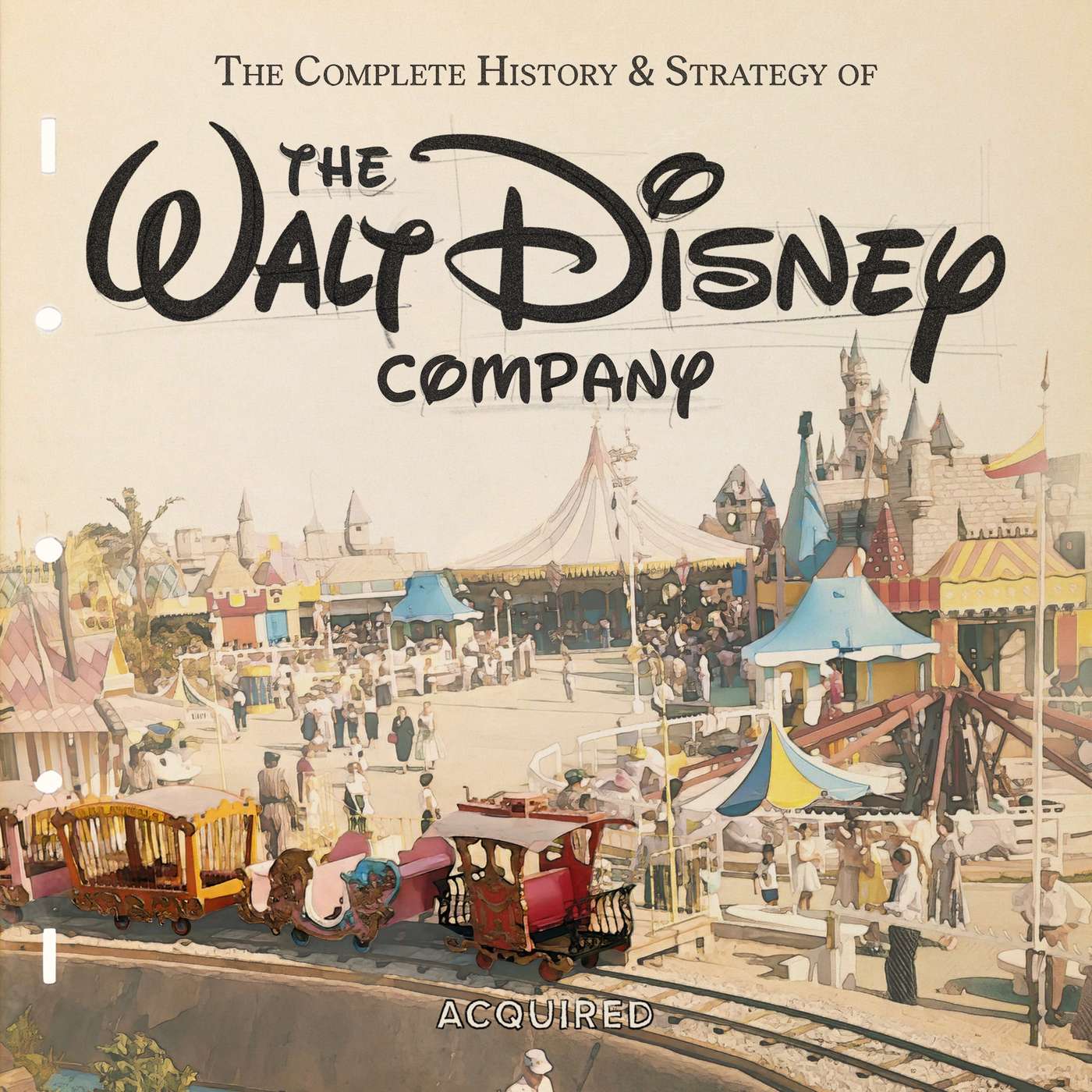
Acquired's 4.5-hour deep dive into The Walt Disney Company traces Walt's era from his childhood through his death in 1966, examining how Disney accidentally invented the modern "flywheel" business model. The episode spans Walt's early artistic ambitions, the transition from commercial art to animation, the creation of…
Worth it if you're fascinated by business history, want to understand how Disney became dominant, enjoy long-form narrative storytelling grounded in primary sources, or appreciate analysis that goes beyond surface-level business journalism.