
Former Green Beret on Doomsday Prepping, Potential Revolution, and What to Do When Chaos Erupts
Evaluation and Summary
Tucker Carlson interviews former Green Beret Mike Glover on prepping, surveillance, and societal collapse. The episode promises guidance on surviving "World War III" and chaos, but the show notes reveal a scattered structure that only partially delivers on this premise. The first segment (00:00-08:59) covers preparation in the face of mass surveillance, establishing a security-focused foundation. This transitions into discussion of "The Growing Revolution Against Surveillance and Data Centers" (08:59-13:51), which appears to frame data infrastructure as a threat worthy of resistance. A tangent on Kevin O'Leary's data centers (13:51-41:31) consumes nearly 30 minutes—a substantial portion of the episode—though its relevance to doomsday prepping is unclear from the notes. The episode then shifts dramatically to "Marriage, Women, and Managing Your Sympathetic Nervous System" (41:31-53:16), a personal wellness topic disconnected from the advertised survival focus. A final segment on "How AI Is Making Us Dumb and Docile" (53:16 onward) adds another thematic layer unrelated to practical prepping. The episode is heavily monetized with five paid partnerships (Ethos life insurance, Paleovalley supplements, American Financing, Dose supplements, and Last Country Supply), suggesting substantial ad integration. The guest, Mike Glover, brings credible military background, but the episode's structure suggests the conversation meanders across surveillance anxiety, tech criticism, personal development, and AI concerns rather than providing coherent, actionable doomsday preparation advice. The title promises concrete guidance on "what to do when chaos erupts," but the show notes suggest the content is more ideological commentary on surveillance and technology threats than practical survival instruction. The episode appears designed to appeal to an audience concerned about systemic collapse and tech overreach, but lacks clear organization or sustained focus on its central premise.
Verdict: A scattered, ad-heavy episode that promises practical doomsday prepping but delivers ideological commentary on surveillance and technology with minimal actionable content.
News rubric
-
Accuracy and sourcing n/a
Show notes provide no factual claims, sourcing, or verifiable statements to evaluate
-
Balance and context 1/5 25%
Framing assumes surveillance and data centers are inherent threats without presenting counterarguments or nuance
-
Timeliness and relevance 2/5 19%
Prepping and surveillance concerns are evergreen topics, but the episode's relevance is undermined by scattered focus and lack of current events tie-in beyond vague "World War III" framing
-
Substance 2/5 19%
Show notes reveal significant padding: 30 minutes on Kevin O'Leary's data centers, tangents on marriage and AI, and five ad reads suggest thin substantive content stretched across 96 minutes
-
Delivers on its title 2/5 19%
Title promises practical guidance on surviving chaos and preparing for collapse, but show notes indicate only one segment directly addresses prepping; most content covers surveillance ideology, tech criticism, and personal wellness
-
Value for time 1/5 19%
96-minute runtime with five sponsor reads, a 30-minute tangent on data centers, and multiple off-topic segments (marriage, AI, nervous system management) suggests poor pacing and significant filler relative to promised prepping content
Worth it if you're interested in anti-surveillance ideology and tech criticism, but not if you want concrete prepping advice or a focused interview.
Content flags
- Ad-heavy Five paid partnerships (Ethos, Paleovalley, American Financing, Dose, Last Country Supply) integrated into a 96-minute episode represents substantial ad load
- Clickbait Title emphasizes 'doomsday prepping' and 'what to do when chaos erupts,' but show notes reveal only limited prepping content; most segments cover surveillance, data centers, marriage, and AI—unrelated to the advertised survival focus
Based on the episode description. AI-generated; it can be wrong.
Show notes
More from The Tucker Carlson Show

This episode features Tucker Carlson and guest Dave Smith (comedian, libertarian commentator, and host of 'Part of the Problem') discussing claims that Charlie Kirk predicted October 7 would be an Israeli false flag operation. The episode's central thesis—presented in the title and description—is that Kirk was correct…
Worth it if you're interested in libertarian political commentary or want to hear a particular ideological perspective, but not if you're seeking factual reporting or evidence-based analysis.

The Tucker Carlson Show features an interview with C.J. Hopkins, an author and playwright whose book 'The Rise of the New Normal Reich' draws parallels between Covid-era government policies and Nazi totalitarianism. The episode chronicles Hopkins's legal troubles after publishing the book: Amazon's removal of it from…
Worth it if you're already sympathetic to critiques of Covid policies and government censorship, and want to hear Hopkins's account without pushback or verification.

Tucker Carlson interviews Sir Jacob Rees-Mogg, the prominent British Conservative politician and current GB News broadcaster, to discuss Britain's military preparedness and the prospect of conflict with Russia. The episode is structured around five main segments: an opening exploration of what war with Russia would…
Worth it if you're interested in hawkish British perspectives on NATO and Russia, or want to hear Rees-Mogg's unfiltered views on military conflict and sovereignty.

Tucker Carlson interviews Leon Lotz, a South African farmer and former military serviceman, about violent attacks on farming communities in South Africa. Lotz describes a traumatic 2010 incident in which armed attackers invaded his in-laws' farm, killing his father-in-law, severely assaulting his mother-in-law, and…
Worth it if you're interested in South African farm violence and personal testimonies of trauma, but be aware the episode uses contested framing that conflates criminal violence with coordinated ethnic cleansing.

The Tucker Carlson Show episode features an interview with Zelensky's former press secretary, who has fled Ukraine and faces treason charges for criticizing the Ukrainian president. The episode frames the conversation around allegations that Ukraine under Zelensky has "descended into darkness," positioning the guest…
Worth it if you're interested in critical perspectives on Ukrainian leadership, but approach with skepticism given the one-sided framing and lack of sourcing.
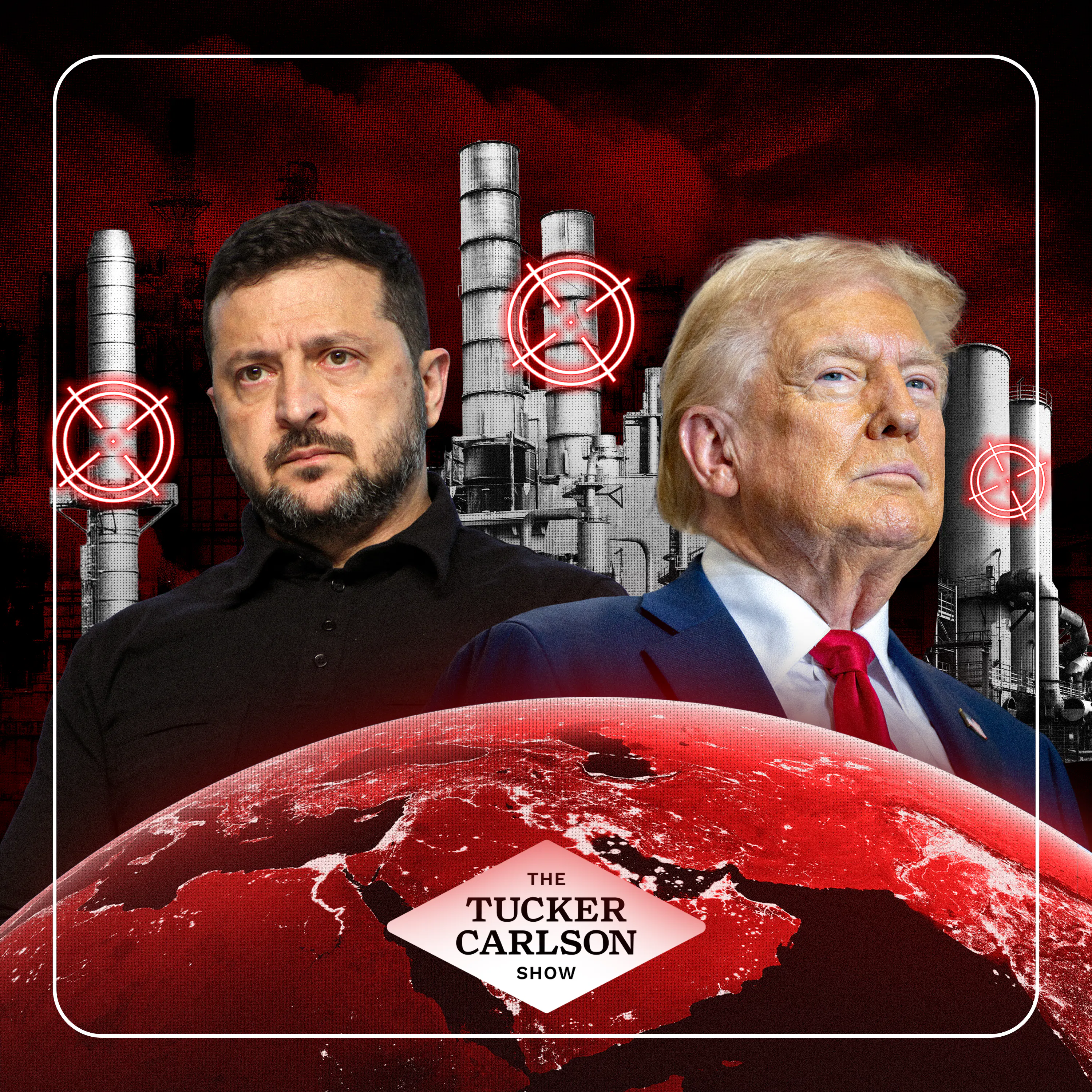
Tucker Carlson interviews Brandon J. Weichert, a national security editor and author of 'A Disaster of Our Own Making: How the West Lost Ukraine,' to discuss the geopolitical consequences of ongoing wars in Iran and Ukraine. The episode's central thesis, as framed in the description, is that these conflicts are…
Worth it if you're already aligned with skeptical views of U.S. foreign policy and want a contrarian take, but not if you seek balanced analysis or rigorous sourcing.