The Goths: Befriending Clever Crows
Evaluation and Summary
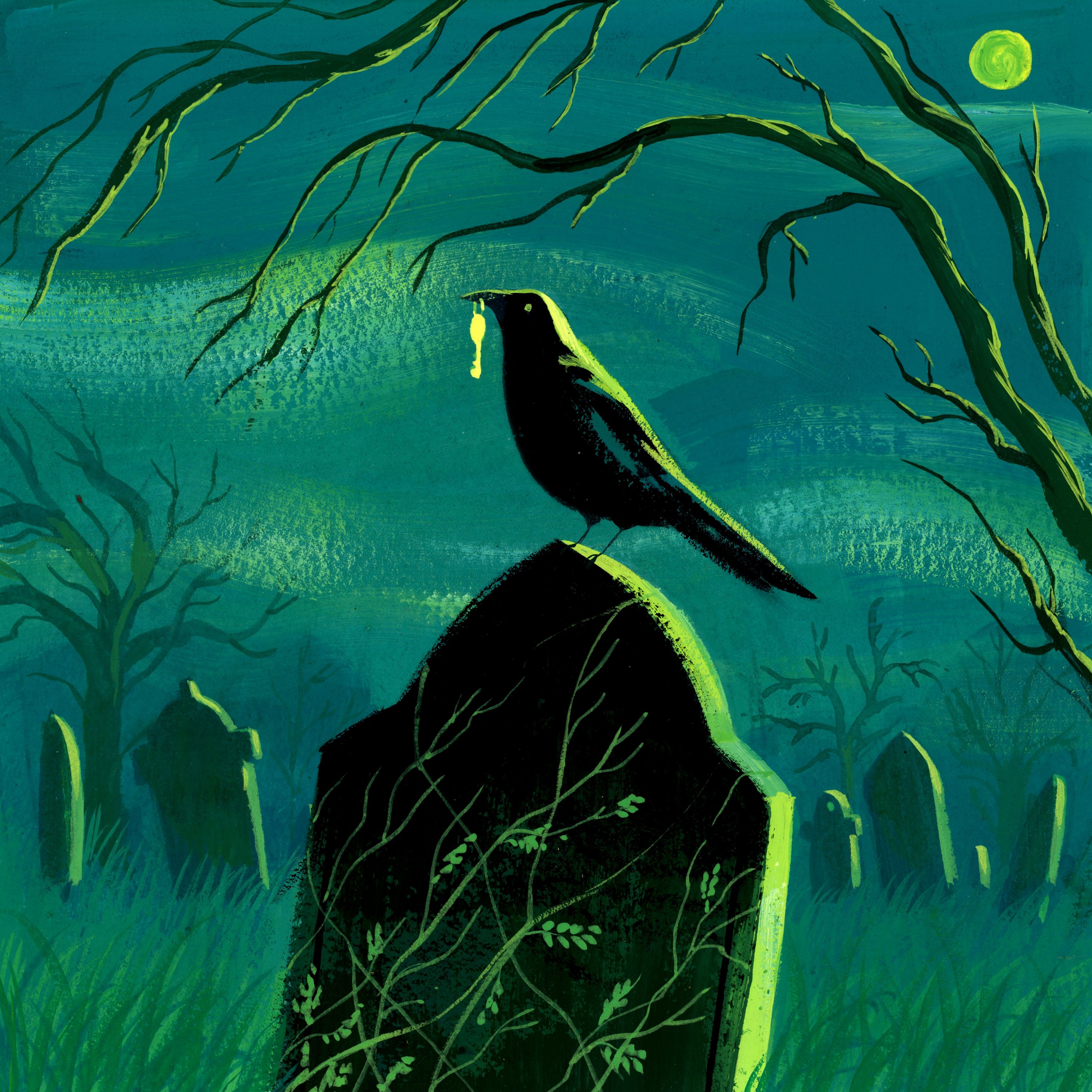
Terrestrials explores the relationship between humans and crows through the true story of Emma Terry, a cheerful, colorful woman who spent seven years leaving treats for crows in her cemetery neighborhood—a stark contrast to the birds' spooky reputation. The episode challenges the morbid stereotype surrounding crows by highlighting their remarkable intelligence: they can recognize human faces, use tools, and solve problems like dropping nuts into crosswalks for cars to crack open. Emma's curiosity about whether crows might reciprocate kindness by leaving gifts led her to conduct an informal experiment, leaving treats in a basket outside her home nearly daily. The episode features Dr. John Marzluff, a crow scientist and ornithologist, who helps listeners understand whether the bond Emma developed with the crows represents genuine interspecies friendship or a compelling narrative we impose on animal behavior. The show notes hint at a payoff—Emma eventually finds something glinting under her basket—though the full resolution isn't detailed in the description. The episode is framed as a Halloween-themed story that recontextualizes crows from harbingers of doom to intelligent, potentially affectionate creatures. The production credits indicate professional storytelling from WNYC Studios, with sound design and fact-checking, suggesting narrative depth and accuracy. The show encourages listener engagement through a newsletter, social media, and a free Crow Scientist app for citizen science participation. The episode balances personal narrative (Emma's seven-year journey) with scientific expertise (Dr. Marzluff's perspective), aiming to educate listeners about crow cognition while exploring the emotional question of whether animals can form meaningful bonds with humans. The 31-minute length suggests a focused, contained story rather than an expansive deep dive.
Verdict: A well-produced, fact-checked story that educates while entertaining, blending personal narrative with genuine science to challenge stereotypes and explore a compelling question about interspecies connection.
Kids & Family rubric
-
Age-appropriate and engaging 4/5 20%
Halloween framing and a relatable protagonist with a quirky quest should engage kids; the crow intelligence angle is inherently fascinating for curious minds, though the full engagement depends on narrative execution not visible in notes.
-
Educational or emotional value 4/5 20%
Teaches genuine crow cognition (tool use, face recognition) while exploring themes of kindness, friendship, and challenging stereotypes; the personal story arc suggests emotional resonance alongside factual learning.
-
Trustworthy guidance 5/5 15%
Features a credentialed crow scientist (Dr. Marzluff) to contextualize claims; fact-checked by Sophie Samiee; encourages critical thinking about whether observed behavior equals friendship rather than accepting the narrative uncritically.
-
Substance 4/5 15%
Combines personal narrative (Emma's seven-year experiment), scientific expertise, specific crow behaviors, and a concrete payoff moment; 31 minutes suggests focused content, though show notes don't reveal depth of tangents or padding.
-
Delivers on its title 4/5 15%
Title promises befriending clever crows; episode delivers Emma's attempt to befriend them, crow intelligence examples, and scientific perspective on whether friendship is real—fully on-topic with slight ambiguity about the final answer.
-
Value for time 4/5 15%
31 minutes is reasonable for a narrative-driven story with character, science, and payoff; pacing appears intentional (seven-year journey compressed into tight episode), though actual pacing can't be assessed from notes alone.
Worth it if you enjoy thoughtful nature storytelling, have curiosity about animal intelligence, or want to reframe Halloween's crow symbolism through a lens of wonder rather than spookiness.
Based on the episode description. AI-generated; it can be wrong.