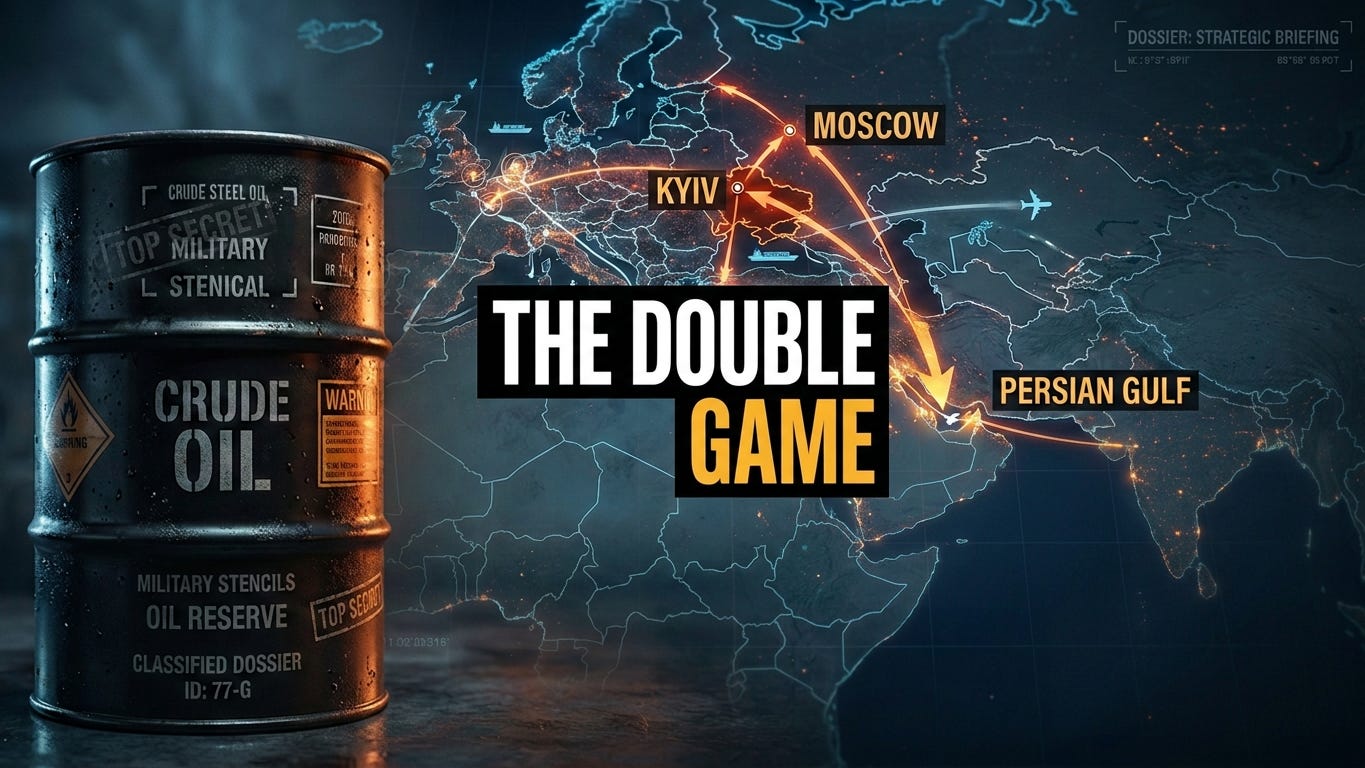
How The Gulf Plays Both Sides In The Ukraine-Russia War (S01E166)
Evaluation and Summary
Badlands episode 166 examines the complex geopolitical balancing act Gulf states—particularly Saudi Arabia, UAE, and Qatar—are performing in the Ukraine-Russia conflict. Host Borzou Daragahi interviews researchers Anastasiya Shapochkina and Bohdan Kostiuk about their report on Russia-GCC (Gulf Cooperation Council) relations following the Iran war. The episode explores a central paradox: Gulf states maintain friendly diplomatic and financial ties with Russia despite Russia allegedly providing weapons and satellite intelligence that enable Iranian strikes against Gulf military bases. The framing positions Zelensky's attempt to convince Gulf nations to join anti-Russia efforts as a difficult diplomatic challenge, given Russia's deep entanglement with Gulf economies and security interests. The episode also addresses whether diplomatic efforts to resolve the Ukraine conflict—now longer than World War I—have made any progress. The core tension is that Gulf states benefit from Russian energy markets and defense partnerships while simultaneously threatened by Russian-enabled Iranian aggression, forcing them to navigate competing interests rather than choose sides clearly. The episode promises insight into this three-way relationship dynamic between Russia, Iran, and Gulf states, examining how geopolitical realities constrain moral or ideological alignment with Ukraine's position.
Verdict: A timely, well-sourced geopolitical deep-dive on an important but underreported angle of the Ukraine conflict, though the paywall and limited preview details make full assessment difficult.
News rubric
-
Accuracy and sourcing 3/5 20%
Episode cites a specific recent report by named researchers as its foundation, suggesting sourced analysis, but show notes don't detail specific facts, figures, or additional sources beyond this report.
-
Balance and context 3/5 20%
Presents the Gulf states' dilemma fairly (Russian ties vs. Iranian threat) and acknowledges Zelensky's difficult diplomatic position, but limited detail on competing perspectives or full context of each state's position.
-
Timeliness and relevance 4/5 15%
Directly relevant to ongoing Ukraine war (October 2026 publication) and current Gulf geopolitics; the angle on Gulf neutrality amid global conflict is timely and important.
-
Substance 3/5 15%
Appears to offer substantive analysis through expert interviews and a focused report, but show notes provide limited detail on actual arguments, data, or specific examples discussed.
-
Delivers on its title 4/5 15%
Title promises explanation of how Gulf plays both sides; episode structure directly addresses this paradox (Russia ties + Iranian threat), though depth unclear from notes alone.
-
Value for time 3/5 15%
26 minutes is reasonable for a focused geopolitical analysis with two expert guests, though pacing and tightness cannot be fully assessed from show notes.
Worth it if you follow international relations, want to understand why Gulf states haven't backed Ukraine, or are interested in Russia-Iran-Gulf state dynamics.
Content flags
- Sponsored Episode is explicitly marked as a 'free preview of a paid episode' requiring subscription to borzou.substack.com to hear full content.
Based on the episode description. AI-generated; it can be wrong.
Show notes
More from badlands podcast by borzou daragahi
Badlands episode 167 examines Iran's escalating use of capital punishment against political dissidents, framed around the regime's disregard for its own laws and international standards. The episode features part 2 of an interview with environmental activist Morad Tahbaz, who survived arrest and imprisonment in…
Worth it if you follow Iran's political repression closely or want firsthand testimony from a survivor of Evin Prison, though the US execution comparison may feel tangential.
Badlands episode S01E165 (24 min, published Oct 7, 2026) covers three distinct topics. The primary focus is August Hanning, Germany's former intelligence chief, who allegedly provided state secrets to another country—a discovery that emerged from a messy divorce case. Host Borzou Daragahi frames this as revealing…
Worth it if you want quick takes on European geopolitics and current scandals, but not if you expect rigorous reporting or balanced analysis.