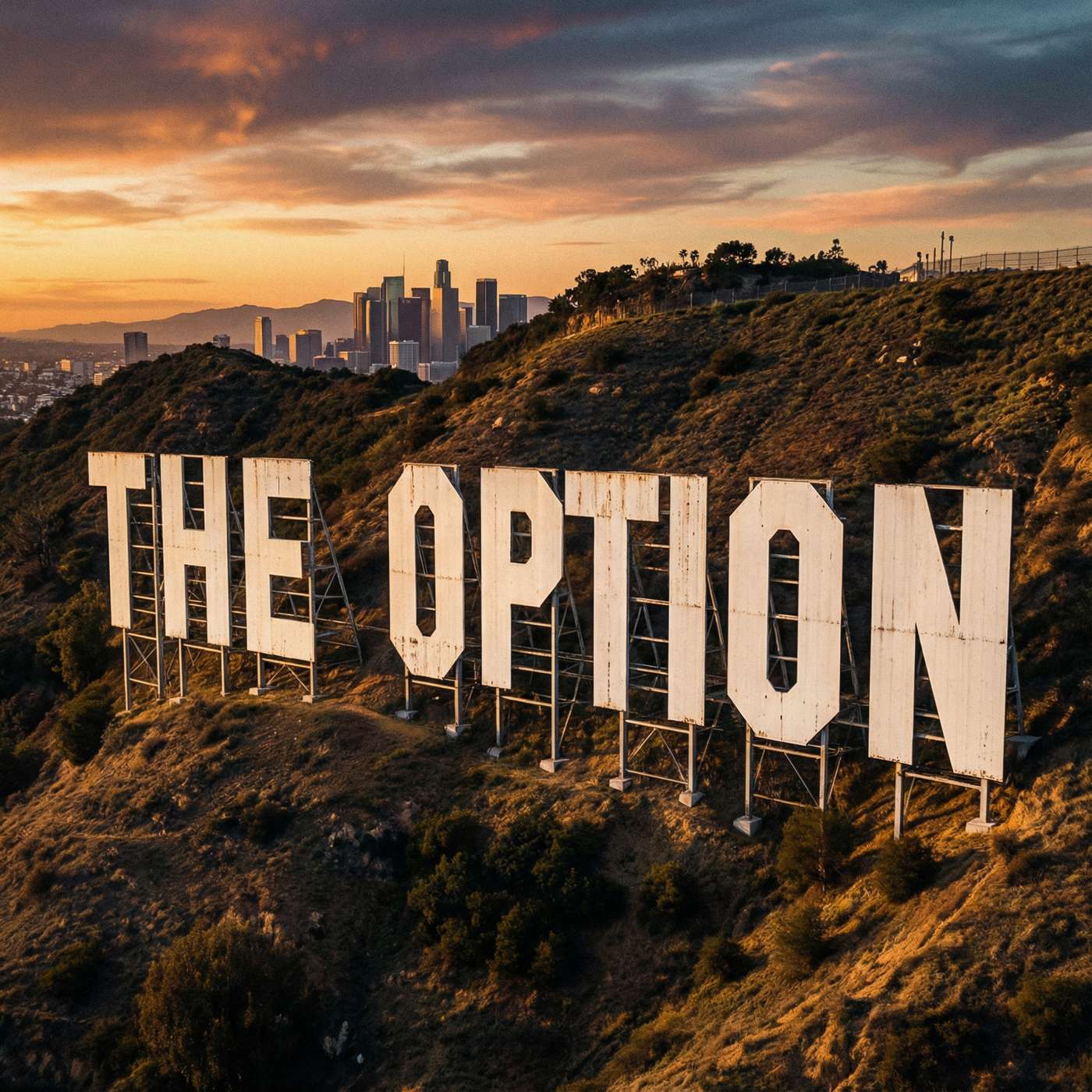
Episode 153: Skydance's Warner Bros To-Do List
Evaluation and Summary
The Option's 5-minute episode dissects the massive slate inherited by Skydance Pictures co-chairs Dana Goldberg and Josh Greenstein following their acquisition of Warner Bros., focusing on the studio's complex portfolio of roughly 65 titles and the financial pressures shaping immediate decisions. The episode identifies Barbie 2 as the top priority—despite the original's record $1.44B gross, no sequel has been greenlit and the creative team (Greta Gerwig, Margot Robbie, Ryan Gosling) must be re-upped. Other key items on the triage list include Jonah Hill's finished comedy The Cut Off (pulled from release calendar), Matt Reeves' The Batman Part II (currently paused, dated Feb. 2028), Baz Luhrmann's Jehanne d'Arc (awaiting script revision), and Bradley Cooper's Ocean's prequel (in production for June 2027). The episode emphasizes the structural financial tension: the combined Paramount-Warner entity carries $79B in net debt against $30B+ annual content spend, while contractual penalties for non-delivery on a 30-picture slate commitment are roughly $30M per film—making shelving troubled productions cheaper than releasing them. This creates a perverse incentive where high-budget films in trouble may never reach audiences. The episode notes that Paramount's $2.7B synergy overdelivery serves as Ellison's proof-of-concept for the merger's viability. The slate is full through mid-2028 but increasingly unsettled thereafter, with the two studios operating as independent creative entities under coordinated release scheduling. The takeaway is that agents and producers with Warner deals need to understand the financial realities now, as projects could end up in rewrites queues without attached directors.
Verdict: A sharp, information-dense briefing that delivers real industry insight and financial context for studio decision-making, though the brevity and lack of narrative or guest voices limit its entertainment value.
TV & Film rubric
-
Critical insight 4/5 20%
Goes beyond listing titles to analyze the structural financial incentive (debt load vs. $30M penalty) that shapes greenlight decisions and shelving strategy.
-
Behind-the-scenes knowledge 4/5 20%
Provides specific contract details, debt figures ($79B), penalty clauses (~$30M per film), and insider framing of the triage process facing new leadership.
-
Entertainment 2/5 15%
At 5 minutes, this is a rapid-fire data dump with no guest interview, banter, or narrative arc to make it engaging listening.
-
Substance 4/5 15%
Dense with concrete information—specific titles, release dates, financial figures, and strategic context—though the brevity limits depth on any single decision.
-
Delivers on its title 5/5 15%
Title promises a to-do list for the new regime; episode delivers exactly that, mapping priorities and the financial constraints shaping them.
-
Value for time 4/5 15%
5 minutes is tight and efficient for the scope; no filler, though listeners may want more context on why certain projects are paused or how decisions will unfold.
Worth it if you follow studio business, care about which films get made or shelved, or work in entertainment and need to understand the financial pressures reshaping major releases.
Based on the episode description. AI-generated; it can be wrong.
Show notes
More from The Option
The Option reports on CAA's appointment of Dasha Smith as Chief Operating Officer, a significant hire pulled directly from the NFL where she served as Executive Vice President and Chief Administrative Officer under Commissioner Roger Goodell. The episode frames this move as a strategic signal about CAA's competitive…
Worth it if you track entertainment and sports business leadership moves and want a quick daily briefing on agency power dynamics.