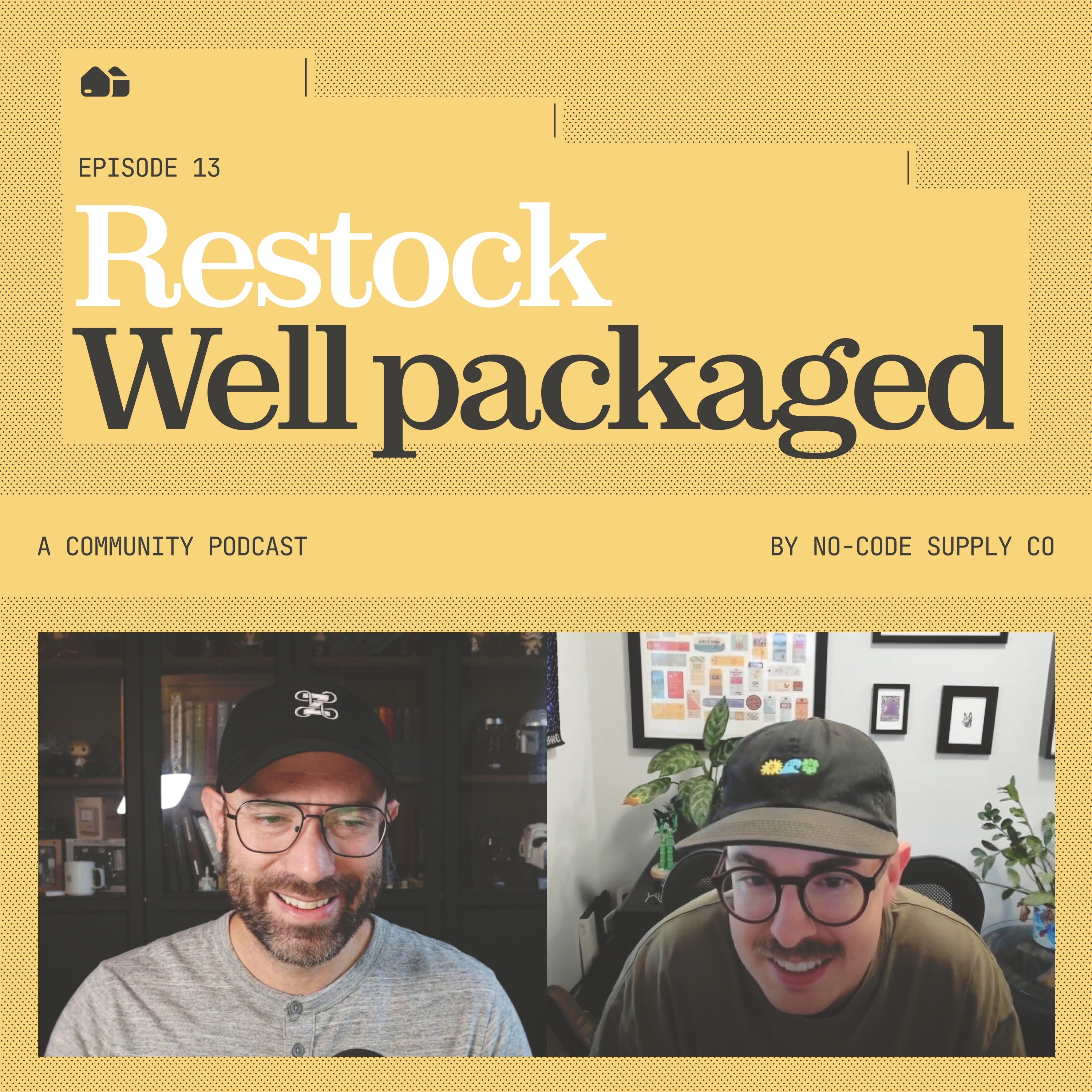
Ep. 13 | Packaging Matters
Evaluation and Summary
Restock episode 13 explores how packaging—visual design, branding, and presentation—has become the decisive factor in getting noticed in a world where AI can rapidly build products, websites, and launch materials. The hosts discuss a vision of interconnected AI agents (using tools like Obsidian, Three.js, and Claude Code) that could organize information hierarchically, from personal knowledge vaults to corporate org charts, with examples like Paperclip and Gather. The core argument is that since the technical execution is increasingly commoditized (models can build the product and site in code), differentiation now hinges on how work is packaged and presented. The episode examines several case studies: pen.dev's rebrand strategy, Framer's polished launch site contrasted with bare GitHub repos, Canva and Gamma as design democratizers, and the cultural signal sent by handwritten notes suggesting human effort. They also critique America.gov as an AI front door to government services, noting the problem of stale underlying data. The episode touches on personal branding through examples like Steven Bartlett and The Diary of a CEO, suggesting that brand reflects organizational culture. Throughout, the hosts reference a wide range of no-code and AI tools (TypeSafe AI, Laya, Reverse, Koati) as evidence of the landscape they're analyzing. The underlying thesis is that in a post-scarcity product world, packaging becomes the primary competitive moat—what gets you noticed, trusted, and chosen. The episode appears to be hosted by Corey Moen and Matthew P Munger from No-Code Supply Co., positioning themselves as observers of trends in AI-driven tooling and design.
Verdict: A sharp, well-framed exploration of a timely trend (packaging as moat in AI-driven product development) with strong examples and clear thesis, though it reads more as curated observation than original reporting or deep expertise.
Arts rubric
-
Insight into the work 4/5 20%
Offers a coherent thesis about packaging as competitive advantage in an AI-commoditized product landscape, with multiple concrete examples (pen.dev, Framer, Canva, Gamma) that illustrate the principle.
-
Expertise and access 3/5 20%
Hosts appear to be informed observers and curators of no-code/AI trends rather than practitioners with deep authority; they synthesize existing tools and examples but don't claim insider access to the companies discussed.
-
Sparks curiosity 4/5 15%
The central idea—that packaging now matters more than product—is provocative and well-supported by examples; listeners would likely want to explore the referenced tools and rethink their own launch strategies.
-
Substance 3/5 15%
Dense with references and examples, but show notes suggest a curated list of links rather than deep dives; the episode appears to be a thematic exploration with breadth rather than investigative depth on any single topic.
-
Delivers on its title 5/5 15%
Title 'Packaging Matters' is directly and thoroughly addressed; the entire episode is built around the premise that packaging is now the primary differentiator.
-
Value for time 3/5 15%
38 minutes for a curated trend discussion with many links suggests reasonable pacing, though without hearing the audio it's unclear if there's padding or if the examples are explored with sufficient depth to justify the length.
Worth it if you're building or launching a product in the AI era and want to understand why visual presentation and branding now compete with technical execution for attention.
Based on the episode description. AI-generated; it can be wrong.