Good Shift - Who's Typing? How the Algorithm Vibe Codes You - E218
Evaluation and Summary
Dr. JC Doornick's 9-minute 'Good Shift' episode reframes the concept of 'vibe coding'—a term coined by AI researcher Andrej Karpathy in February 2025 describing how users can build software by simply describing desired outcomes to AI. Doornick inverts this idea: he argues that our repeated thoughts function as lines of code, and algorithms compete to write the next ones for our mental 'operating system.' The core thesis explores how digital convenience masks a quiet surrender of agency. Doornick distinguishes between activity (doing things) and agency (authentic choice), warning that algorithmic systems exploit our blind spots through selective perception. He uses ChatGPT as a case study, suggesting AI tools can obscure what we don't know we're missing. The episode's practical contribution is the Interface Response System—a four-step framework: perceive (notice what's happening), pause (create space before reacting), process (examine whether desires are authentic or induced), and proceed (act consciously). Doornick frames this as a path to becoming a 'conscious vibe coder'—someone who recognizes algorithmic influence and reclaims intentional thought. The episode positions itself within a larger philosophy that 'who you are determines how well what you do works' and that perception is subjective and learnable. The show notes emphasize themes of consciousness expansion and human performance, suggesting the episode targets listeners concerned about digital manipulation and seeking practical mental frameworks. The timestamps indicate roughly equal weight given to conceptual setup (first half) and the actionable Interface Response System (second half). No guest interviews or external voices are mentioned; this is a solo presentation by Doornick. The episode includes sponsor reads (Kwik Learning, Operly, Blue Blinds Bakery) but these appear standard for the podcast format rather than dominating the content.
Verdict: A thought-provoking short episode that reframes algorithmic influence through an original metaphor and offers a practical four-step framework, but lacks depth, examples, and sourcing to fully justify its claims.
Education rubric
-
Clarity of explanation 3/5 20%
Core metaphor (repeated thoughts as code, algorithms as competitors) is creative but somewhat abstract; the Interface Response System is clearly structured, but the connection between vibe coding inversion and the four-step framework could
-
Accuracy 3/5 20%
Karpathy's vibe coding term is correctly attributed to February 2025; claims about algorithmic influence and selective perception align with established AI/psychology literature, but no sources cited and some claims (e.g., algorithms 'compe
-
Structure 4/5 15%
Clear progression from concept definition to problem identification to solution framework; timestamps show logical flow from theory to practice, though the 9-minute format limits depth at each stage
-
Substance 3/5 15%
Solid conceptual content and a usable framework, but 9 minutes is tight; the Interface Response System gets only ~2 minutes of explanation, and examples are sparse—mostly assertion rather than detailed illustration
-
Delivers on its title 4/5 15%
Title 'Who's Typing?' promises exploration of algorithmic influence on thought; episode delivers this through the vibe coding reframe and shows how algorithms shape cognition, though 'How the Algorithm Vibe Codes You' is somewhat vague and
-
Value for time 3/5 15%
9 minutes is efficient for a short-form podcast; pacing is brisk and no obvious filler, but the brevity means concepts are introduced rather than deeply explored, limiting actionable takeaway beyond the four-step framework
Worth it if you're concerned about algorithmic manipulation, interested in consciousness and digital agency, and want a quick conceptual framework to audit your own thinking patterns.
Content flags
- Ad-heavy Multiple sponsor reads (Kwik Learning, Operly, Blue Blinds Bakery) appear in show notes; for a 9-minute episode, this represents notable ad load relative to content
Based on the episode description. AI-generated; it can be wrong.
Show notes
More from Makes Sense - with Dr. JC Doornick
Dr. JC Doornick explores the psychological dynamics behind 'hurt people hurt people,' reframing it as a process where unresolved pain gets transferred to others—often without their awareness. The episode opens with relatable scenarios: sudden coldness, ghosting, or discovering someone has been talking negatively about…
Worth it if you're interested in understanding unconscious harm in relationships and want practical tools for breaking cycles of transferred pain.
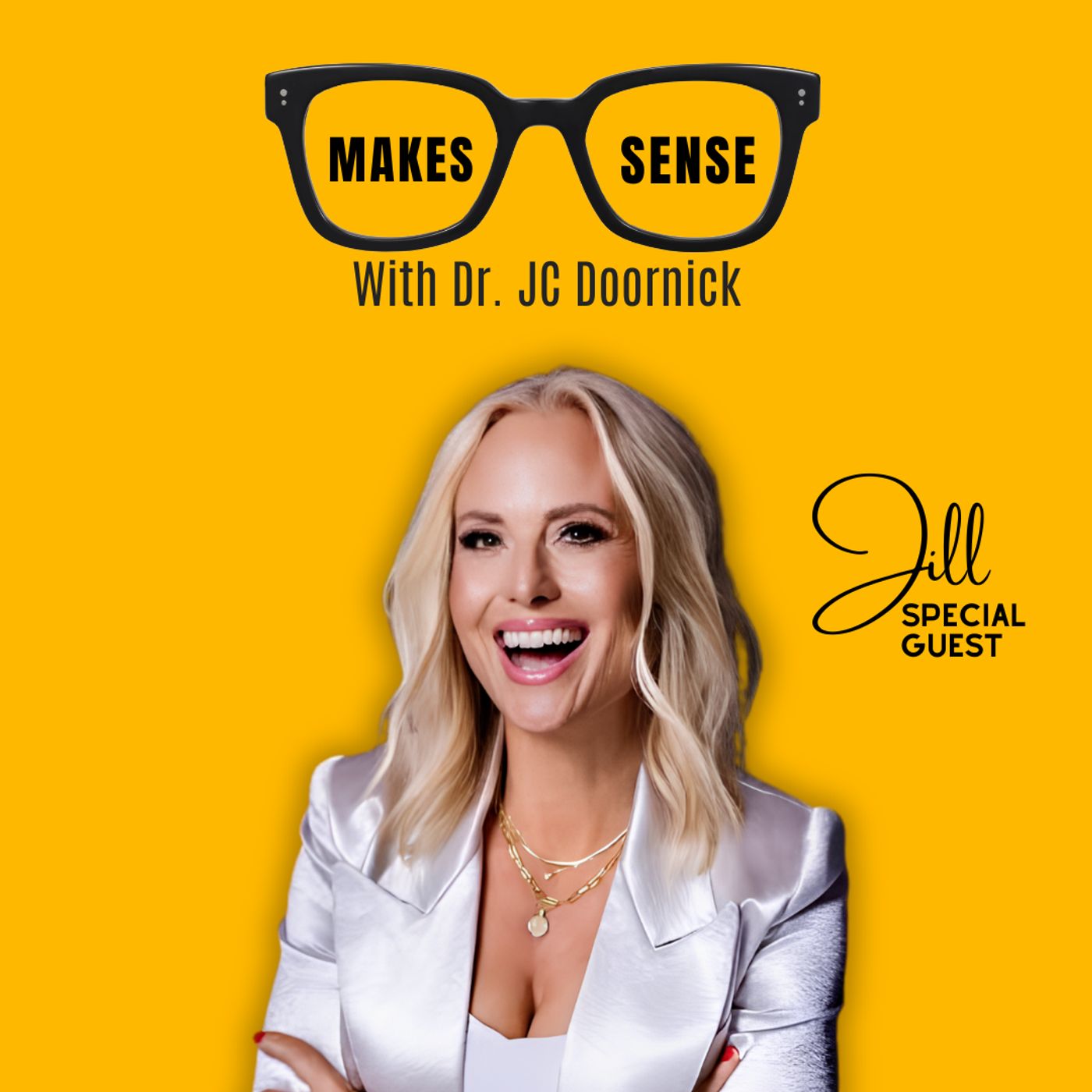
Dr. JC Doornick interviews Jill Schulman, a former Marine Corps combat engineer and current leadership coach with a master's in positive psychology from Penn. Schulman shares her unconventional path: breaking gender barriers in the Marines, transitioning to pharma and corporate leadership, and eventually distilling…
Worth it if you struggle with fear-based procrastination, want practical frameworks for building confidence, or appreciate personal-development content grounded in real military and corporate experience.