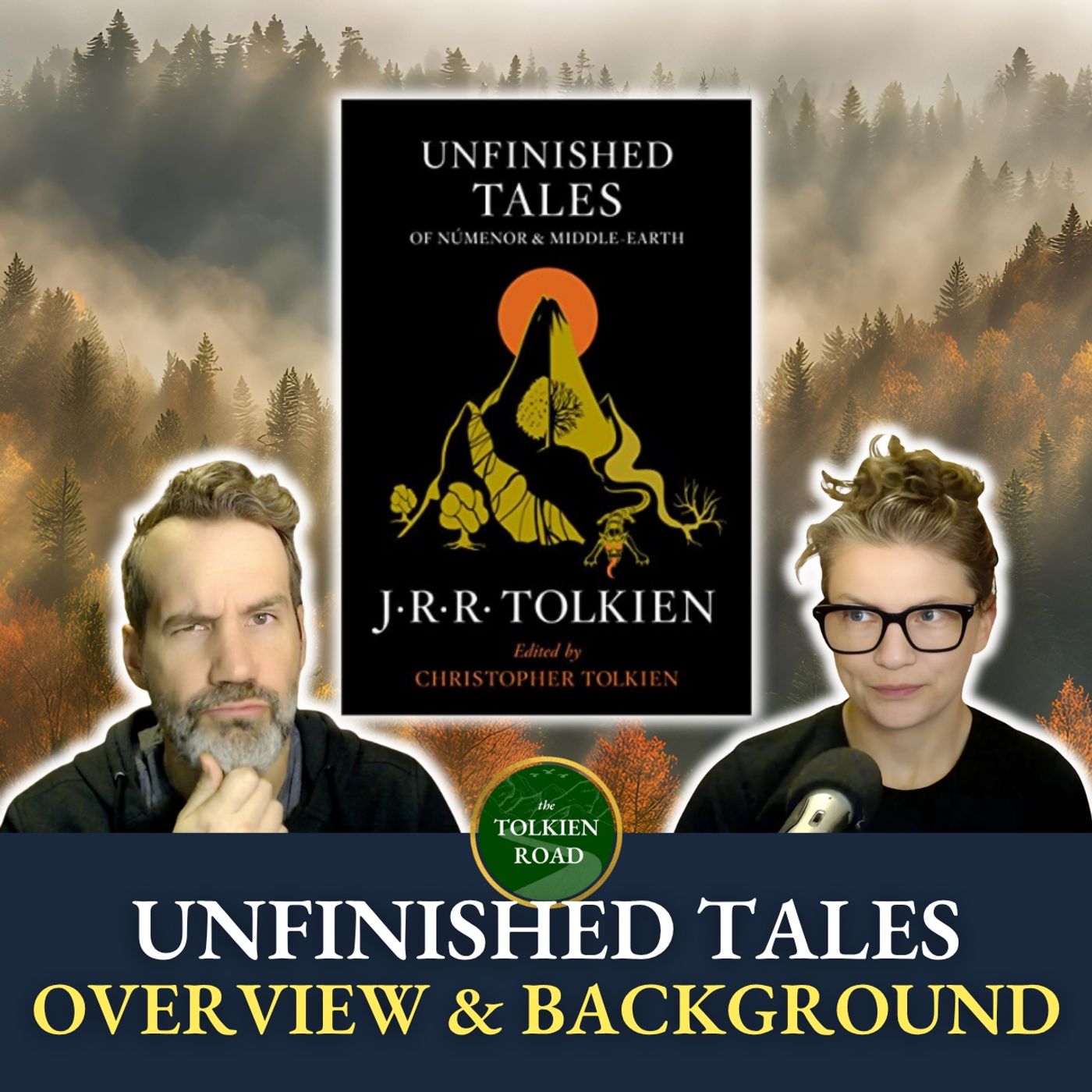
The Tolkien Road launches a deep dive into Christopher Tolkien's *Unfinished Tales of Númenor and Middle-earth* (1980) by examining why the book exists, how it differs from *The Silmarillion*, and what it reveals about Tolkien's creative process. The episode frames *Unfinished Tales* as a watershed moment in Tolkien publishing—a shift from Christopher's interventionist editorial approach on *The Silmarillion* toward a more scholarly, transparent presentation of manuscripts as Tolkien actually left them. The hosts explain that Christopher faced three choices after *The Silmarillion*: abandon unpublished material, continue the legendarium himself, or present textual history. He chose the third path, becoming a "tour guide" through Tolkien's drafts, revisions, contradictions, and abandoned ideas rather than a polisher of unfinished narratives. The episode explores why this matters: *Unfinished Tales* gave readers access not just to stories but to the *process* of their creation—geography, timelines, alternate versions, and the evolution of Tolkien's thinking. The hosts address Christopher's apparent uncertainty about whether fans actually want such granular detail, arguing that serious Tolkien readers find immense value in understanding how the legendarium developed. The episode positions *Unfinished Tales* as a prototype for the later twelve-volume *History of Middle-earth*, establishing a publishing philosophy that prioritized transparency and scholarly rigor over narrative smoothness. A "Tolkien Quote of the Week" segment and listener correspondence round out the episode. The show notes emphasize that *Unfinished Tales* is "harder" than *The Silmarillion*—more fragmented and demanding—but also more honest about the messy reality of creative work. The takeaway is that Christopher's decision to preserve and expose manuscript complexity rather than construct polished versions fundamentally changed how readers could engage with Middle-earth's creation.
Verdict: A well-structured, knowledgeable exploration of *Unfinished Tales* that illuminates Christopher Tolkien's editorial philosophy and the book's significance, though the length and some filler elements prevent it from being essential listening.
Arts rubric
Insight into the work4/520%
Episode goes beyond plot summary to examine editorial philosophy, Christopher's three choices, and how *Unfinished Tales* reveals Tolkien's creative process and textual evolution.
Expertise and access4/520%
Hosts demonstrate informed knowledge of Christopher Tolkien's editorial decisions, manuscript history, and the relationship between *Unfinished Tales* and *The History of Middle-earth*; no guest listed but show notes suggest deep familiarit
Sparks curiosity4/515%
The framing of *Unfinished Tales* as a window into Tolkien's creative process and the explanation of textual complexity should motivate listeners to engage with the book itself.
Substance4/515%
Episode covers editorial philosophy, Christopher's decision-making process, the difference from *The Silmarillion*, and the value of textual history; timestamps suggest structured segments with minimal filler.
Delivers on its title5/515%
Title promises overview and background; episode directly addresses what *Unfinished Tales* is, why Christopher published it, and the editorial philosophy behind it.
Value for time3/515%
75 minutes for an overview episode is reasonable but lengthy; show notes suggest some padding (listener correspondence, quote of the week) alongside substantive content.
Worth it if you're a serious Tolkien reader preparing to tackle *Unfinished Tales* or curious about how Christopher Tolkien shaped the posthumous legendarium.
Based on the episode description. AI-generated; it can be wrong.
Show notes
What exactly is Unfinished Tales—and why did Christopher Tolkien choose to publish his father’s unfinished writings at all?
In this episode of The Tolkien Road, we begin a new journey into Tolkien’s posthumously published legendarium by exploring the history, purpose, and editorial philosophy behind Unfinished Tales of Númenor and Middle-earth. 00:00 — Introduction: Beginning Unfinished Tales
06:36 — Tolkien Quote of the Week: Why Fantasy Matters
08:52 — What Is Unfinished Tales?
10:14 — Why This Book Was So Important
11:38 — Christopher Tolkien Takes Up His Father’s Work
12:56 — Why Unfinished Tales Is Harder Than The Silmarillion
14:31 — Unfinished Tales as a Bridge to The History of Middle-earth
16:54 — Christopher Tolkien’s Experience with The Silmarillion
20:28 — The Three Choices Christopher Tolkien Faced
21:33 — Choosing Textual History Instead of New Stories
24:14 — Why Christopher Changed His Editorial Approach
27:36 — Why Publish Tolkien’s Unfinished Material?
28:23 — Do Tolkien Fans Really Want All the Details?
44:59 — Christopher Tolkien’s Lasting Editorial Legacy
45:42 — Listener Correspondence
What Is Unfinished Tales? Unfinished Tales of Númenor and Middle-earth was published in 1980
It followed The Silmarillion, which Christopher Tolkien published in 1977
The book gathers incomplete narratives, drafts, notes, and alternate versions of stories from across the legendarium
Some stories are relatively complete, while others require extensive editorial explanation
Christopher frequently interrupts the narrative to explain manuscript differences, chronology, textual problems, and editorial choices
Why It Is Different from The Silmarillion The Silmarillion was shaped into a relatively cohesive narrative
Christopher combined and edited multiple sources in an attempt to present something close to his father’s intended mythology
Unfinished Tales takes a very different approach
Rather than smoothing over inconsistencies, Christopher increasingly shows readers the manuscripts as Tolkien actually left them
The result is more scholarly, fragmented, and sometimes more difficult—but also much more transparent
Christopher Tolkien’s Three Choices
After publishing The Silmarillion, Christopher essentially faced three paths: Do nothing and leave his father’s unpublished material alone
Continue the legendarium, perhaps by completing stories or bringing in other writers
Present the textual history, allowing readers to see Tolkien’s drafts, revisions, contradictions, and unfinished writings
Christopher ultimately chose the third path.
Why That Decision Mattered Unfinished Tales became a prototype for the later twelve-volume History of Middle-earth
Instead of continuing Middle-earth himself, Christopher became the curator and interpreter of Tolkien’s manuscripts
He increasingly preferred to show readers what his father actually wrote rather than construct polished versions of unfinished stories
Stories already familiar from The Silmarillion, such as Tuor’s journey to Gondolin and the tale of the Children of Húrin, could now appear in fuller or less heavily edited forms
Readers gained access not only to Tolkien’s stories but also to the process by which those stories developed
Christopher Tolkien as “Tour Guide”
A useful way to understand Unfinished Tales is as a museum of Tolkien’s unfinished writings, with Christopher serving as the tour guide.He explains: Which manuscripts survive
How different versions relate to one another
Where Tolkien changed his ideas
Which texts are incomplete
Why contradictions exist
What editorial decisions were made
That makes the book more demanding, but also extraordinarily valuable for readers who want to understand how Tolkien’s legendarium evolved.
Why Tolkien Fans Want This Material
Christopher sometimes seems uncertain whether readers really want such detailed material.
But for serious Tolkien readers, those details are part of the appeal. Geography, timelines, alternate drafts, abandoned ideas, and seemingly tiny differences can all provide insight into Tolkien’s creative process.
By publishing the textual history, Christopher also gave future readers and adapters a much clearer picture of Tolkien’s actual vision.
The Big Takeaway
Unfinished Tales represents a turning point in the history of Tolkien publishing.
After the more interventionist editorial approach required to create The Silmarillion, Christopher Tolkien chose a different path: preserve the manuscripts, expose their complexity, and let readers see the legendarium developing in Tolkien’s own words.
That decision gave us not only Unfinished Tales, but eventually The History of Middle-earth—and an unprecedented window into the creation of Middle-earth.
SPECIAL THANKS Kaitlyn of Tea with Tolkien
Liis U
Andrew T
John R
Shannon S
Brian O
Emilio P
Zeke F
James A
James L
Chris L
Chuck F
Asya V
Ish of the Hammer
Teresa C
David of Pints with Jack
Jonathan D
Eric S
Joey S
Eric B
Matt L
Johanna T
Ms. Anonymous
Sam N
Mike M
Become a supporter of this podcast: https://www.spreaker.com/podcast/the-tolkien-road--5222755/support .
The Tolkien Road explores Tolkien's own statements about The Lord of the Rings by examining his two different forewords to the work. The episode opens by asking a fundamental question: what did Tolkien himself say his masterpiece was about? The hosts walk through the original 1954 foreword, which presents the story as…
Worth it if you're a Tolkien enthusiast wanting to understand what the author himself claimed his work meant, or anyone interested in the relationship between authorial intent and reader interpretation.