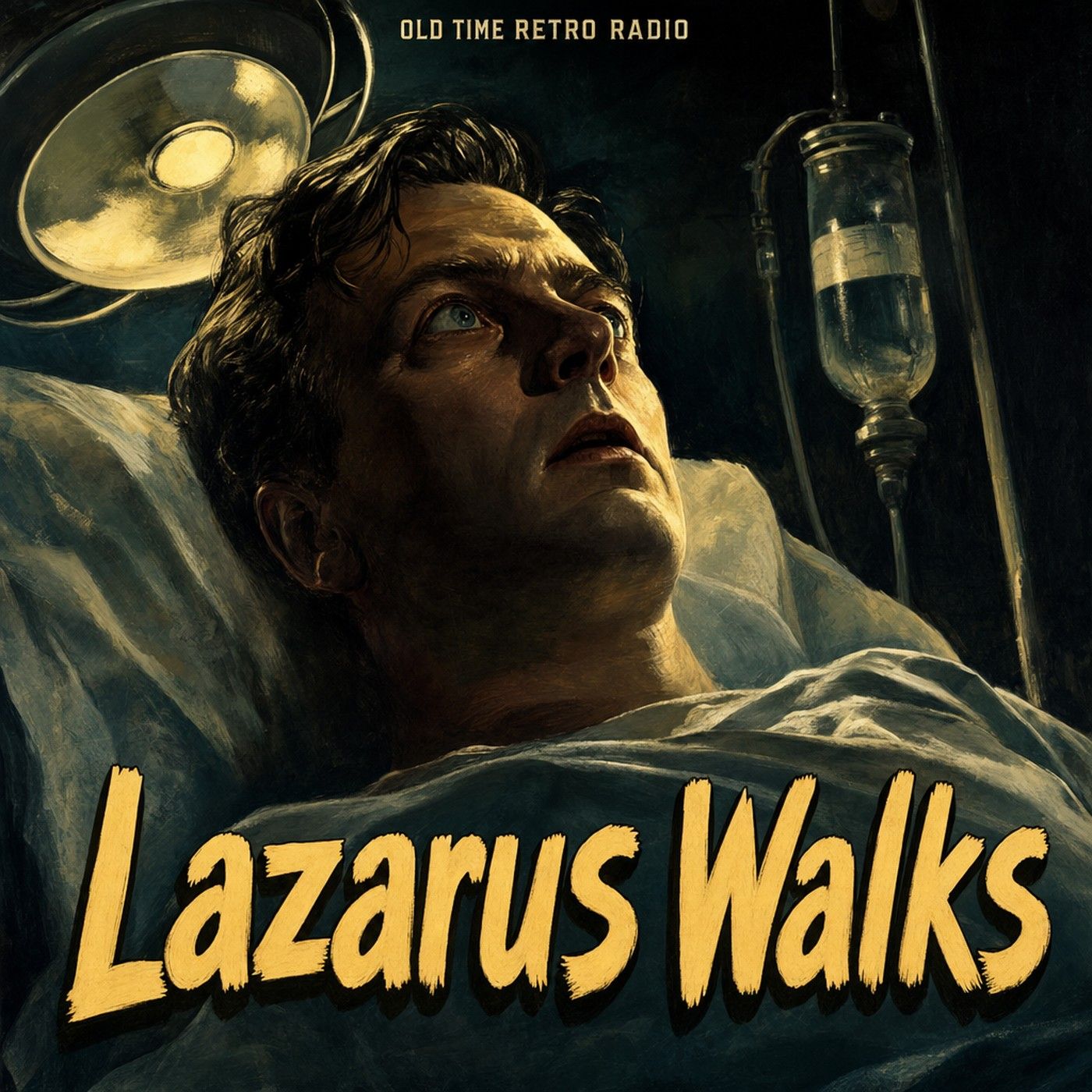
Suspense - "Lazarus Walks" (Old Time Radio, 1943)
Evaluation and Summary
This 1943 Suspense radio episode stars Orson Welles as Dr. Graham, a psychiatrist, and Hans Conried as Roger Holcombe, a man who survives clinical death during surgery and returns with a disturbing new ability: an uncanny relationship with truth and lies. The episode explores the psychological and supernatural implications of this transformation, positioning it as a mystery that blends medical drama with the paranormal. Adapted by Robert L. Richards from a story by J. Marion Speed, the episode was originally broadcast on October 1, 1943. The production includes a newly recorded contextual introduction by Victor Sterling, the original 28-minute broadcast, and a closing announcement, with audio that has been cleaned and mastered for modern listening. The episode's central tension appears to revolve around whether Holcombe's newfound abilities are genuinely supernatural or psychological manifestations of trauma from his near-death experience—a classic Suspense formula that plays on audience uncertainty about the nature of reality and sanity. The title 'Lazarus Walks' invokes the biblical figure who rose from the dead, suggesting themes of resurrection, rebirth, and the uncanny return of someone fundamentally changed by their brush with mortality. The episode represents early Golden Age radio drama, a period when the medium was experimenting with psychological horror and supernatural storytelling, leveraging the power of sound design and voice acting to create atmosphere and dread.
Verdict: A well-cast classic radio drama with an intriguing psychological-supernatural premise that likely delivers solid period entertainment, though the source material doesn't provide enough detail to confirm whether execution matches concept.
Fiction rubric
-
Writing 3/5 20%
Adapted from an existing story with a competent premise (death-induced truth-perception), but source material provides no dialogue samples to assess script quality beyond the setup.
-
Performance and production 3/5 20%
Orson Welles and Hans Conried are accomplished actors, but without hearing the actual performance, quality can only be inferred; audio has been remastered for consistency.
-
Plot momentum 3/5 15%
The central mystery (what Holcombe's abilities mean and their origin) provides forward momentum, but source material doesn't reveal pacing or whether tension sustains across 28 minutes.
-
Substance 3/5 15%
Solid psychological-supernatural premise with thematic depth (death, truth, sanity), but show notes don't indicate whether the episode explores these ideas substantively or remains surface-level.
-
Delivers on its title 4/5 15%
Title 'Lazarus Walks' directly invokes resurrection and the changed nature of the returned; the episode's premise of a man transformed by near-death experience aligns well with this promise.
-
Value for time 3/5 15%
30-minute total runtime with 28 minutes of content is standard for Golden Age radio; pacing cannot be assessed from notes alone, but length is appropriate for the format.
Worth it if you enjoy Golden Age radio drama, Orson Welles performances, or psychological horror with supernatural undertones.
Based on the episode description. AI-generated; it can be wrong.
Show notes
More from Suspense | Old Time Radio
This is an archival recording of 'The Long Wait,' a hard-boiled drama from the original Suspense radio series, broadcast November 2, 1949. The episode stars Burt Lancaster as Dan Varrell, a man recently released from prison who returns to Manhattan consumed by the need for revenge over his brother's death. The…
Worth it if you enjoy classic Old Time Radio, noir crime dramas, or want to experience Burt Lancaster in an early dramatic role from the golden age of radio.
Suspense presents "The Thing in the Window," a 1946 radio play written by Lucille Fletcher and starring Joseph Cotten. The episode follows actor Martin Aimes, who becomes fixated on a shadowy figure visible in a window across the street. The central tension of the story revolves around Aimes's growing obsession with…
Worth it if you enjoy classic radio drama, psychological suspense, or Lucille Fletcher's exploration of paranoia and unreliable perception.
This is a restored broadcast of 'Life Ends at Midnight,' a 1944 episode from the classic radio drama series Suspense. The episode centers on a domestic crisis in the Bates household: Mrs. Bates's troubled son Walter arrives in desperate need of $1,500 before midnight, creating an urgent deadline that drives the…
Worth it if you enjoy classic radio drama, appreciate historical audio restoration, or want to experience the Suspense series' signature blend of domestic tension and noir-tinged danger.