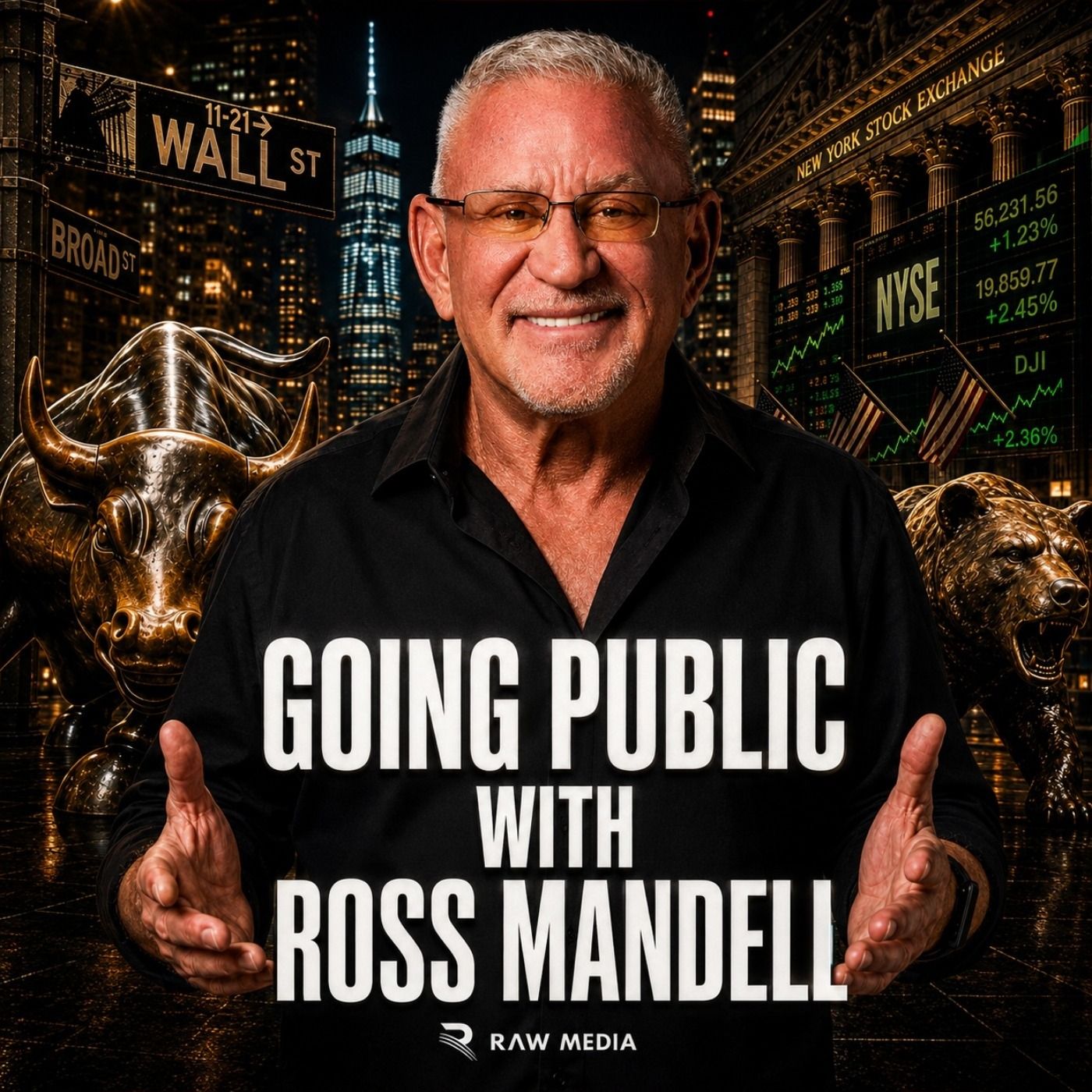
NVIDIA's $235 Billion Buyback: What Does Jensen Huang Know?
Evaluation and Summary
In this 12-minute episode of Going Public with Ross Mandell, host Ross Mandell analyzes NVIDIA's $235 billion stock buyback authorization as a signal of the company's confidence in its future. The episode breaks down how stock buybacks work mechanically—reducing share count, boosting earnings per share, and returning capital to shareholders—and examines what NVIDIA's massive authorization reveals about management's bullish outlook. Mandell traces NVIDIA's evolution from its origins through Jensen Huang's leadership, highlighting the company's expansion beyond GPUs into AI infrastructure, robotics, networking, and automotive technology. He connects the buyback decision to NVIDIA's strong free cash flow generation, driven by surging demand for its chips in AI infrastructure spending. The episode explains the relationship between earnings growth, valuation multiples (P/E ratios), and stock performance, using NVIDIA as a case study. Mandell compares NVIDIA's approach to Apple's well-known buyback history and addresses investor concerns about sustainability, including risks from AI spending cycles and semiconductor boom-and-bust patterns. Despite acknowledging these cyclical risks, Mandell reveals that NVIDIA remains his largest personal stock position, positioning the buyback as validation of his bullish thesis. The episode covers the math of how buybacks affect shareholder value when combined with earnings growth, and why the $235 billion authorization—one of the largest ever—matters as a signal of management confidence. Throughout, Mandell emphasizes that the buyback should be viewed alongside NVIDIA's fundamental business strength and cash generation capacity rather than in isolation. The content is framed as educational and explicitly disclaims being investment advice. The episode includes promotional elements for Mandell's Patreon community and booking calls with him.
Verdict: A competent but unremarkable explainer on NVIDIA's buyback that delivers basic financial education without fresh insight or engaging storytelling.
Society & Culture rubric
-
Fresh perspective 2/5 20%
Standard buyback analysis and bullish NVIDIA thesis; no novel angles on the company's strategy or market dynamics beyond conventional wisdom
-
Storytelling and voices 1/5 20%
Solo host format with no guest interviews or personal narratives; purely expository delivery without human dimension
-
Thoughtfulness 2/5 15%
Acknowledges cyclical risks and boom-bust concerns but doesn't deeply explore counterarguments or nuance; mostly confirms host's existing bullish position
-
Substance 3/5 15%
Covers buyback mechanics, cash flow, valuation, and competitive context with reasonable depth for 12 minutes; some educational value but limited new information
-
Delivers on its title 4/5 15%
Directly addresses what the buyback reveals about Jensen Huang's strategy and confidence; stays on topic throughout with relevant analysis
-
Value for time 3/5 15%
Twelve minutes allows only surface-level treatment of complex topics; chapters suggest organized pacing but limited time for deep exploration
How we score Society & Culture
Worth it if you're new to understanding stock buybacks and want a quick primer on NVIDIA's capital allocation strategy, but skip it if you already follow tech stocks closely.
Content flags
- Sponsored Episode includes promotional links to Mandell's Patreon, booking calls, and Instagram; framed as educational content but serves to build his audience and services
Based on the episode description. AI-generated; it can be wrong.
Show notes
More from Going Public With Ross Mandell
Ross Mandell makes a case for why Okta stock could benefit from the emerging AI agent boom. The episode frames identity and access management (IAM) as a critical but overlooked infrastructure need as autonomous AI agents proliferate across enterprises. Mandell explains Okta's core business—workforce and customer…
Worth it if you're interested in AI infrastructure plays, cybersecurity stocks, or looking for contrarian investment angles beyond the obvious AI chip narratives.