Are You Over-Tracking Your Health? This is How to Use Your Data
Evaluation and Summary
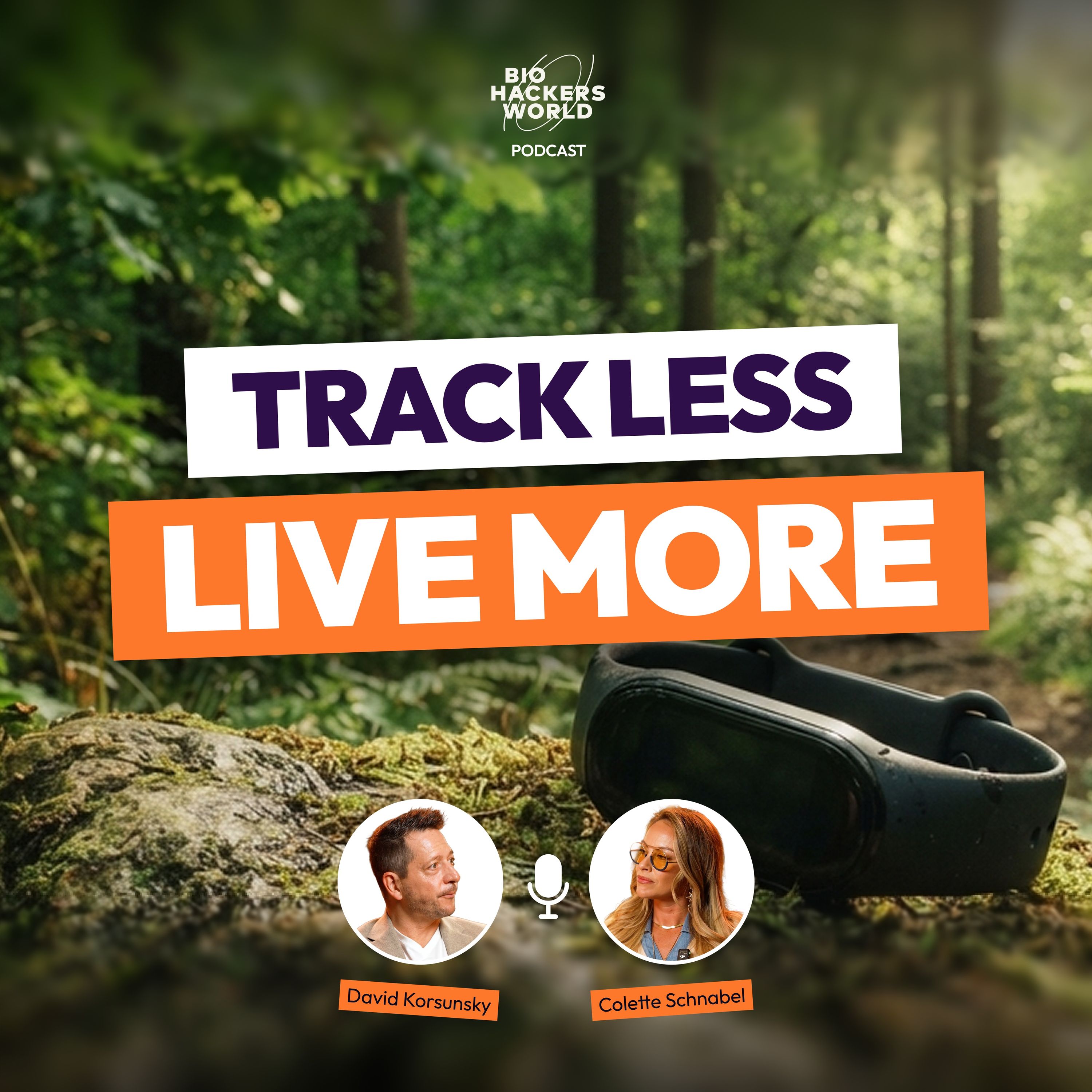
This 16-minute episode from Biohack Your World Podcast features David Korsunsky, founder of Heads Up (a health data platform), and Colette Schnabel, a luxury longevity consultant, discussing the psychological and practical pitfalls of obsessive health tracking. Recorded live at the Biohackers World Conference, the conversation centers on a core tension: health data can inform better decisions, but excessive tracking often creates anxiety rather than improvement. Korsunsky makes a key distinction—data should function as a compass for pattern recognition, not as a verdict on your health status. The episode covers specific metrics (HRV, sleep, blood sugar) and recommends that beginners start with sleep and blood sugar tracking rather than overwhelming themselves with multiple biomarkers. A central theme is avoiding overreaction to single bad readings and recognizing that sometimes the healthiest choice is to stop tracking and trust your body's signals. The conversation touches on how AI can help synthesize years of accumulated lab work and wearable data into actionable insights, and emphasizes balancing objective measurements with intuition. The ultimate framing reorients the goal of biohacking from chasing better numbers to achieving more energy and capacity for meaningful life and relationships. The episode is positioned as practical guidance for people caught between the allure of quantified self-optimization and the reality of data-driven anxiety. No specific research studies, clinical evidence, or detailed protocols are mentioned in the show notes, though the framing suggests a reasonable, psychology-aware approach to health tracking.
Verdict: A timely, psychologically aware conversation on a real problem (tracking anxiety), but lacking research grounding and depth; useful for people already interested in biohacking but not a must-listen.
Health & Fitness rubric
-
Evidence-based claims 2/5 20%
Show notes mention HRV and blood sugar as metrics but provide no research citations, studies, or evidence-based justification for recommendations.
-
Expert credentials 3/5 20%
Korsunsky founded a health data platform and Schnabel is a self-described luxury longevity consultant; relevant domain experience but no clinical or research credentials mentioned.
-
Safe and practical advice 4/5 15%
Core message—use data as a compass, not a stressor, and sometimes stop tracking—is sensible and psychologically sound; recommends starting with sleep and blood sugar rather than overwhelming beginners.
-
Substance 2/5 15%
At 16 minutes with only show notes available, the episode appears to cover key talking points but likely lacks depth; no detailed examples, case studies, or nuanced exploration evident.
-
Delivers on its title 4/5 15%
Title promises guidance on over-tracking and using data wisely; show notes confirm the episode addresses both the problem and practical solutions.
-
Value for time 3/5 15%
16 minutes is a reasonable length for a conversational overview, but without hearing the episode, unclear if pacing is tight or if it includes tangents; likely solid for a conference talk format.
Worth it if you use wearables or health trackers and feel anxious about your data, or if you're curious about balancing quantified self-optimization with intuition.
Based on the episode description. AI-generated; it can be wrong.